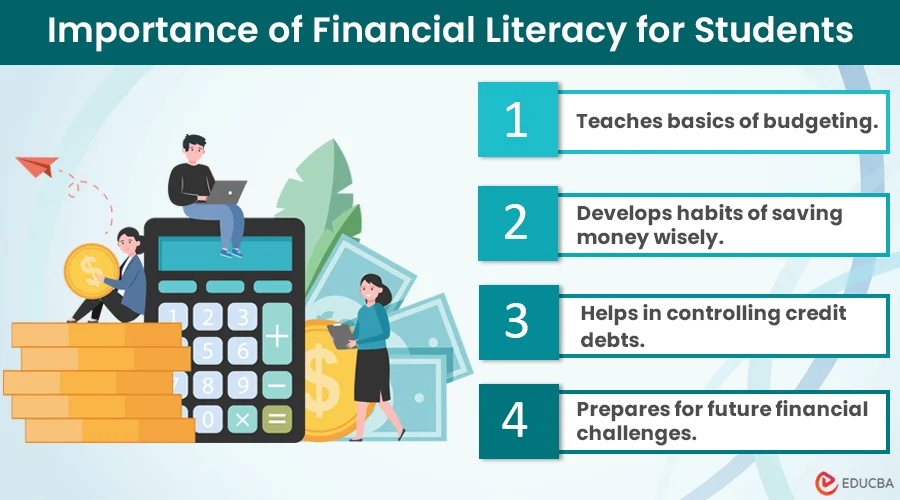
For decades, the rallying cry to solve personal financial misery has been consistent: “We need more financial education!” From government initiatives and school curriculum debates to corporate wellness programs and a booming industry of self-help books and influencers, the message is pervasive. Yet, despite this flood of information, the outcomes remain grim. Adults continue to struggle with debt, live paycheck-to-paycheck, fail to save adequately for retirement, and fall prey to predatory financial products. The stark disconnect between the availability of financial education and the persistence of financial ill-health prompts a critical question: Why does financial education fail so many adults?
The uncomfortable truth is that traditional financial education is not merely ineffective; it is often fundamentally flawed in its design, delivery, and underlying assumptions. Its failure is not an accident but the result of a complex interplay of psychological barriers, systemic economic forces, outdated pedagogy, and a profound misunderstanding of human behavior. To understand this failure is to move beyond blaming individuals for their lack of “literacy” and to examine the broken system itself.
The Myth of the Rational Actor: Ignoring Behavioral Economics
At the heart of most traditional financial education lies a bankrupt assumption: that humans are rational, logical actors who, once presented with correct information, will calmly optimize their financial decisions for long-term benefit. This Homo economicus model is the bedrock of classical economics but is a fiction in the real world.
1. The Power of Present Bias: Behavioral economics has proven that humans are hardwired for present bias. We value immediate gratification (a new gadget, a vacation, the comfort of avoiding a difficult budget conversation) far more than abstract future rewards (a comfortable retirement in 30 years). A lesson on compound interest, no matter how well-delivered, battles against a deep-seated neurological preference for “now.” Telling someone to save $200 a month is a logical argument. Choosing between that savings and fixing a broken car today is an emotional and psychological battle that logic often loses.
2. The Role of Emotion and Identity: Financial decisions are deeply emotional. Shame, fear, hope, pride, and social status are all tangled up with money. A curriculum on debt management fails when the individual is silently ashamed of their credit card balance, seeing it not as a math problem but as a moral failing. Furthermore, spending is tied to identity and social belonging. The pressure to keep up with peers—whether through housing, cars, or experiences—often overrides knowledge of a healthy debt-to-income ratio.
3. Cognitive Overload and Decision Fatigue: Adults are already making thousands of decisions daily. By the time they are confronted with a 401(k) enrollment form—a document filled with jargon like “asset allocation,” “small-cap value fund,” and “expense ratios”—they are often suffering from decision fatigue. Defaulting to the easiest option or doing nothing becomes the path of least resistance. Financial education that adds more complex information without simplifying actual decision-making is just adding to the noise.
The Pedagogy of the Abstract: Irrelevance and Poor Delivery
Much of the financial education offered to adults is delivered in ways that are immediately forgettable, irrelevant, or utterly disconnected from their lived reality.
1. The “One-Size-Fits-None” Workshop: The classic workplace “lunch-and-learn” on retirement planning is a prime example. It treats a heterogeneous group—a 22-year-old new hire with student debt, a 45-year-old single parent saving for college, and a 60-year-old nearing retirement—as if they have identical needs. The content is necessarily generic, rendering it useless for specific, pressing dilemmas. This shotgun approach rarely hits the target for anyone.
2. Focus on Facts Over Frameworks: Many programs prioritize the transmission of facts—what is a bond, the definition of APR, the rules for a Roth IRA—over the cultivation of a financial mindset or decision-making framework. Knowing the definition of “diversification” is not the same as knowing how to diversify your specific portfolio with the options in your employer’s plan, or why you should stay diversified during a market crash. This focus on trivia over practical strategy is a fatal flaw.
3. Timing is Everything (And It’s Usually Wrong): Education is most effective when it is “just-in-time” rather than “just-in-case.” A mandatory high school class on mortgages, taken 15 years before a student might buy a home, has minimal retention. Conversely, a first-time homebuyer seminar offered when someone is actively looking is powerfully relevant. Most adult financial education is delivered arbitrarily—during an onboarding week, a random Tuesday seminar—with no connection to an immediate, actionable decision.
The Overwhelming Headwinds: Systemic and Socioeconomic Barriers
Perhaps the most cynical oversight of standard financial education is its implicit suggestion that financial success is purely a function of individual knowledge and discipline. This ignores the monumental structural forces that shape financial outcomes.
1. The Scarcity Trap: Research by Sendhil Mullainathan and Eldar Shafir in their book Scarcity reveals that poverty itself imposes a massive cognitive tax. The mental bandwidth consumed by juggling bills, fearing eviction, or managing unreliable transportation depletes the very cognitive resources required to make “prudent” long-term plans. Telling someone in the scarcity trap to simply “budget better” is like telling a drowning person to swim harder while ignoring the weight pulling them down. Financial education cannot overcome the raw mathematics of an income that fails to cover basic necessities.
2. The Predatory Financial Environment: Adults are not making decisions in a neutral marketplace. They are bombarded by a sophisticated, multi-billion dollar advertising and financial product industry designed to exploit behavioral biases. Credit card companies offer “rewards” that encourage spending. “Buy now, pay later” schemes normalize debt for everyday purchases. The financial incentives for institutions are often diametrically opposed to the consumer’s financial health. A two-hour seminar on interest rates is feeble competition against a lifetime of curated marketing messages promoting consumption and debt.
3. Inequality of Access and Social Capital: True financial capability isn’t just about knowing things; it’s about access to beneficial systems and trusted advisors. Affluent individuals often learn through family mentorship—informal coaching on investing, introductions to good accountants, understanding of tax strategies. Those without this social capital are left to navigate complex systems alone, relying on impersonal (and potentially conflicted) online information or salespeople disguised as advisors. Education without access is like giving someone a map of a minefield but no safe path through it.
The Measurement Problem: Defining Success Incorrectly
The failure of financial education is often masked by a failure to properly measure its success. Programs are frequently evaluated by “outputs” (attendance, satisfaction surveys, pre/post knowledge tests) rather than long-term “outcomes” (reduced debt, increased savings, improved credit scores, secured retirement).
Passing a quiz on financial terms does not translate to behavioral change. A participant might leave a workshop feeling informed and motivated, but that motivation typically fades within weeks when confronted with real-life trade-offs and the inertia of old habits. Without sustained support, nudges, and system-level changes, the knowledge decays and behavior remains unchanged.
Toward a More Effective Paradigm: From Education to Empowerment
If traditional financial education is broken, what might work? Success requires a holistic shift from isolated information-dumping to integrated empowerment. This involves:
1. Behavioral Design Over Lecture: Use insights from behavioral economics to design “choice architectures” that make good decisions the default, easy path. This includes auto-enrollment in retirement plans with escalating contributions, automatic savings transfers set up on payday, and simplified, jargon-free financial product design. A nudge is often more powerful than a newsletter.
2. Personalized, Just-in-Time Coaching: Leverage technology and human support to provide guidance at critical moments. A robo-advisor that helps with portfolio allocation, a text-message-based program that helps build an emergency fund $5 at a time, or access to a certified, non-commissioned financial coach for specific, urgent questions can bridge the gap between knowledge and action.
3. Addressing the Systemic Foundations: Truly effective financial empowerment must advocate for and be coupled with policy and systemic changes: living wages, stronger consumer protection laws, regulation of predatory lending, and public benefits that provide a genuine safety net. Education cannot compensate for a rigged system.
4. Fostering Financial Psychology and Mindfulness: Programs must create space to address the emotional, relational, and identity-based aspects of money. This means teaching financial mindfulness—the ability to notice one’s emotional triggers around spending—and helping individuals align their spending with their deeply held values, not just their fleeting desires or social pressures.
5. Lifelong Integration, Not One-Off Events: Financial capability is a practice, not a subject to be mastered. Support must be ongoing, integrated into trusted community institutions (libraries, places of worship, community colleges), and delivered in supportive peer groups where shared struggles and successes can reduce shame and build accountability.
Conclusion: Beyond Blame to System Redesign
The persistent failure of financial education for most adults is a symptom of a deeper problem: treating a profound, multi-dimensional human challenge as a simple literacy deficit. We have mistaken a symptom—a lack of knowledge—for the disease itself, which is a combination of hostile structural environments, powerful psychological biases, and inappropriate pedagogical methods.
Continuing to double down on the same old workshops, generic curricula, and fact-based exams is an exercise in futility. It conveniently places the onus of failure on the individual (“they weren’t motivated,” “they didn’t apply the lessons”) while absolving systems, institutions, and program designers of their responsibility.
To make a real difference, we must stop “educating” and start empowering. This means designing systems that assume human frailty, providing support that is relevant and timely, attacking predatory practices, and acknowledging that no amount of personal budgeting can overcome an income that doesn’t cover rent and groceries. The goal should not be to create a population of financial scholars, but to create environments where all adults, regardless of psychology or circumstance, have a genuine opportunity to achieve financial stability and dignity. Until we make this paradigm shift, financial education will remain what it has largely been: a well-intentioned but ultimately failing attempt to solve a systemic crisis with an individualistic pamphlet.