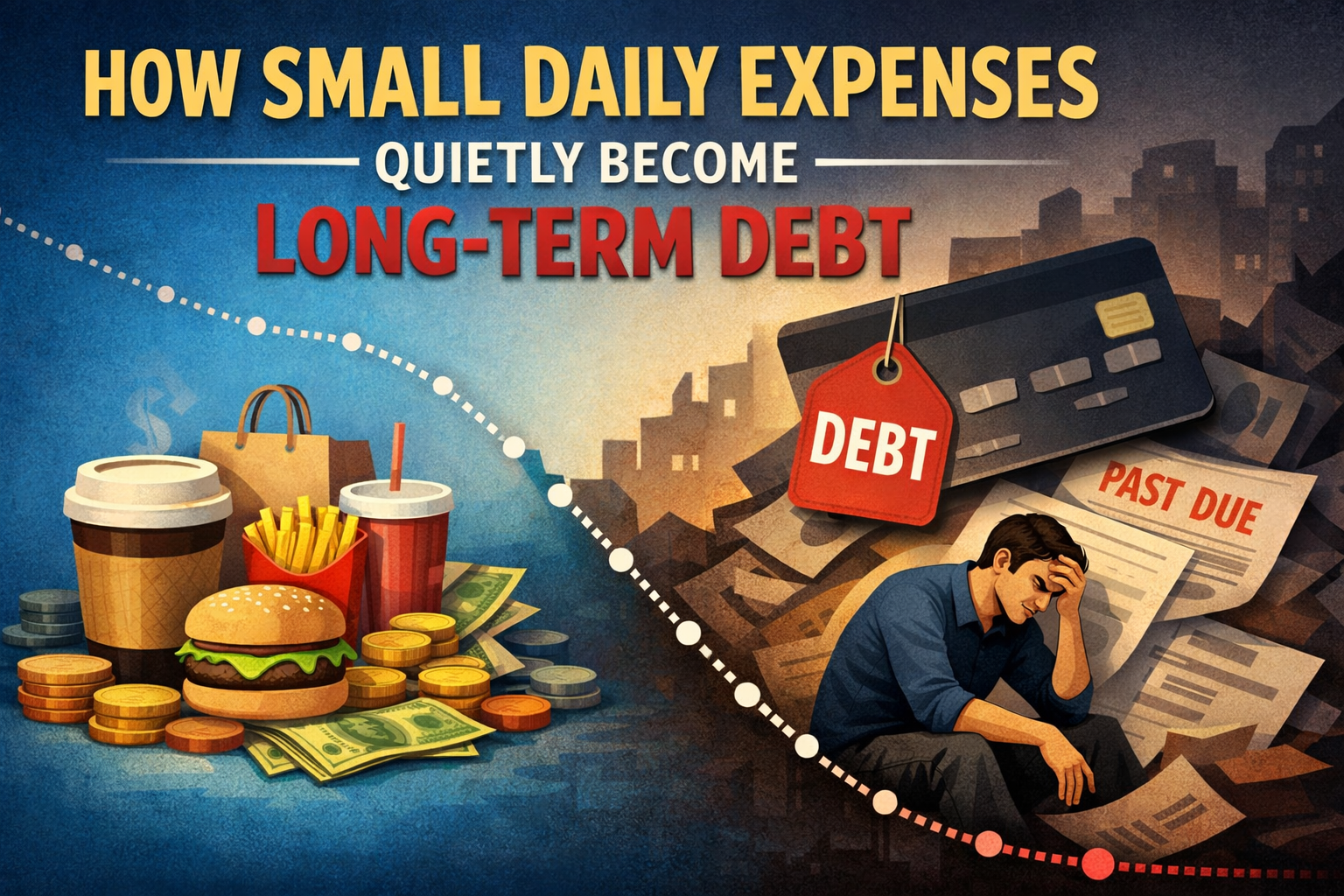
We live in a world of frictionless spending. A tap on a phone, a wave of a card, and a morning latte, a lunch delivery, or an impulsive online purchase is complete. These transactions feel insignificant—a few dollars here, a few there. They are the financial equivalent of a gentle drip. Unnoticed day-to-day, but over months and years, they can flood the basement of our finances, leaving us standing in the stagnant water of long-term debt. This is the insidious paradox of modern personal finance: the greatest threat to our financial freedom is not always the dramatic, one-time catastrophe, but the slow, persistent bleed of small, unexamined daily expenses.How Small Daily Expenses Quietly Become Long-Term Debt
The Psychology of the “Small” Spend: Why We Don’t See It Coming
To understand how these small expenses become debt, we must first understand the cognitive biases that enable them.
1. Mental Accounting: We categorize money in our minds, often irrationally. We see $5 for a coffee as coming from a different, more permissible “entertainment” or “treat” account, not from our core “savings” or “bill” account. This compartmentalization makes small feels justified and disconnected from our larger financial picture.
2. The Pain of Paying (and Its Absence): Using cash is psychologically painful; you physically hand over money, feeling the loss. Digital payments, especially one-click purchases or stored card information, drastically reduce this pain. The transaction is abstract, a mere number changing on a screen. This dissociation removes a critical barrier to spending.
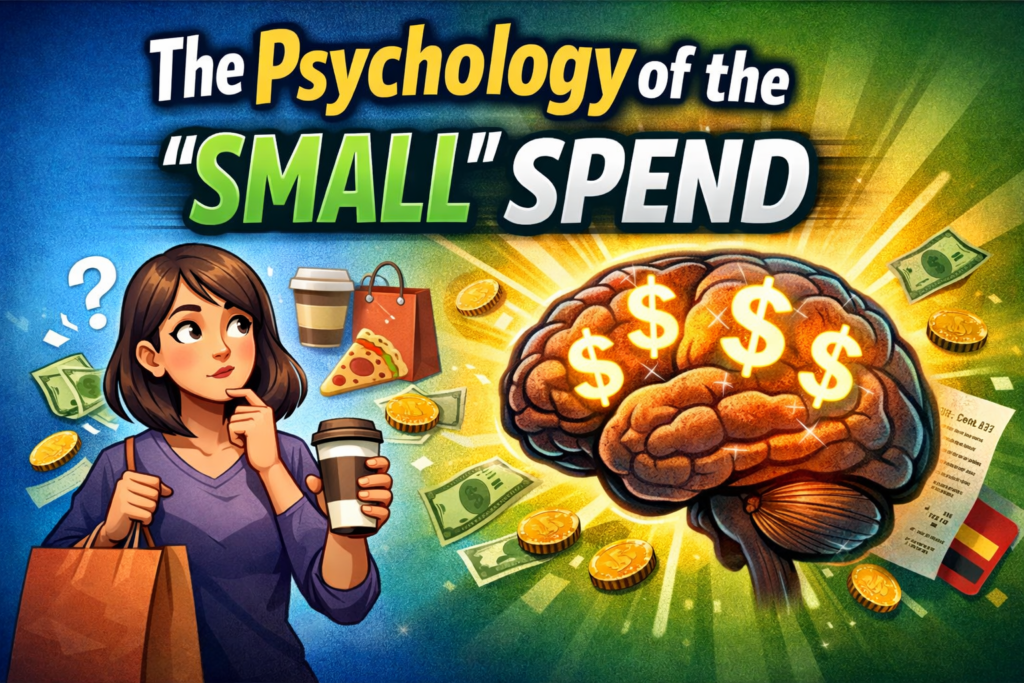
3. The “Just This Once” Fallacy: Human beings are terrible at predicting future behavior. A $12 gourmet sandwich for lunch is framed as a rare treat. But “just this once” has a sneaky way of becoming “every Tuesday,” then “whenever I’m busy,” and finally, the new normal. We fail to compound the cost over time in our minds.
4. Lifestyle Creep (The Drip-Feed Version): As income rises, small upgrades become standard. The regular coffee becomes a vanilla oat milk latte. The packed lunch becomes a meal-prep subscription, then a delivery app. Each step feels like a minor, deserved upgrade, but collectively, they inflate your baseline cost of living, leaving no room for savings and pushing you toward credit when unexpected costs arise.
The Math of a Thousand Cuts: From Daily Drip to Debt Ocean
The psychology sets the stage, but the math seals the fate. Let’s move from theory to cold, hard numbers.
The Classic Example: The Daily Coffee. The $5 daily coffee is a cliché for a reason. It’s a perfect case study.
- Daily: $5
- Weekly (5 days): $25
- Monthly: ~$110
- Yearly: $1,300
Suddenly, that “small” daily habit costs over a thousand dollars a year. But the real danger isn’t the $1,300 you spent. It’s the opportunity cost—what that money could have become if saved or invested instead. If that $110 per month were invested in a broad-market index fund with an average annual return of 7%:
- After 10 years: ~$19,000
- After 20 years: ~$58,000
- After 30 years: ~$136,000
Your coffee habit didn’t just cost you $1,300 a year; it potentially cost you a six-figure retirement nest egg. This is the power of compounding in reverse—it works against you just as fiercely as it can work for you.
The Modern Ecosystem of Micro-Spending: Today, it’s rarely just coffee. It’s a constellation of small leaks:
- Subscription Creep: $9.99 for streaming, $14.99 for music, $9.99 for cloud storage, $39.99 for a gym you rarely visit. Individually manageable, collectively they can easily surpass $100/month—often on auto-pay, forgotten and unexamined.
- Food & Convenience: The $15 lunch delivery (vs. a $3 packed lunch), the $8 afternoon snack, the $30 “quick” grocery delivery fee and tip. Food is the single largest category where small daily decisions explode into a massive monthly outflow.
- Digital Impulses: In-app purchases, one-click “Buy Now” buttons, limited-time offers. These are designed to bypass deliberation entirely.
- The “Small” Premium: The upgraded shipping to get it tomorrow, the extra insurance on a rental, the brand-name item over the nearly-identical generic. These marginal costs feel trivial at the moment of decision.
The Bridge to Debt: The Cash Flow Squeeze. Here is the critical pivot point. When your small daily expenses inflate your lifestyle to consume most or all of your take-home pay, you have created a precarious financial position with zero margin of safety. You are living paycheck-to-paycheck by choice, not necessity. Then, when life inevitably happens—a $400 car repair, a medical co-pay, a broken appliance—you have no cash to cover it. The only option becomes debt.
You put the emergency on a credit card. The balance, say $500, doesn’t get paid off because your budget is already stretched taut by your daily habits. The next month, another small expense becomes a card charge. The balance grows. You make minimum payments, but you’re still spending $15 on lunch daily. Now, you’re not only paying for your current life, you’re slowly financing your past life, plus interest.
The Psychology of the “Small” Spend
Once the initial bridge to debt is crossed, a dangerous cycle begins:
- Interest: The Invisible Tax: Credit card interest, often 20-29% APR, transforms past small pleasures into a present-day burden. That forgotten $100 dinner from six months ago now costs $120 and counting. Your money now works for the bank, not for you.
- Minimum Payment Mirage: Minimum payments are designed to keep you in debt for decades. On a $5,000 balance at 24% APR, paying the minimum (typically ~2-3%) could take over 30 years to pay off and cost more than $10,000 in interest. You feel like you’re making progress, but you’re running on a treadmill.
- Reduced Financial Flexibility: Debt payments become a new, non-negotiable monthly expense. This further reduces your cash flow, making you even more vulnerable to the next unexpected expense, which leads to more debt. It’s a vicious, self-perpetuating cycle.
- The Psychological Toll: The stress of debt affects decision-making, leading to short-term thinking. It can erode mental health, relationships, and the ability to plan for the future. You may feel trapped, making it harder to see a way out or to muster the discipline to change daily habits.
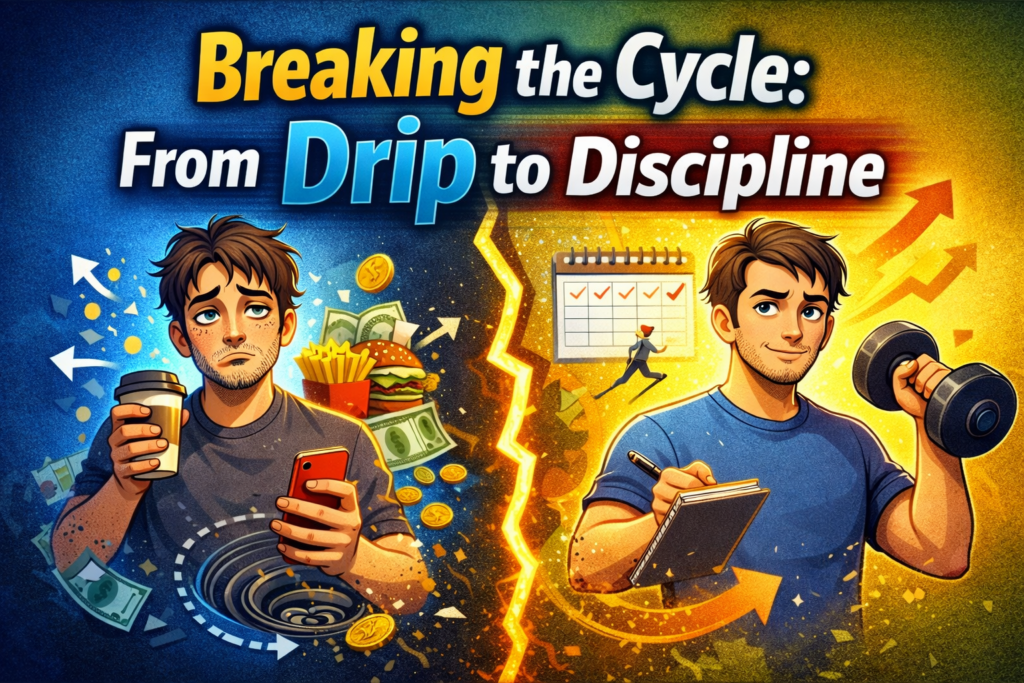
Breaking the Cycle: From Drip to Discipline
Escaping this trap requires a two-pronged attack: a shift in mindset and a system of actionable steps.
Phase 1: The Audit – Shining a Light on the Drips.
You cannot manage what you do not measure. For one month, track every single expense. Use an app, a spreadsheet, or a notebook. No judgment, just data. Categorize everything. You will be shocked. The goal is to move spending from the unconscious to the conscious. Identify your top three “drip” categories (e.g., eating out, subscriptions, rideshares).
Phase 2: The Mindset Shift – Redefining “Small.”
- Adopt the “Yearly Lens”: Before any non-essential purchase, mentally multiply it. “Is this $20 worth $240 a year to me? Would I hand over $240 for this right now?”
- Embrace the “Latte Factor” Concept (Proactively): Instead of seeing it as a deprivation, identify your personal “latte factors” and decide to redirect them. Automatically transfer that potential spending into a savings or investment account before you can spend it. Make saving frictionless and spending slightly harder.
- Implement a 24-48 Hour Rule: For any non-essential purchase over a set amount ($25, $50), enforce a waiting period. The urge to buy is often transient.
Phase 3: The System Build – Creating a Sustainable Structure.
- Budget with Purpose: Use a zero-based budget (every dollar has a job) or the 50/30/20 rule (Needs/Wants/Savings-Debt Repayment). Allocate a specific, reasonable amount for “guilt-free” discretionary spending. This is crucial—total deprivation leads to relapse.
- Attack the Subscriptions: Conduct a quarterly subscription audit. Cancel anything you don’t actively use and get value from weekly.
- The Cash or Debit Envelope System: For your most leaky categories (food, entertainment), use a set amount of cash or a dedicated debit account for the month. When it’s gone, it’s gone. This reinstates the “pain of paying.”
- Automate the Important Things: Pay yourself first. Set up automatic transfers to savings, investments, and debt repayment the day you get paid. What remains is what you can truly spend.
- Tackle Debt Aggressively: Use either the Debt Snowball (pay smallest balances first for psychological wins) or Debt Avalanche (pay highest-interest debt first for mathematical efficiency) method. Choose one and commit. Every dollar saved from cutting a small expense should be directed here.
The Path Forward: Building Wealth, Not Debt
The transformation is not about never enjoying a coffee or a meal out again. It is about intentionality. It is the difference between living a life where money controls you—where small impulses dictate your long-term security—and one where you control your money.
When you plug the small leaks, you accomplish more than just stopping the drain. You begin to fill the reservoir. The money that once evaporated into a thousand small things now starts to pool. It becomes an emergency fund that breaks the debt cycle. It becomes a down payment on a house. It becomes contributions to a retirement account that compound in your favor.
Long-term debt, for many, is not born from a single reckless decision, but from a thousand unthinking ones. Conversely, long-term wealth is rarely built from a single windfall, but from a thousand small, disciplined choices repeated over time. It is the daily decision to pack a lunch, to brew coffee at home, to pause before clicking “buy,” and to consciously direct your financial resources toward the life you truly want to build.
The power lies in recognizing that there is no such thing as a financially neutral small expense. Every dollar is a soldier. You get to choose which army it fights for: the army of instant gratification that leaves you with nothing but clutter and debt, or the army of your future self, building a fortress of security, freedom, and possibility. Choose your soldiers wisely, one day at a time.
FAQ: Small Expenses and Long-Term Debt
Q: I don’t buy coffee out. Are there other “small expenses” I might be missing?
A: Absolutely. Modern small expenses are often digital and recurring: streaming services, app subscriptions, premium memberships (Amazon Prime, etc.), in-game purchases, convenience fees for delivery or booking, ATM fees, bottled water/snacks at gas stations, and unused insurance or warranty add-ons.
Q: Is it really that bad to use credit cards for daily expenses if I pay them off every month?
A: If you pay the statement balance in full every month, you avoid interest and can benefit from rewards. This is a optimal strategy. However, it requires extreme discipline and a budget. The danger is that the ease of swiping can lead to overspending beyond what you can actually pay off, slipping into the debt trap. For many, using a debit card or cash for daily spending is a safer behavioral guardrail.
Q: How can I tell if my small spending is a problem?
A: Key warning signs: You have little to no savings (less than one month’s expenses). You are unable to pay your credit card balance in full each month. You aren’t contributing to retirement savings. You feel stress or anxiety about money. An unexpected $500 expense would force you to use credit. If any of these are true, your daily spending is likely undermining your financial foundation.
Q: What’s the single most effective first step I can take?
A: Track your spending for one full month. No changes, just complete awareness. This data is the non-negotiable foundation for any real change. You must know where your money is actually going before you can redirect it.
Q: I’ve cut back, but I still have old debt. Where do I start?
A: Stop adding to it first. Switch to using cash/debit for daily life. Then, list all your debts (balance, interest rate). Choose a payoff method (Snowball or Avalanche). Attack the smallest or highest-interest debt with every extra dollar you’ve freed up from cutting daily expenses. Consider calling creditors to ask for a lower interest rate. The key is consistency.