We’ve all done it. Scrolled through a feed of impossibly perfect lives and felt that small, sharp pang of inadequacy. Chosen the more photogenic cocktail over the one we truly craved. Polished a story for a party, embellishing our job title or the exotic-ness of our vacation. We’ve lingered over a witty tweet, crafting and re-crafting it for maximum impact. The audience for these performances is often vague—a constellation of acquaintances, former classmates, colleagues, and, overwhelmingly, strangers. In the digital amphitheater of modern life, the urge to impress people we don’t know has moved from a occasional social nuance to a dominant, draining force. But what is the real, cumulative cost of this pursuit? The invoice is subtle, paid not in one lump sum but in incremental deductions from our emotional well-being, our finances, our relationships, and our very sense of self.
The Stage is Set: Why Strangers Matter More Than Ever
To understand the price, we must first understand the stage. Historically, our social standing was negotiated within relatively stable, tangible communities—our village, our church, our extended family. Reputation was earned over a lifetime among people who knew our context. The modern world, particularly the digital one, has shattered this.
We now live in what sociologists call a “context-collapsed” environment. Our social media profiles are viewed simultaneously by our mother, our boss, a friend from high school, and thousands of people we’ve never met. In this flattened landscape, the stranger’s gaze gains extraordinary power. A stranger has no context. They judge solely based on the curated exhibit you present: the highlight reel of successes, the perfectly framed moments of joy, the pithy observations. They are a blank slate onto which we project our desired identity, and their validation—in the form of likes, shares, and follows—feels like pure, objective proof of our worth.
This is compounded by the “comparison paradox.” We no longer compare ourselves to our neighbors; we compare our behind-the-scenes to everyone else’s greatest hits, sourced from a global pool of billions. The stranger on a beach in Bali, the entrepreneur flaunting a new sports car, the home chef plating a Michelin-star-looking meal—they become the irrelevant but relentless benchmarks for our own lives.
The driver is a primal one: social belonging. In a hyper-mobile, often anonymous world, signaling our place in a tribe—be it the tribe of the successful, the cultured, the adventurous, or the witty—feels like a survival mechanism. Impressing strangers becomes a shortcut to belonging, a way to scream into the void, “I am valuable! I am one of you!”
The Itemized Bill: Breaking Down the Costs
1. The Emotional & Psychological Tax: Anxiety and the Hollow Self
The most profound cost is internal. The performance for strangers requires a constant splitting of consciousness. One part of you experiences the moment; the other part immediately evaluates its potential—Is this Instagrammable? How will this sound as a story? This psychic divide is the enemy of presence and genuine joy. A sunset becomes a photo op, a intimate conversation becomes potential anecdotal fodder, a personal triumph is incomplete until it’s publicly validated.
This breeds a specific, low-grade anxiety: “Impression Anxiety.” It’s the worry that your curated self is not holding up, that your metrics are inadequate, that you are fading into the background of the global feed. It fuels the Fear of Missing Out (FOMO) and its sinister twin, the Fear of Being Forgotten (FOBF). The dopamine hit of external validation is real but fleeting, creating a cycle of craving and withdrawal that mirrors addiction. Self-worth becomes a stock market, fluctuating with the daily metrics of engagement.
Ultimately, this erodes authenticity. When your identity is forged in the gaze of the unknown other, you risk losing touch with what you actually like, want, and believe. The self becomes a brand, and the CEO of that brand is a committee of strangers. The question “Who am I?” is answered not by introspection, but by analytics: “What version of me gets the best response?” The result is a hollow self, expertly decorated but fundamentally empty.
2. The Financial Drain: Conspicuous Consumption in the Digital Age
Thorstein Veblen’s 1899 theory of “conspicuous consumption” was never more relevant. We still buy things to signal status, but the audience has exploded, and the items have morphed. The goal is no longer just to impress the Joneses next door; it’s to impress the algorithm and the anonymous scrollers who see its output.
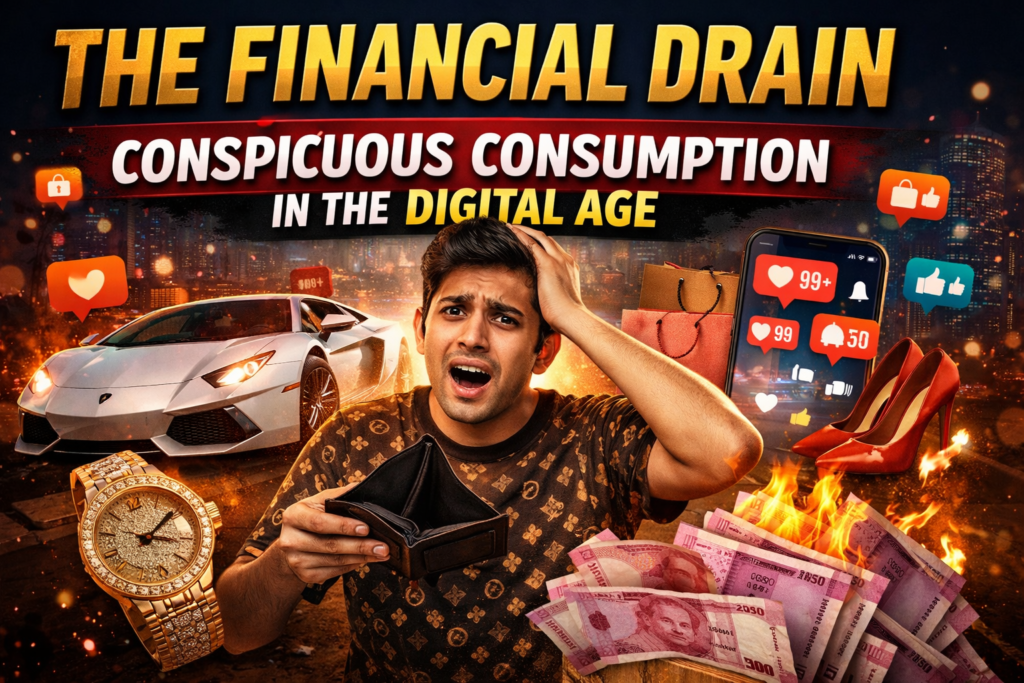
This manifests in what we can call “Instagrammable Debt.” It’s the pressure to:
- Take vacations chosen for their aesthetic (that overwater bungalow, that hot air balloon at dawn) rather than for genuine desire for the destination.
- Buy designer items or trendy streetwear with prominent logos, less for quality and more for the recognizability in a photo.
- Dine at expensive, hyped restaurants where the food is secondary to the ambiance and the “plating potential.”
- Live in (or rent for a weekend) spaces that are architected for backgrounds, not comfort.
The cost is literal debt, savings never accumulated, and financial stress—all incurred for the applause of people whose names we don’t know. We are spending real resources to purchase temporary, intangible social capital in a market that resets every 24 hours.
3. The Relational Cost: Neglecting the Intimate for the Impressive
Time and emotional energy are finite. The currency we spend crafting our image for strangers is directly deducted from our investments in deep, intimate relationships. It’s easier to post a generic “Happy Anniversary!” photo for the crowd than to have a difficult, vulnerable conversation with your partner. It’s easier to broadcast your support for a cause in a story than to show up for a friend in quiet crisis.
We begin to perform our relationships rather than live them. A family gathering becomes a content shoot. A friend’s wedding is experienced through the lens of your own potential photos. The pressure to present a perfect partnership, perfect parenthood, or perfect friendship to the outside world can strain those very bonds, as the messy, real, unphotogenic work of love is sidelined for the polished performance.
4. The Cost in Time and Attention: Our Most Precious Resources
The hours are staggering. The time spent curating feeds, editing photos, crafting captions, researching “viral” trends, and simply scrolling to monitor the competition is time stolen from hobbies that bring private joy, from learning skills that offer real growth, from rest, from reflection, from simply being bored (a crucial state for creativity). We are outsourcing our attention—the very fabric of our lived experience—to the court of public opinion. Our life becomes content, and we become its harried, unpaid manager.
The Turning Point: Recognizing the Debt
The bill comes due in moments of quiet exhaustion: the burnout from perpetual performance, the emptiness after a “perfect” trip remembered only through a camera roll, the loneliness felt amidst a thousand followers, the shock of a credit card statement filled with purchases that brought no lasting satisfaction.
Recognizing the debt is the first step toward solvency. It often starts with a simple, uncomfortable question: “Who am I doing this for?” Ask it at the moment of purchase, before you post, as you rehearse a story. If the honest answer is “For people whose approval doesn’t truly matter to my core well-being,” you’ve identified the tax.
Toward an Authentic Economy: Investing in the Real
Canceling this debt doesn’t mean renouncing the world or social media. It means shifting from an economy of impression to an economy of authentic experience. It’s a conscious reallocation of resources.
- Invest Emotionally in Context: Redirect the energy spent on broadcasting into deepening a few, key relationships. Have conversations that are off the record. Share failures as openly as successes. Seek validation from people who see your uncurated self and love you for it.
- Spend Financially on Experience, Not Evidence: Buy the cozy couch that won’t photograph well but is perfect for reading. Choose the holiday that intrigues you, even if it’s not a “top 10” destination. Value the utility and private joy of an item over its signaling power.
- Reclaim Your Time and Attention: Institute digital boundaries. Engage in activities with no documentary potential—a walk without a phone, a hobby you’re bad at but enjoy, reading a physical book. Let moments be yours alone.
- Embrace the “Unimpressive” and Mundane: Find glory in the unshareable. The quiet morning coffee, the struggle of learning, the messy kitchen after a meal made with love. This is the soil where a true self grows, away from the performative greenhouse.
Conclusion: The Wealth of Being Unseen
The ultimate price of impressing strangers is the potential loss of your own life, lived on your own terms. It is a bargain where you trade authenticity for applause, depth for breadth, and substance for silhouette.
True wealth, in a human sense, is not measured in the admiring glances of passersby, but in the depth of our connections, the clarity of our self-knowledge, and the quiet contentment of a life that feels genuinely our own. It is found in the courage to be unimpressive—to be flawed, inconsistent, private, and real. In a world screaming for attention, the most radical and rewarding act may be to turn away from the crowd, to stop performing for the strangers in the digital balcony, and to finally, fully, show up for the only life you’re guaranteed: your own. The currency of that life is not likes, but moments of unfiltered presence. And that is a fortune no stranger can ever give, or take away.