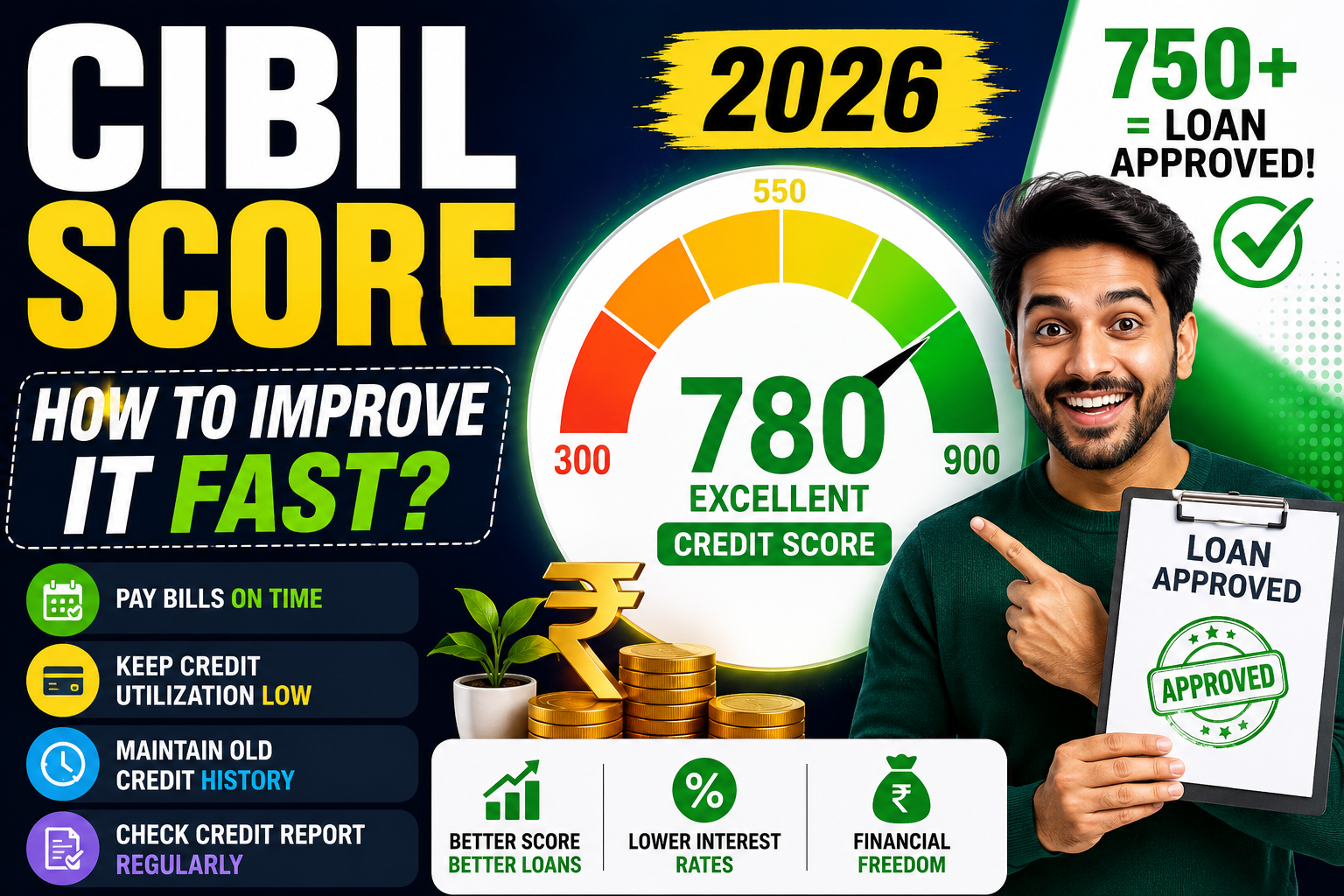
If you’ve ever applied for a personal loan, home loan, credit card, or car loan, you’ve probably heard about your CIBIL score. This 3-digit number can decide whether your loan gets approved, how much interest you’ll pay, and even your credit card limit.
A strong CIBIL score can save you thousands of rupees in interest over the years. The good news is that even if your score is low, it can often be improved with consistent financial habits.
In this guide, you’ll learn what a CIBIL score is, how it’s calculated, what score is considered good, and the fastest ways to improve it in 2026.
Quick Answer: A CIBIL score ranges from 300 to 900. Generally, 750+ is considered a good score by many lenders.
What Is a CIBIL Score?
A CIBIL Score is a three-digit credit score issued by TransUnion CIBIL, one of India’s leading credit bureaus. It reflects how responsibly you’ve managed borrowed money in the past.
The score helps banks and financial institutions evaluate your creditworthiness.
Score Range: 300–900
The higher your score, the better your chances of loan approval.
CIBIL Score Range Explained
| CIBIL Score | Rating |
|---|---|
| 300–549 | Poor |
| 550–649 | Fair |
| 650–699 | Average |
| 700–749 | Good |
| 750–900 | Excellent |
A score above 750 is generally preferred for many loans and premium credit cards.
Why Is CIBIL Score Important?
Your credit score affects much more than loan approval.
Benefits of a High CIBIL Score
- Faster loan approval
- Better interest rates
- Higher credit card limits
- Easier home loan eligibility
- Better chances of pre-approved offers
For example, two people earning the same salary may receive different loan offers simply because their CIBIL scores differ.
How Is CIBIL Score Calculated?
Your score is based on several financial behaviors—not your salary.
| Factor | Importance |
|---|---|
| Payment History | 35% |
| Credit Utilization | 30% |
| Credit Age | 15% |
| Credit Mix | 10% |
| New Credit Enquiries | 10% |
Let’s understand each one.
1. Payment History (Most Important)
Always pay your EMIs and credit card bills on time.
Even one missed payment can reduce your score significantly.
Best Practice: Enable AutoPay or reminders.
2. Credit Utilization Ratio
This means how much of your credit limit you’re using.
Example
| Credit Limit | Spending | Utilization |
|---|---|---|
| ₹1,00,000 | ₹20,000 | 20% |
| ₹1,00,000 | ₹80,000 | 80% |
Experts generally recommend keeping utilization below 30%.
3. Credit Age
Older credit accounts help build trust.
Avoid closing your oldest credit card unless necessary.
4. Credit Mix
Having different types of credit (such as home loan, car loan, or credit card) may improve your credit profile over time.
Don’t take unnecessary loans just for this purpose.
5. Hard Enquiries
Every time you apply for multiple loans or credit cards, lenders perform a hard inquiry.
Too many inquiries in a short period can negatively impact your score.
How to Improve Your CIBIL Score Fast
Here are the most effective strategies.
1. Pay Every Bill Before Due Date
This is the fastest long-term improvement.
Use:
- Auto debit
- UPI reminders
- Calendar alerts
2. Keep Credit Utilization Under 30%
If your limit is ₹50,000, try to keep spending below ₹15,000.
Lower utilization often improves credit health.
3. Don’t Miss EMI Payments
Even a small EMI matters.
Late payments remain in your credit history for years.
4. Avoid Multiple Loan Applications
Applying to five banks at once can hurt your score.
Compare offers first, then apply selectively.
5. Increase Your Credit Limit
If your bank offers a higher limit without requiring extra spending, it can reduce utilization percentage.
Example:
- Old Limit: ₹50,000
- New Limit: ₹1,00,000
Spending ₹20,000 now equals only 20% utilization.
6. Keep Old Credit Cards Active
A longer credit history is generally beneficial.
Use your oldest card occasionally for small purchases and pay it in full.
7. Check Your Credit Report for Errors
Sometimes reports contain mistakes such as:
- Wrong late payment
- Closed account showing active
- Duplicate loan entry
Correcting errors may improve your score.
8. Pay Outstanding Dues Completely
Settling overdue balances is much better than ignoring them.
The sooner you clear dues, the better.
9. Avoid Minimum Payment Trap
Credit card statements often show:
- Minimum Due
- Total Due
Always try paying the Total Due to avoid high interest and improve your credit profile.
10. Maintain a Healthy Credit Mix
A balanced borrowing history looks stronger than relying only on credit cards.
Again, avoid borrowing unnecessarily.
11. Don’t Become a Guarantor Lightly
If the borrower defaults, your credit profile may also be affected.
Only become a guarantor when you fully trust the borrower.
12. Be Patient
Credit improvement isn’t instant.
Consistent good behavior over several months usually produces better results.
How Long Does It Take to Improve CIBIL Score?
| Situation | Estimated Time |
|---|---|
| High utilization | 1–3 Months |
| Late payment recovery | 3–12 Months |
| Building new history | 6–18 Months |
| Major improvement | 6–12 Months |
Results vary depending on your credit history.
Common Reasons Your Score Drops
- Missing EMI
- Paying credit card late
- Using 90%+ credit limit
- Multiple loan applications
- Loan default
- Settled loan status
Avoiding these habits protects your score.
Example: 620 to 760 Score Journey
Imagine Aman has:
- Score: 620
- Credit Card Limit: ₹60,000
- Spending: ₹45,000
Improvements
- Reduced spending to ₹15,000
- Paid bills before due date
- Stopped unnecessary loan applications
- Cleared overdue balance
Within several months of consistent behavior, his score may improve significantly.
CIBIL Score Myths
Myth 1: Salary Increases CIBIL
False. Salary does not directly determine your score.
Myth 2: Checking Your Own Score Reduces It
False. Your own credit check is usually a soft inquiry.
Myth 3: Closing Credit Cards Improves Score
Not always. Closing old cards can shorten your credit history.
Myth 4: More Loans Mean Better Score
Wrong. Responsible repayment matters more than the number of loans.
FAQs
What is a good CIBIL score in India?
A score of 750 or above is generally considered good.
Can I improve my score in 30 days?
You may see improvement if high credit utilization is the main issue, but major improvements usually take longer.
Does paying minimum due improve CIBIL?
It’s better than missing payment, but paying the full amount is usually the healthier habit.
Is 700 a good score?
Yes, it’s considered good, though 750+ may provide better lending opportunities.
How often should I check my CIBIL score?
Checking every 2–3 months is generally sufficient for most people.
Final Thoughts
Your CIBIL score is one of the most important financial numbers in your life. A higher score can lead to easier approvals, lower interest rates, and better financial opportunities.
The simplest formula is:
- Pay on time
- Keep utilization below 30%
- Avoid unnecessary loan applications
- Monitor your credit report regularly
Small financial habits today can create a much stronger credit profile over the long term.