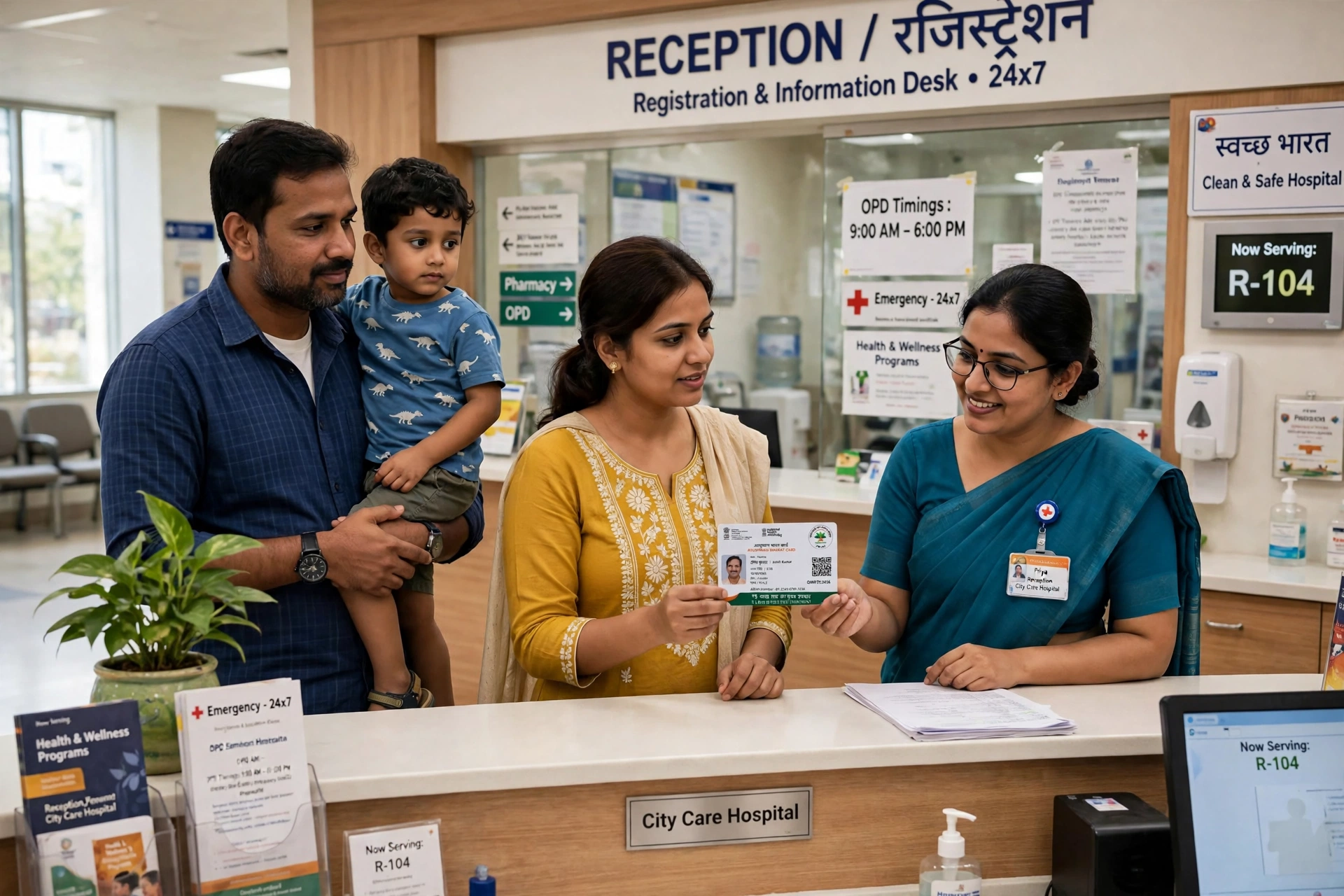
Most people buy health insurance and then forget about it. The policy document goes into a drawer, the premium gets auto-debited every year, and life goes on. Then one day there is a hospital admission, and suddenly the family is trying to understand terms like pre-authorisation, waiting period, and co-payment while standing at a billing counter. That is the worst possible time to learn how a claim works.
A health insurance claim in India is not complicated once you know the two routes and the few documents that matter. The trouble usually comes from small gaps: a hospital that is not in the insurer’s network, a discharge summary that does not mention the right diagnosis, or a claim filed after the deadline. This article walks through the whole process in plain language, so that when you need it, you are filing a claim instead of figuring one out.
Cashless Claim vs Reimbursement: The Two Routes
There are only two ways to claim, and the difference matters more than anything else in this article. In a cashless claim, you get treated at a network hospital, the insurer settles the bill directly with the hospital, and you pay only the parts the policy does not cover. In a reimbursement claim, you pay the full bill yourself first and then ask the insurer to pay you back.
Cashless is almost always easier, because it removes the biggest stress of a hospital stay: arranging a large sum of money at short notice. A surgery that costs ₹2 lakh is far less frightening when the insurer is paying the hospital directly. But cashless only works at network hospitals, which are hospitals that have a tie-up with your insurer or its third-party administrator, the TPA. Before any planned treatment, check the insurer’s network list for hospitals near you. For an emergency, go to the nearest good hospital first and sort out the network question second, because treatment comes before paperwork.
Reimbursement is what you use when the hospital is not in the network, or when a cashless request has been denied for some reason. It works, but it needs more discipline from you: every bill, every receipt, every report, kept in order. Many reimbursement claims are delayed not because the treatment was not covered, but because a document is missing or a bill is not in the right format.
Cashless Claim, Step by Step
For a planned admission, the process starts a few days before you go in. Inform your insurer or TPA about the admission, the hospital, and the expected treatment. The hospital’s insurance desk will usually handle the form, called a pre-authorisation request, which asks the insurer to approve a certain amount for the treatment. The insurer may approve the full amount, approve part of it, or ask for more information, such as test reports that justify the procedure.
Once approval comes through, you get admitted, the treatment happens, and at discharge the hospital sends the final bill to the insurer. You pay the non-covered items: things like registration charges, certain consumables, and any co-payment or deductible your policy has. Then you sign the discharge papers and go home. Keep copies of everything anyway, because if the insurer later questions part of the bill, you want your own set of papers.
For an emergency admission, the sequence is compressed but the idea is the same. The hospital informs the insurer, usually within 24 hours of admission, and files the pre-authorisation request while treatment is under way. You or a family member should carry the health insurance card, a photo ID, and the policy number to the hospital. If the hospital’s insurance desk says the insurer has not responded, do not wait silently. Ask what exactly is pending, and call the insurer’s helpline yourself. A claim stuck in “pending documents” is often just one report away from approval.
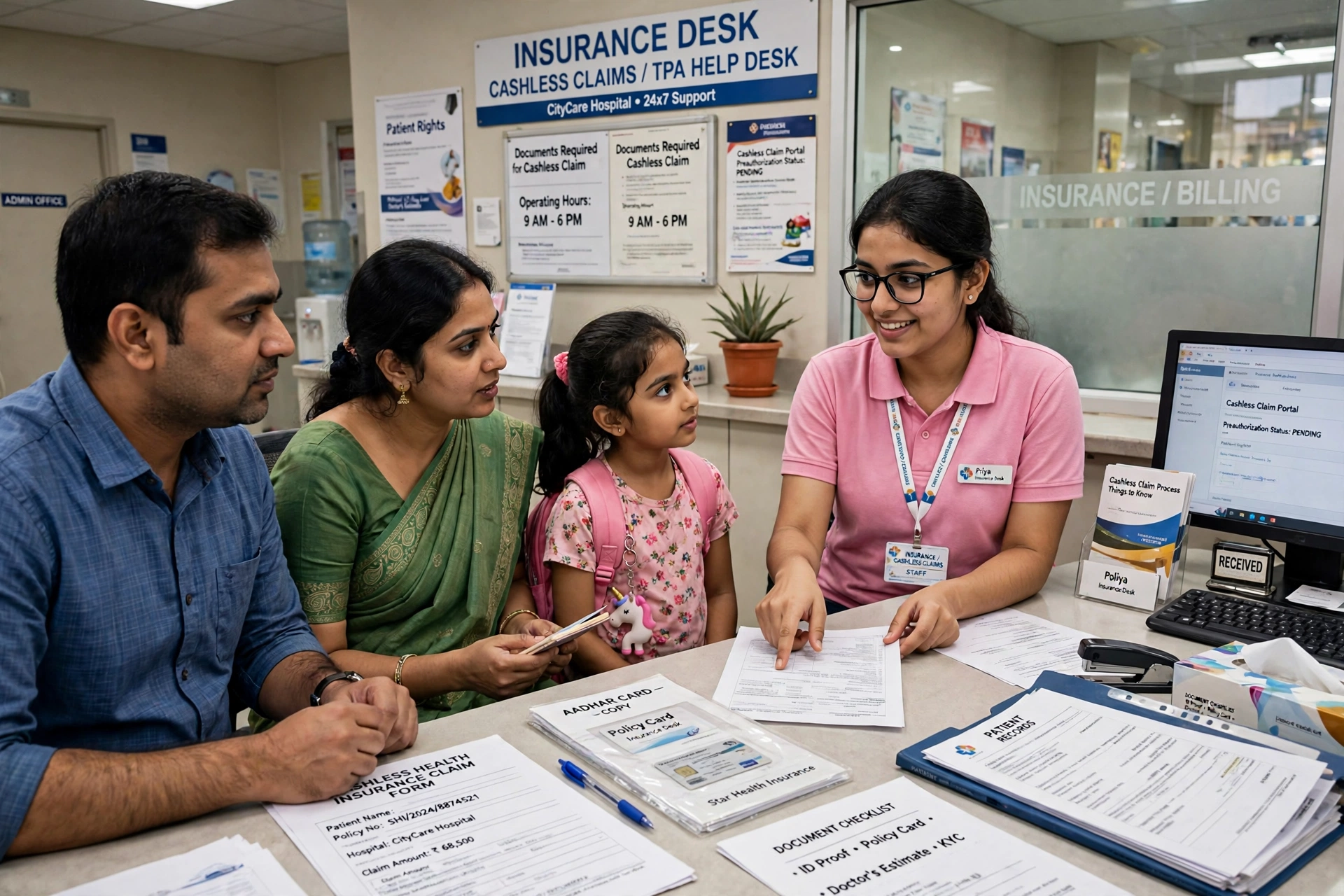
Reimbursement Claim, Step by Step
If you paid the bill yourself, the clock starts at discharge. Most insurers ask you to inform them within 24 to 48 hours of admission or discharge, and to submit the full set of documents within 15 to 30 days of discharge. Check your own policy for the exact numbers, because missing a deadline is one of the simplest reasons for a rejection, and also one of the most avoidable.
The standard document set looks like this:
| Document | Why the insurer asks for it |
|---|---|
| Claim form, filled and signed | Your formal request, with bank details for payment |
| Discharge summary | Proof of admission, diagnosis, and treatment given |
| Original hospital bills and receipts | Proof of what was actually paid |
| Doctor’s prescriptions and consultation notes | Proof that the treatment was medically necessary |
| Investigation reports: blood tests, scans, X-rays | Evidence supporting the diagnosis |
| Pharmacy bills with prescriptions | Medicines claimed must match a prescription |
| Cancelled cheque or bank passbook copy | So the payment goes to the right account |
Two habits make reimbursement much smoother. First, collect originals as you go, not at discharge when everyone is tired and eager to leave. Ask for an itemised bill, not just a lump-sum total, because insurers settle line by line and question lump sums. Second, photograph or scan every document before you hand it over. If a courier loses a file or an upload fails, you have a backup, and that backup has saved more claims than most people realise.
Why Claims Get Rejected, and How to Avoid It
Rejections feel personal, but most of them fall into a handful of patterns, and nearly all of them can be avoided with a little attention before admission.
The waiting period is the most common surprise. Many policies do not cover certain illnesses for the first two to four years, and pre-existing diseases usually have their own waiting period of two to three years. If you were treated for diabetes or high blood pressure before buying the policy and did not disclose it, the insurer can reject the claim entirely. The fix is boring but essential: disclose your medical history honestly when you buy the policy, and read the waiting-period clause for the specific illness you are claiming for.
The second pattern is non-disclosure at the time of buying. A policy bought without mentioning an existing condition is a policy built on shaky ground. Insurers check hospital records during large claims, and a mismatch between those records and your proposal form is grounds for rejection. Honesty at purchase time costs you nothing extra in most cases, and it protects the claim when it matters.
The third pattern is treatment that the policy does not cover. Cosmetic surgery, dental treatment, fertility treatment, and injuries from adventure sports are commonly excluded. So are some items inside a hospital bill: gloves, cotton, and other consumables are often not payable, which is why the final approved amount is frequently lower than the total bill. Ask the hospital insurance desk for an estimate of the non-payable portion before admission, so the difference does not surprise you at discharge.
The fourth pattern is paperwork gaps: a missing discharge summary, a pharmacy bill without a matching prescription, or a claim filed late. This is the most fixable category, and it is also the one where a calm, organised family member makes the biggest difference. If a document is genuinely unavailable, write to the insurer explaining why and asking what alternative they will accept, rather than simply leaving it out.
What to Do If Your Claim Is Rejected or Short-Settled
A rejection is not always the end of the story. Start by asking the insurer, in writing, for the exact reason, with the specific policy clause cited. Vague answers like “as per policy terms” are not enough. Once you have the reason, check it against your policy document. If the reason is a missing document, supply it and ask for reconsideration. If the reason is a misunderstanding of the diagnosis or treatment, ask your treating doctor for a written clarification and submit that.
If the insurer still refuses, you can escalate. First, the insurer’s grievance cell, then the Insurance Ombudsman, which handles complaints up to ₹50 lakh without any fee and without needing a lawyer. The ombudsman route is genuinely useful and far less intimidating than it sounds; many claims are settled at this stage once an independent eye looks at the file. Keep every email and letter, because a written trail is what turns a complaint from a phone argument into a case.
Short settlement, where the insurer pays less than the bill, deserves the same treatment. Ask for a line-by-line explanation of what was disallowed and why. Sometimes the gap is a consumables exclusion you cannot change. Sometimes it is a room-rent limit: if your policy covers a room up to ₹5,000 a day and you stayed in a ₹10,000 room, the insurer may proportionately reduce not just the room charges but also doctor and procedure charges linked to that room category. That single clause, called proportionate deduction, surprises many people. If your sum insured allows it, choose a room within your eligible category, or buy a policy without a room-rent cap in the first place.
Cashless, Reimbursement, or Both: Planning Ahead
The best time to prepare for a claim is before anyone falls ill. Keep a small folder, physical or digital, with your policy document, the TPA card, the insurer’s helpline number, and the list of network hospitals near your home and workplace. Share it with your spouse or a family member, because the person filing the claim is often not the person who bought the policy.
Review your sum insured once a year. Medical inflation in India runs well above general inflation, and a ₹5 lakh cover that felt generous five years ago may barely cover a major surgery today. A super top-up policy, which kicks in after a threshold, is often a cheaper way to raise your total cover than increasing the base policy, and it is worth considering if your family has a history of hospitalisation.
And remember that health insurance is only one part of the safety net. If you have dependents, the question of what happens to their income if you are not around is a different one, covered in our guide to term insurance versus health insurance and what your family actually needs. A health policy pays hospital bills. It does not replace income, and confusing the two leaves families exposed in exactly the situation they were trying to protect against.
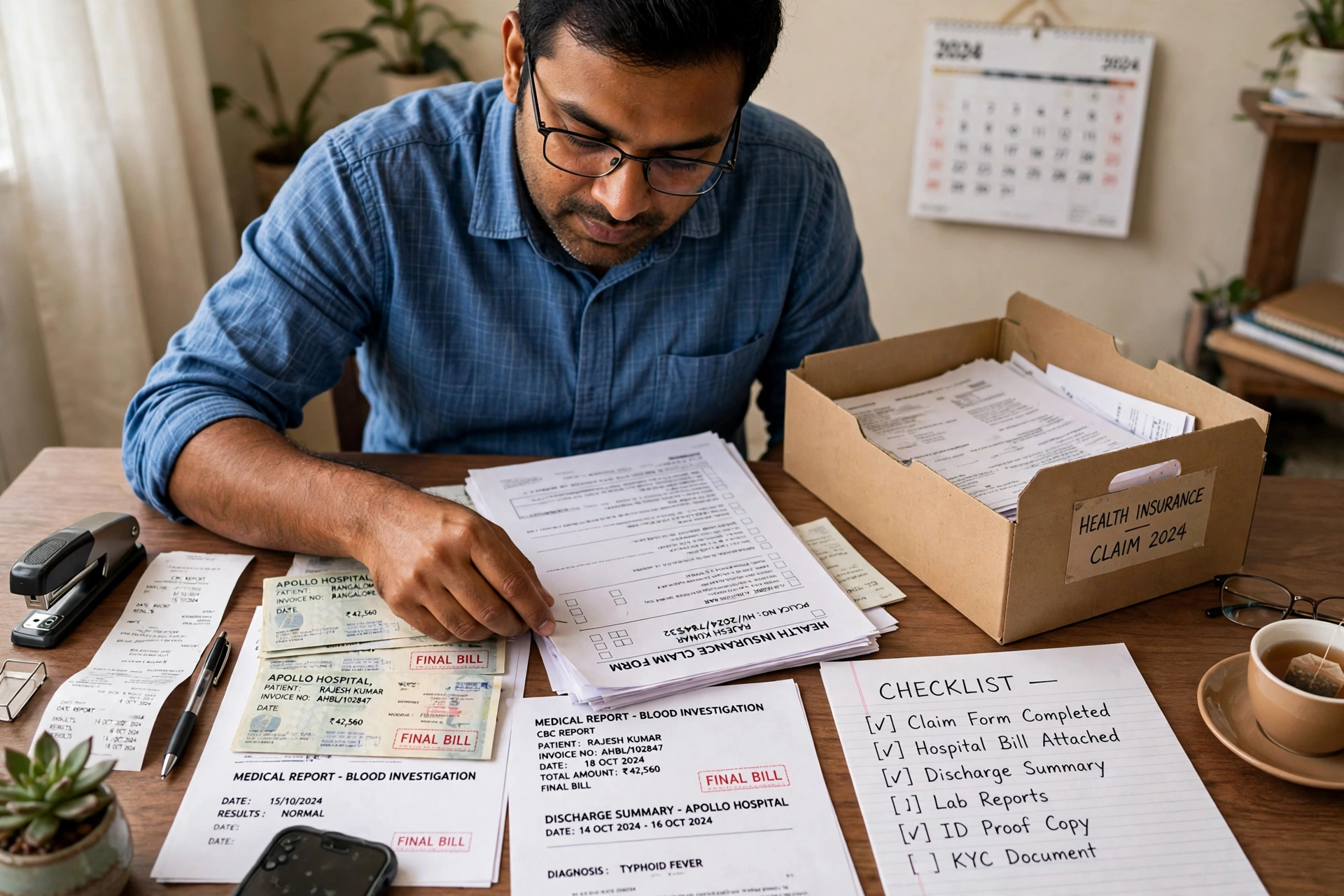
A Short Checklist for Your Next Claim
When admission is planned, inform the insurer early, confirm the hospital is in the network, and get the pre-authorisation approved before you go in. Carry your insurance card, photo ID, and policy number. At discharge, collect the itemised bill, the discharge summary, all prescriptions, and all reports, and photograph everything before submitting. For reimbursement, file within the deadline, keep copies of the claim form and courier receipt, and follow up in writing if you hear nothing within two weeks.
None of this is difficult, but all of it is easier before the crisis than during it. A health insurance policy only does its job if the claim goes through, and the claim goes through when the treatment is covered, the hospital is in the network or the documents are complete, and the story in the paperwork matches the treatment that actually happened. Get those three things right, and the policy you have been paying for quietly every year finally does the loud, useful thing you bought it for.