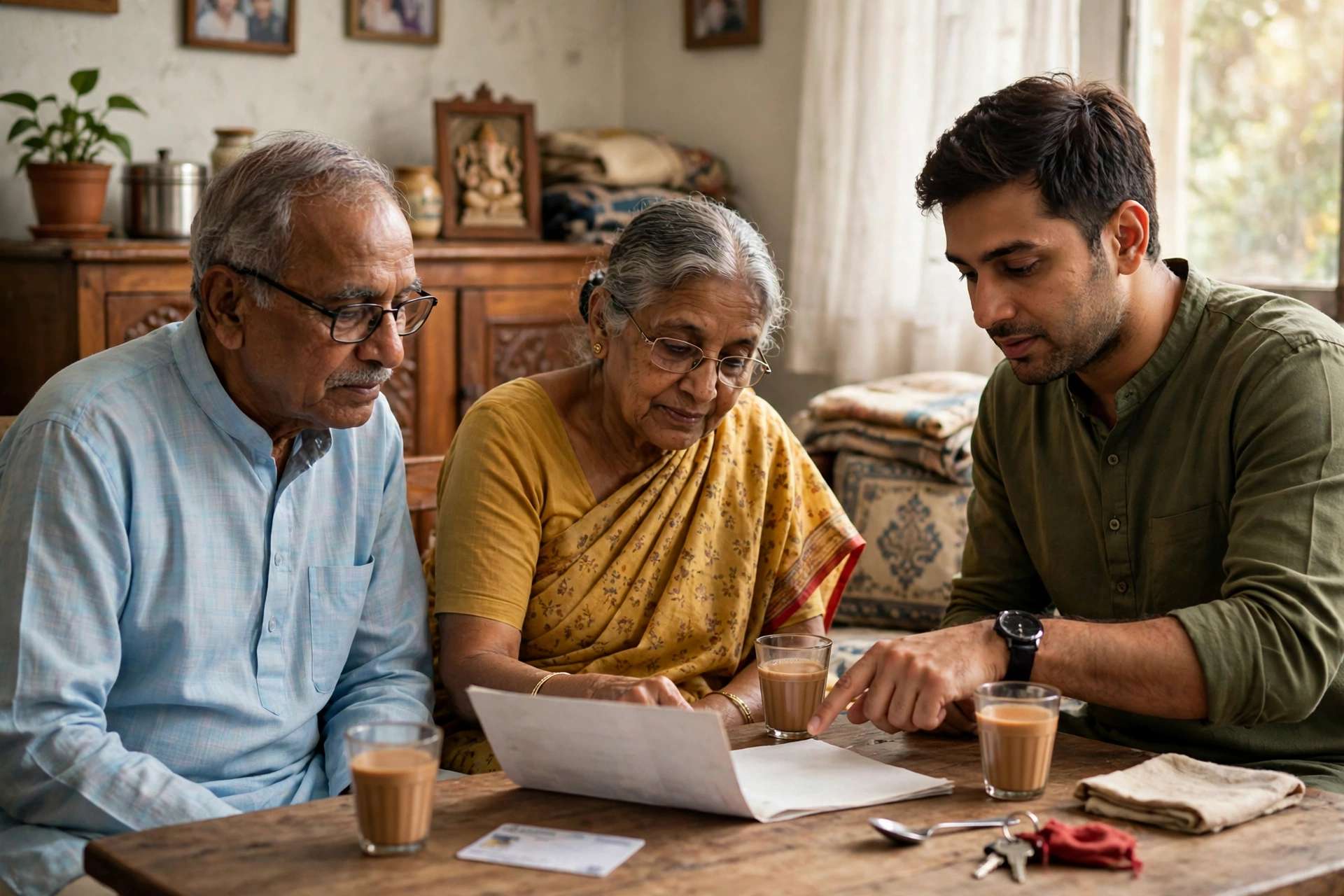
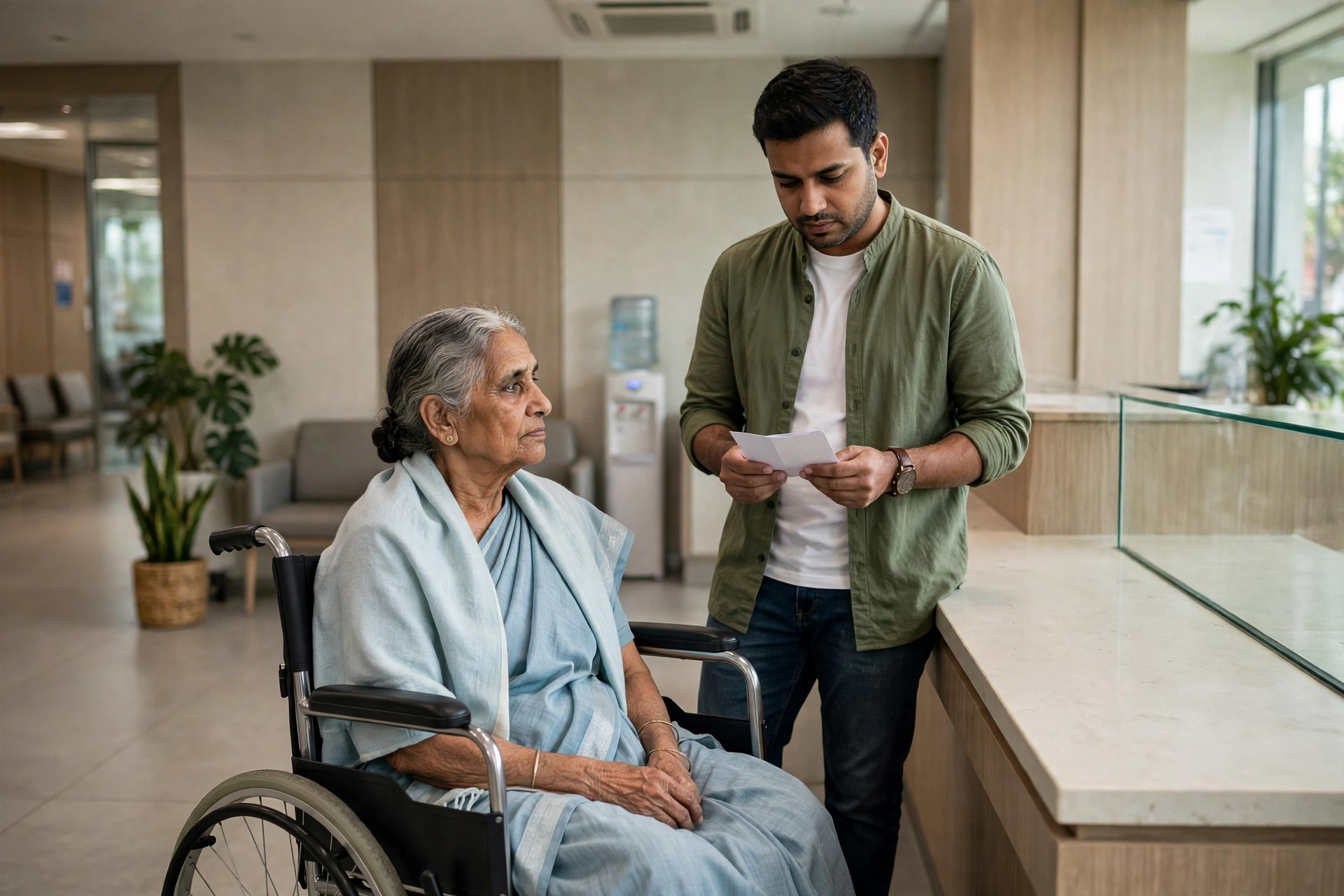
Most people buy their first health insurance policy for themselves. Then one day, usually somewhere in their thirties, the phone rings. A parent has been admitted to hospital. The bill at discharge is ₹2.5 lakh for a five-day stay. The family pays it from savings, and somewhere in that week, a question that should have been asked years ago finally gets asked: why didn’t we have health insurance for them?
It is a question worth asking earlier than most families do. A single hospitalisation for a parent in their sixties can cost more than a year of premiums. A cardiac procedure can cost ₹4-6 lakh. A knee replacement runs ₹2-3 lakh. And these are not rare events — they are the normal, expected medical expenses of ageing. The only real question is whether you plan for them in advance or pay for them when they arrive.
When to buy: the short answer is before you need it
The best time to buy health insurance for your parents is when they are healthy. That sounds obvious, but it is the single most important rule in this whole subject, because insurers price a policy based on health at the time of buying. A 55-year-old with no medical history can get a ₹10 lakh family floater or individual policy at a reasonable premium, with a waiting period of two to four years for pre-existing diseases. The same person at 65, after a diabetes diagnosis and a stent, will pay far more, face exclusions, or be refused altogether.
Most insurers will still sell a policy to a healthy person up to age 65 or even 70, but the premium rises steeply with every year of age. A ₹5 lakh individual policy for a 55-year-old might cost ₹12,000-18,000 a year. For a 65-year-old, the same cover can cost ₹25,000-40,000. For someone over 70, it can cross ₹50,000, and some insurers will insist on a medical test first.
That is why waiting is the expensive option. Every year you delay, the premium goes up and the chance of a new diagnosis — which then becomes a pre-existing condition with its own waiting period — goes up too. If your parents are in their fifties and healthy, this year is the cheapest year you will ever get the policy. It will not get cheaper next year.
There is also a practical point about waiting periods. Even after you buy, the policy does not cover everything from day one. Pre-existing diseases — diabetes, blood pressure, thyroid, asthma — typically carry a waiting period of two to four years, depending on the insurer. Some specific treatments, like cataract surgery or a knee replacement, have a waiting period of one to two years even for a healthy person. So a policy bought in an emergency is almost useless for that emergency. The cover has to be in place, and the waiting periods have to be running, well before the hospital visit happens.
How much cover is enough
The most common mistake families make is buying too little cover. A ₹5 lakh policy sounds like a lot of money until a hospital bill arrives. In a mid-range private hospital in a metro city, a five-day stay with surgery can easily touch ₹4-5 lakh. Add a second hospitalisation in the same year, and the cover is gone.
For parents in their late fifties or sixties, ₹10 lakh of cover is a sensible starting point for most families in a metro or tier-1 city. In smaller cities, where hospital costs are lower, ₹7.5-10 lakh still works. For parents over 70, ₹15-25 lakh is worth considering, especially since a super top-up policy can add large cover at a relatively small extra cost.
A super top-up is a separate, cheap policy that kicks in after a deductible — say ₹5 lakh — is crossed. If your base policy is ₹10 lakh and you add a ₹25 lakh super top-up with a ₹10 lakh deductible, you effectively have ₹35 lakh of cover for a fraction of what a single ₹35 lakh policy would cost. For older parents, this is often the smartest way to buy large cover without paying a huge premium.
One more number to think about: the room rent limit. Older policies and cheaper policies often cap room rent at 1% of the sum insured per day. On a ₹5 lakh policy, that is ₹5,000 a day. If your parent is admitted to a room that costs ₹8,000 a day, the insurer pays only in proportion — and that proportion applies not just to the room, but to the whole bill, including doctor fees and surgery charges. A policy with no room rent limit, or a high limit, avoids this trap entirely. When comparing policies, this one clause is worth more attention than the premium difference of a few thousand rupees.
Individual policy or family floater?
If your parents are both alive and roughly the same age, a family floater for the two of them is often cheaper than two individual policies. A floater of ₹10 lakh shared between two parents costs less than two ₹10 lakh individual policies, because the insurer assumes both parents will not need the full amount in the same year.
But there is a catch. If one parent has a major hospitalisation that uses up most of the floater, the other parent is left with very little cover for the rest of the year. For parents with very different health profiles — one healthy, one with a heart condition — separate individual policies can be safer, because one person’s claims do not eat into the other’s cover.
What about adding parents to your own family floater? It is tempting, because it looks convenient, and some employers offer it. But it is usually a bad idea. The premium for a floater is driven by the oldest member, so adding a 62-year-old parent to your policy can double or triple the premium for the whole family. And again, one hospitalisation for a parent can exhaust the shared cover that your spouse and children also depend on. Keeping parents on a separate policy — their own floater or individual policies — protects everyone.
What about your parents’ employer or government cover?
Many parents who worked in government service, public sector banks, or large companies have some form of retiree medical cover. The Central Government Health Scheme, state government schemes, and company retiree plans all exist. The first step before buying a private policy is to check exactly what that cover provides, because it changes what you need to buy.
The common gaps in these schemes are real: a fixed annual limit that has not kept pace with hospital costs, cover only at empanelled hospitals, no cashless facility at private hospitals, and no cover for a spouse after the employee’s death. A private policy bought alongside the government or company cover fills those gaps, and the private policy can also serve as the primary cover at hospitals where the scheme does not work.
If your parents have no employer cover at all — which is the case for most families in the unorganised sector — a private policy is not optional. It is the only cover they have.
Pre-existing diseases: the part everyone gets wrong
This is where most families either panic or get misled. A pre-existing disease is any condition your parent had, or was treated for, before buying the policy. Diabetes, high blood pressure, thyroid problems, asthma, a previous surgery — all of these count.
The important thing to understand is that a pre-existing disease does not make a policy useless. It means there is a waiting period, usually two to four years, before claims related to that disease are paid. Claims for anything unrelated — an accident, a new infection, a different illness — are covered from the start, after the initial 30-day waiting period that applies to all illnesses.
The mistake to avoid is hiding a pre-existing condition on the proposal form. Some agents suggest leaving a diagnosis out to get a lower premium or avoid a medical test. This is the worst advice in insurance. If the insurer discovers the condition later — and they will, because hospitals share records and claim investigations check history — the claim can be rejected and the policy cancelled. A policy bought with a lie is not a policy at all. Declare everything, accept the waiting period, and let the cover build up honestly.
Some insurers now offer policies with a reduced waiting period for pre-existing diseases, sometimes as short as one year, in exchange for a higher premium. For a parent with a known condition, this can be worth paying for, because the cover becomes useful much sooner. Ask specifically about this when comparing policies.

The medical test: what to expect
For parents above 55 or 60, most insurers ask for a medical test before issuing the policy — blood sugar, blood pressure, cholesterol, kidney and liver function, an ECG, sometimes a treadmill test. The insurer usually arranges this at your home or at a nearby lab, and pays for it.
Do not be nervous about the test. It is not a pass-or-fail exam. It is how the insurer sets the premium and the terms. A slightly high blood sugar reading might add a loading of 10-20% to the premium. A serious finding might lead to an exclusion for one specific condition, not a rejection of the whole policy. And if the insurer does refuse, you can try another insurer — underwriting standards differ, and a rejection from one company does not mean a rejection from all.
One practical tip: schedule the medical test when your parent is rested and has taken their regular medication. A blood pressure reading taken after a stressful journey or a missed dose can come out much higher than the real, everyday number, and that inflated reading becomes part of the underwriting record.
What to check before you pay
A health insurance policy is a long document, and nobody reads all of it. But five things are worth checking before you buy, because they decide how the policy behaves when you actually need it.
First, the claim settlement ratio of the insurer, published by the IRDAI. A company that settles 95 out of 100 claims is a safer bet than one that settles 85, even if the second is cheaper. The difference of a few thousand rupees in premium is nothing next to a rejected claim of ₹3 lakh.
Second, the network hospitals near your parents’ home. Cashless treatment — where the insurer pays the hospital directly — only works at network hospitals. Check that there are good hospitals in the network within a reasonable distance, and that your parents’ regular hospital is on the list.
Third, the co-payment clause. Some policies for senior citizens require you to pay 10-30% of every claim yourself. A 20% co-payment on a ₹4 lakh bill is ₹80,000 out of your pocket. Policies without co-payment cost more, but for parents above 60, avoiding co-payment is usually worth the extra premium.
Fourth, the sub-limits. Beyond room rent, some policies cap specific treatments — cataract surgery at ₹25,000, for example. Modern policies have fewer sub-limits, but the cheap ones still have them. A policy with no sub-limits on common procedures is worth the higher price.
Fifth, the restoration benefit. Many policies now restore the sum insured if it gets exhausted in a year — if your ₹10 lakh cover is used up, it comes back for a second, unrelated illness in the same year. This is genuinely useful for older parents, because two hospitalisations in one year are not unusual.
The tax angle, and the premium question
Health insurance premiums for parents qualify for a tax deduction under Section 80D of the Income Tax Act. If your parents are senior citizens, you can claim up to ₹50,000 a year for their premium, in addition to the ₹25,000 you can claim for yourself and your spouse. If you are paying ₹30,000 a year for your parents’ policy and you are in the 30% tax bracket, the effective cost drops by ₹9,000.
On the premium itself, here is the honest picture. A ₹10 lakh policy for two parents aged around 60 will typically cost ₹30,000-50,000 a year, depending on the insurer, the city, and their health. That is a lot of money, and it is fair to ask whether it is worth it. Without insurance, a single hospitalisation of ₹3-4 lakh wipes out that much savings in one week, and the next one starts from zero. The premium is the price of knowing that a medical emergency is a claim, not a financial crisis.
If the premium is genuinely unaffordable, a smaller policy is better than no policy. A ₹5 lakh policy with a super top-up, or even a ₹3 lakh policy, still covers the most common hospitalisations. Buy what you can afford now, and increase the cover at renewal when income allows.
A few practical steps to take this week
Start with a conversation, not a purchase. Sit with your parents and make a list: their current health conditions, the medicines they take, the hospitals they prefer, and any existing cover from an employer or government scheme. This list is what any good advisor or comparison will need.
Then compare three or four policies, not fifteen. Look at the same sum insured — say ₹10 lakh — across insurers, and compare the premium, the waiting period for pre-existing diseases, the co-payment, the room rent limit, and the network hospitals near your parents.
Fill the proposal form yourself, or sit with your parent while the agent fills it, and declare every condition honestly. Keep a copy of the filled form. If an agent pressures you to hide something, walk away from that agent.
And once the policy is bought, do not file it away and forget it. Put the policy number and the insurer’s helpline in your phone. Tell your parents where the health card is. Renew on time — a break in the policy can reset the waiting periods you have already served, which is the most expensive mistake in this whole process.
Health insurance for your parents is not a product you buy once and forget. It is a small, recurring promise that when the phone rings at midnight, the question will be about your parent’s health, not about how the family will pay for it.