
Retirement changes what you want from your money. During your working years, growth is the goal. After 60, the question is simpler and more urgent: will the money arrive on time, every time, without any nasty surprises? The Senior Citizens Savings Scheme, or SCSS, exists precisely for that stage of life. It is a government-backed deposit that pays one of the highest fixed rates available to retirees in India, and it pays the interest out every three months, straight into your savings account.
For the October to December 2026 quarter, SCSS pays 8.2% a year. That rate has now stayed unchanged for fourteen straight quarters, since April 2023. It is the joint-highest rate in the entire small savings basket, sharing the top spot with Sukanya Samriddhi Yojana, and it beats most bank fixed deposits for senior citizens by a clear margin. This article explains who can open an SCSS account, how much income it actually produces, what the tax rules are, and how to open one at a post office or a bank.
What Is the Senior Citizens Savings Scheme?
SCSS is a deposit scheme run by the Government of India, offered through post offices and authorised banks such as SBI, HDFC Bank, ICICI Bank and Punjab National Bank. You put in a lump sum once, and the government pays you interest on it every quarter for five years. At the end of five years you get your full deposit back, and you can extend the account once, for another three years, if you want the income to continue.
The scheme was designed for people who have just retired and suddenly have a large sum in hand – provident fund payouts, gratuity, retirement benefits – and need that money to produce a steady income rather than sit idle in a savings account earning 2.7% or 3%. Because it is backed by the government, the safety of the deposit itself is not something you need to lose sleep over. The risk that matters here is different: inflation eating into a fixed payout, and the taxman taking a cut of the interest. Both are worth understanding before you invest.
One important feature sets SCSS apart from most other small savings schemes. The interest rate is locked in on the day you open the account, and it stays fixed for the full five years. If rates fall later, your 8.2% is untouched. If rates rise, you are stuck with 8.2% until maturity – which is the trade-off you accept for the certainty.
SCSS Interest Rate in 2026
The Finance Ministry reviews small savings rates every quarter. For 1 October to 31 December 2026, the SCSS rate is 8.2% a year, unchanged from the previous quarter. The rate is notified by the Department of Economic Affairs, and post offices and banks apply it from the first day of the quarter.
Interest is calculated on the deposit and paid out every quarter, not added back to the deposit. In practice, that means the interest lands in your linked savings account four times a year – at the end of March, June, September and December. There is no compounding inside the scheme itself, because the interest is paid out to you rather than reinvested. If you want compounding, you would have to reinvest each quarterly payout yourself, in a recurring deposit or another instrument.
How Much Monthly Income Does SCSS Actually Give?
This is the part most people want to see in plain rupees. The maths is simple: divide the deposit by four, multiply by 8.2%, and that is your quarterly payout.
| Deposit | Interest every quarter | Interest per year | Total interest over 5 years |
|---|---|---|---|
| Rs.5 lakh | Rs.10,250 | Rs.41,000 | Rs.2,05,000 |
| Rs.10 lakh | Rs.20,500 | Rs.82,000 | Rs.4,10,000 |
| Rs.15 lakh | Rs.30,750 | Rs.1,23,000 | Rs.6,15,000 |
| Rs.30 lakh | Rs.61,500 | Rs.2,46,000 | Rs.12,30,000 |
A deposit of Rs.15 lakh, which is a realistic figure for someone retiring with PF and gratuity, pays Rs.30,750 every three months, or roughly Rs.10,250 a month. At the maximum deposit of Rs.30 lakh, the payout is Rs.61,500 a quarter, about Rs.20,500 a month.
Those numbers look reassuring, but put them next to your actual monthly expenses before deciding. If your household spends Rs.35,000 a month, even the maximum SCSS deposit covers only about three-fifths of it. SCSS works best as one leg of a retirement income plan, alongside a pension, a senior citizen fixed deposit, or a monthly income scheme – not as the whole plan.

Who Can Open an SCSS Account?
The eligibility rules are straightforward, with a few exceptions worth knowing.
- Anyone aged 60 or above can open an account, whether retired or still working.
- Retired civilian employees aged 55 to 60 can open one too, provided they open it within one month of receiving their retirement benefits. The deposit in this case cannot exceed the retirement benefits received.
- Retired defence personnel aged 50 to 60 get the same one-month window, again limited to the retirement benefits received.
- There is no upper age limit, and no requirement to be retired – a 65-year-old still running a business can open an account.
An account can be opened singly or jointly with your spouse. In a joint account, only the first holder needs to meet the age condition, and the spouse can be of any age. A nominee can be added at the time of opening or later, and it is worth doing – it saves your family a pile of paperwork if something happens to you.
One rule people often miss: the Rs.30 lakh limit applies per person across all SCSS accounts, in every post office and bank combined. You can open more than one account, but the total across all of them cannot exceed Rs.30 lakh. Splitting deposits between a post office and a bank does not raise the ceiling.
Deposit Limits, Tenure and the Extension Option
The minimum deposit is Rs.1,000, and further deposits must be in multiples of Rs.1,000. The maximum is Rs.30 lakh per person. The deposit must be made in one go when the account is opened – you cannot add money to an existing SCSS account later. If you receive more retirement money later, you open a fresh account, subject to the overall Rs.30 lakh cap.
The tenure is five years from the date of deposit. On maturity, the full deposit is returned to you, and you have two choices. You can close the account and take the money, or you can extend it once for a further three years. The extension has to be applied for within one year of maturity. One catch: during the extended three years, the interest rate is not your old 8.2%. It is whatever SCSS rate is prevailing on the date of maturity. If rates have fallen by then, your extended income falls with them.
How to Open an SCSS Account
Opening an account takes one visit, and the process is nearly identical at a post office and a bank.
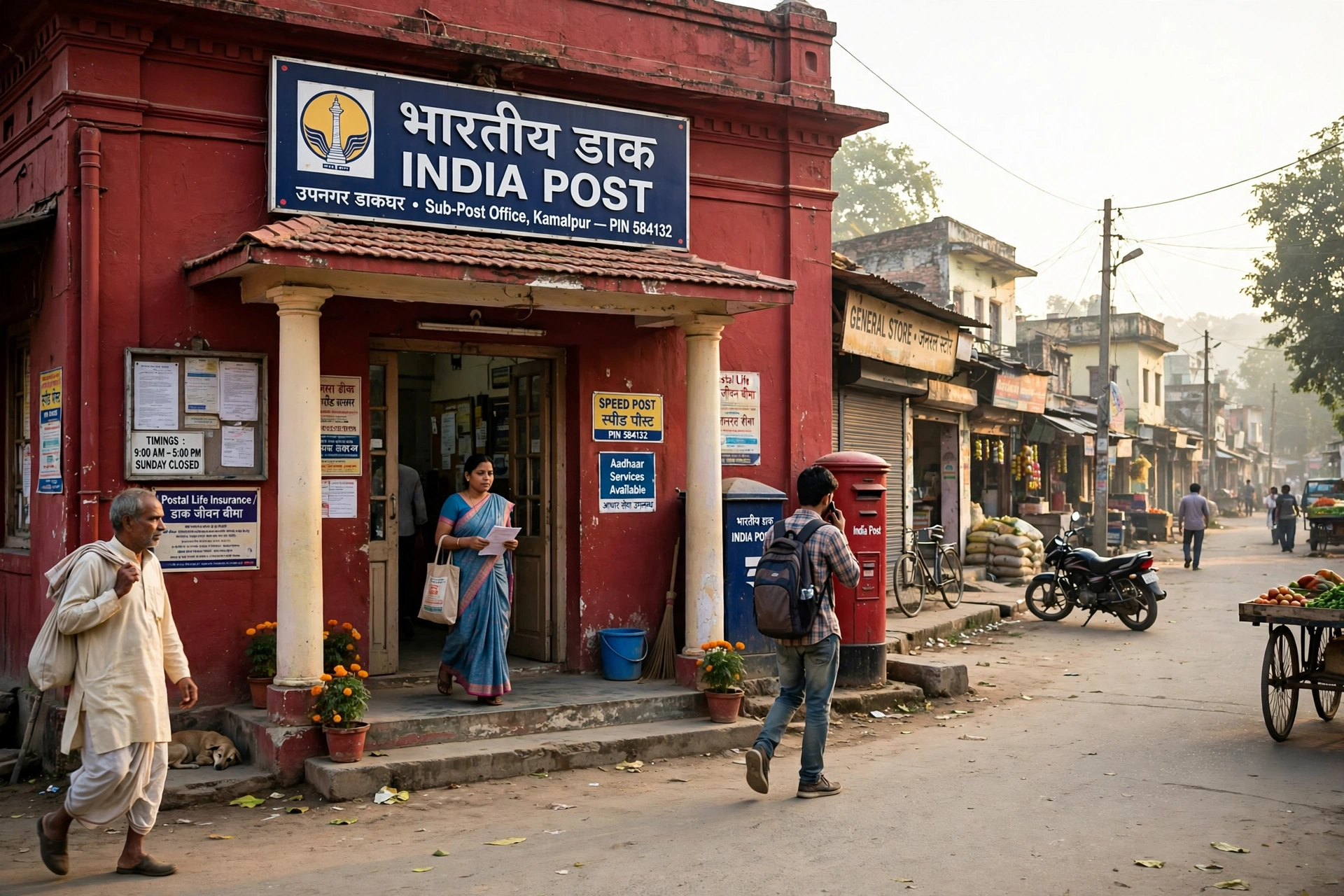
- Pick where to open it. Post offices are available everywhere, including small towns. If you already bank with SBI, HDFC Bank, ICICI Bank or another authorised bank, opening it there keeps your quarterly interest and your savings account in the same place, which makes tracking easier.
- Carry your documents. You will need proof of age (Aadhaar, PAN card, passport, or birth certificate), PAN card, Aadhaar, address proof, and two passport-size photographs. If you are opening under the retired-employee exception below 60, carry your retirement order and proof of the retirement benefits received.
- Fill in Form A, the SCSS account opening form, and nominate someone. The form asks for the deposit amount, the mode of payment, and the savings account where the quarterly interest should be credited.
- Pay the deposit. It can be paid by cash if the amount is below Rs.1 lakh, and by cheque or demand draft for larger amounts. Many banks now accept it through internet banking or a transfer from your savings account.
- Collect your passbook. The account is usually opened the same day. Your passbook records the deposit, the quarterly interest credits, and the maturity date.
If you already have an SCSS account elsewhere, it can be transferred to another post office or bank. A transfer is useful if you move cities after retirement – the account follows you, and the rate you locked in travels with it.
SCSS and Tax: What You Need to Know
SCSS has a mixed tax treatment, and it catches people by surprise.
The deposit qualifies for a deduction under Section 80C, up to the overall Rs.1.5 lakh annual limit of that section. But remember, 80C is shared with EPF, PPF, ELSS, life insurance premiums and home loan principal. If your 80C limit is already used up, the SCSS deposit gives you no extra deduction.
The interest is fully taxable, added to your income and taxed at your slab rate. There is no exemption on SCSS interest, unlike PPF interest. For a retiree in the 20% slab with a Rs.15 lakh deposit, the Rs.1,23,000 annual interest loses about Rs.24,600 to tax, leaving roughly Rs.98,400 a year in hand. In the 30% slab, the same deposit yields about Rs.86,100 after tax. That still beats most bank FDs, but the gap narrows once tax is accounted for.
TDS applies when the interest in a financial year crosses Rs.50,000. The bank or post office deducts 10% (or 20% if PAN is not furnished). If your total income is below the taxable limit, submit Form 15H at the start of the financial year so that no TDS is deducted. For deposits of Rs.15 lakh or more, the annual interest crosses Rs.50,000, so TDS is something almost every large SCSS depositor will face unless Form 15H is filed.
SCSS vs POMIS vs Senior Citizen FD
Retirees usually compare three options for regular income. Here is how they stack up for the October-December 2026 quarter.
| Feature | SCSS | Post Office Monthly Income Scheme | Senior citizen FD (5 years) |
|---|---|---|---|
| Interest rate | 8.2% p.a. | 7.4% p.a. | Around 7.5%-7.75% p.a. |
| Payout frequency | Quarterly | Monthly | Monthly or quarterly, your choice. |
| Maximum deposit | Rs.30 lakh | Rs.9 lakh (single), Rs.15 lakh (joint) | No maximum. |
| Tenure | 5 years, extendable by 3 | 5 years | Flexible, 7 days to 10 years. |
| Tax benefit on deposit | Section 80C | None | None (except 5-year tax-saver FD). |
| Interest taxable | Yes | Yes | Yes. |
SCSS wins on rate and on the size of deposit it accepts. POMIS wins if you want money every month rather than every quarter, and if you are under 60, since it has no age restriction. A senior citizen FD wins on flexibility – you can choose the tenure, break it early with a small penalty, and deposit any amount. Many retirees split their money across two of these rather than putting everything in one.
For a detailed look at the monthly income option, read our guide to the Post Office Monthly Income Scheme. And if you are weighing government small savings more broadly, our article on NSC interest rates and tax benefits covers another 80C option that locks in its rate for five years.
Closing Early and Other Rules to Know
Life does not always follow a five-year plan, and SCSS has rules for that. If you close the account before one year, no interest is payable at all – any interest already paid is recovered from the deposit. Close it between one and two years, and a penalty of 1.5% of the deposit is deducted. After two years, the penalty drops to 1% of the deposit. So a Rs.10 lakh deposit closed after three years returns Rs.9,90,000 plus the interest already received.
If the account holder passes away, the account is closed and the deposit is paid to the nominee or legal heir, without any penalty. Interest is paid up to the date of death. In a joint account, the surviving spouse can continue the account on the same terms, provided they are eligible – which matters, because it keeps the quarterly income flowing for the spouse without a fresh application.
One more detail: the interest must be collected or credited regularly. Unclaimed interest does not earn any further interest. Linking the account to a savings account for direct credit, which most banks and post offices now do by default, takes care of this.
Mistakes to Avoid with SCSS
- Treating the 8.2% as tax-free. It is not. Work out the post-tax income at your slab before deciding how much to put in.
- Forgetting the Rs.30 lakh cap is per person, not per account. A second account does not create fresh room.
- Missing the extension window. You have one year after maturity to extend. Miss it, and the account closes and the money stops earning SCSS rates.
- Opening it in the wrong quarter. The rate is fixed on the opening date. If you are about to retire and rates are expected to fall next quarter, opening sooner locks in the higher rate.
- Putting all retirement money in one place. SCSS caps at Rs.30 lakh and pays quarterly. A mix of SCSS, a monthly income scheme and an FD usually covers expenses more smoothly.
Is SCSS Right for You?
SCSS makes the most sense if you are 60 or older, have a lump sum from retirement, and need reliable income every quarter without worrying about the safety of the deposit. It suits people who value certainty over squeezing out the last rupee of return, and who are comfortable with a five-year commitment.
It makes less sense if you need monthly payouts – POMIS fits better there – or if you are in the highest tax slab and have no 80C room left, because the post-tax return narrows. It also does not suit money you might need in the next year or two, since early closure costs you interest or a penalty.
For most retirees, the sensible approach is to treat SCSS as the backbone of the income plan, not the whole plan. Put in what you need for quarterly bills, keep an emergency fund in a savings account or a flexible FD, and let the rest work in instruments that match your other goals. Retirement income is not about finding the single best scheme. It is about making sure the money shows up, every quarter, for as long as you need it – and on that count, SCSS has quietly done its job for lakhs of retirees for years now.