
You apply for a home loan, everything looks fine — steady job, salary of ₹60,000 a month, no dues you know of — and the bank still says no. Or it says yes, but at a rate a full percentage point higher than your colleague got. Nine times out of ten, the reason is a three-digit number you may never have looked at: your CIBIL score.
What Is a CIBIL Score?
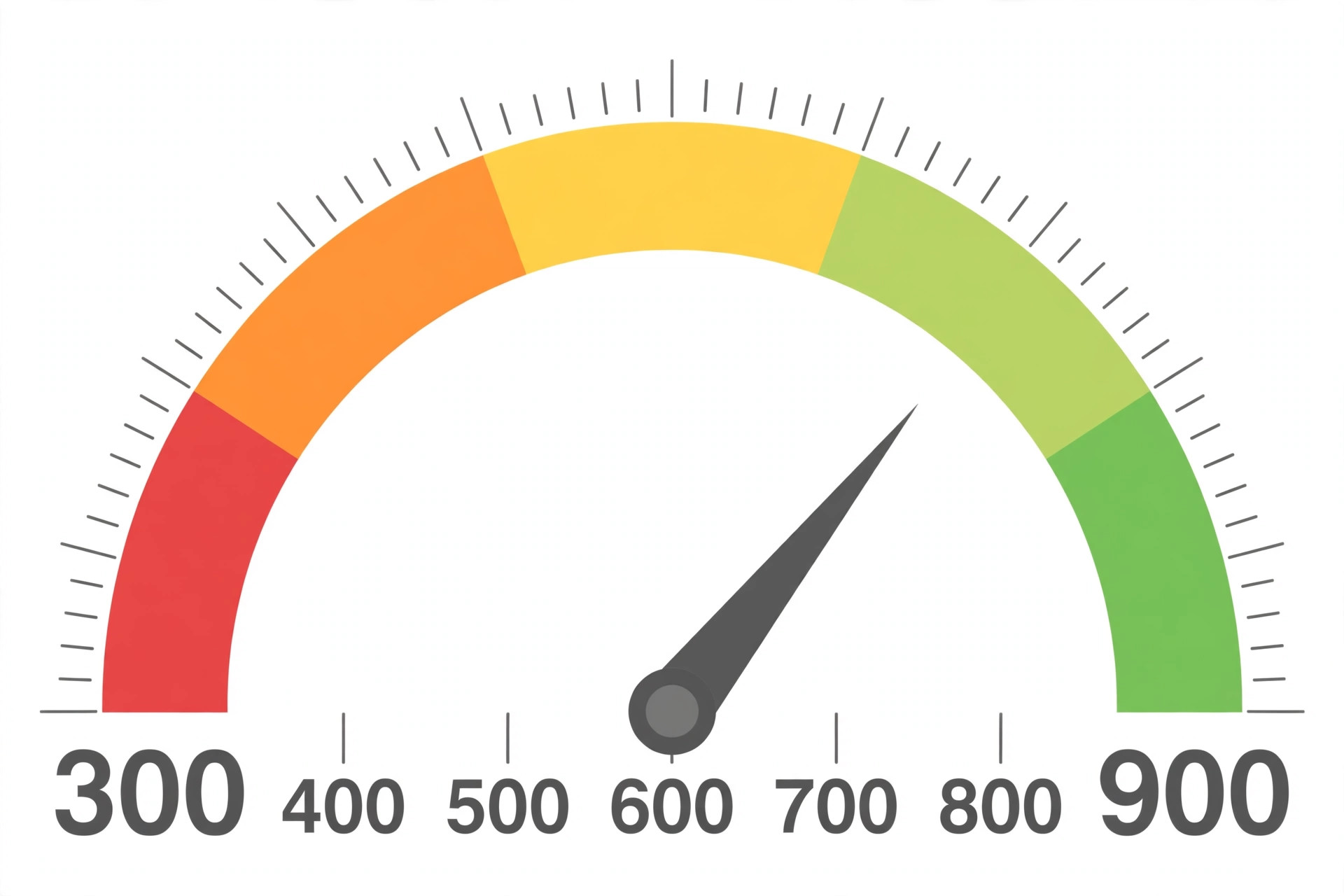
A CIBIL score is a three-digit number between 300 and 900 that sums up your credit behaviour. TransUnion CIBIL, one of India’s four licensed credit bureaus, calculates it from your borrowing and repayment history — every loan and credit card you have taken, every EMI paid on time or late, and every application you have made.
Think of it as a trust score: a high score says this person borrows carefully and pays back on schedule, a low one says the opposite — or that there is too little history to judge.
The score comes with a credit report, the detailed version, listing each loan and card, the sanctioned amounts, the outstanding balances, and the month-by-month payment status. Look at both, not just the number.
The 300 to 900 Range, Explained
Lenders read the bands differently. Here is how the range usually breaks down:
| CIBIL Score | What It Means | What Lenders Usually Do |
|---|---|---|
| 750–900 | Excellent | Best interest rates, quick approvals, higher limits |
| 700–749 | Good | Most loans approved, decent rates |
| 650–699 | Fair | Approval possible, but rates may be higher |
| 550–649 | Poor | Limited options, strict conditions, high rates |
| 300–549 | Very poor | Most applications rejected |
A score of 750 or above is the sweet spot most banks look for, especially for a big loan. Between 700 and 749 you are still in comfortable territory. Below 650, things start getting difficult, and below 600 many lenders will not even process the application.
There is no single “pass mark” written in law — each bank sets its own cut-off, and it varies by product. A bank might accept 700 for a personal loan but want 750 for a home loan of ₹50 lakh. If you have never borrowed anything, you may not have a score at all; CIBIL shows this as “NH” (no history). Lenders cannot judge what they cannot see, so a first-time borrower often starts with a smaller loan or a secured credit card to build a record.
Why Banks Care So Much About Your CIBIL Score
Lending is a business of guessing who will pay back, and the CIBIL score is the cheapest, fastest way for a bank to sort applicants before spending time on paperwork.
For you, the score shows up in three places. First, approval itself — a low score can mean a flat rejection, no matter how good your salary looks. Second, the interest rate. Two people applying for the same ₹50 lakh home loan over 20 years can pay very different amounts. At 8.5% the EMI is about ₹43,391; at 9.5% it is about ₹46,607. That difference of roughly ₹3,200 a month adds up to nearly ₹7.7 lakh over the life of the loan, and your score can easily be the reason for the gap. Third, the loan amount and terms — a strong score can get you a higher sanctioned amount and a longer tenure, while a weak one can mean a smaller loan or a demand for a co-applicant.
How to Check Your CIBIL Score Free
Checking your own score does not hurt it. That is a common worry, and it is wrong. When you check your own report, it is called a soft enquiry, and it has no effect on the score. It is only when a bank checks it while processing your application — a hard enquiry — that it leaves a mark.
There are several free ways to check:
The CIBIL website. Go to cibil.com and sign up for the free annual credit report — the law entitles you to one free full report from each bureau every year. You will need your PAN, date of birth, and a mobile number linked to your identity.
Your bank’s app. Many banks — HDFC, ICICI, SBI, Axis — show your CIBIL score inside their mobile banking app or net banking. If you already bank with them, this is the easiest route.
Third-party apps. Apps like CRED, Paytm, PhonePe, and BankBazaar offer free score checks, pulling the same bureau data in a friendlier format. They are convenient, but read what permissions you are granting — they may use the data to show you loan and card offers.
Check at least twice a year, and always a month or two before applying for a big loan, so you have time to spot errors. Errors are more common than people think — a loan you never took, a closed account still showing as active, a payment marked late when you paid on time. If you find one, raise a dispute on the CIBIL website with proof, and the bureau has to investigate.
What Affects Your CIBIL Score: The 5 Factors
Your score is not random. It comes from five factors, each carrying a different weight. Understand them, and the score stops feeling like luck.
1. Payment History — the Biggest Factor
This is the heavyweight, worth roughly 35% of your score. Every EMI and credit card payment is recorded month by month. Pay on time, every time, and this factor works for you. Miss payments, and it works against you fast.
A single missed EMI can knock 50 to 100 points off a good score, and two or three missed payments in a year can drag a 780 down into the 600s. Settlements are worse: settle a loan for less than the full amount and the account is marked “settled” rather than “closed”, a red flag for lenders for years. Set up auto-debit for every EMI and at least the minimum due on every credit card — though paying the full card bill is far better. If money is tight in a particular month, pay something rather than nothing, and call the lender before the due date rather than after.
2. Credit Utilisation — How Much of Your Limit You Use
This is worth about 30% of your score, and it surprises a lot of people: the ratio of what you spend on your credit card to your total credit limit. Say your card limit is ₹1 lakh and you regularly spend ₹80,000 a month on it — 80% utilisation. Even if you pay the full bill on time every month, the bureau sees someone leaning heavily on credit, and the score dips. The same spending on a ₹3 lakh total limit across two cards would be under 30% utilisation, and the score would look much healthier.
The rule of thumb is to keep utilisation under 30% of your limit, and under 10% if you can manage it. Ask your bank for a limit increase once a year, spread spending across two cards instead of loading one, and pay your card bill twice a month — once mid-cycle and once before the due date — so the balance reported to the bureau stays low.
3. Length of Credit History
About 15% of the score comes from the age of your credit history. Lenders like a long, steady record — a person who has used a credit card responsibly for eight years looks safer than someone with the same income and a six-month-old card. So do not close your oldest credit card just because you stopped using it: closing it shortens your average account age and can reduce your total available limit, which pushes utilisation up. If the card has no annual fee, keep it open and use it for a small recurring payment, like a streaming subscription, with auto-pay switched on.
4. Credit Mix
Roughly 10% of the score reflects the variety of your borrowing. A mix of secured credit (home loan, car loan) and unsecured credit (credit cards, personal loans) looks better than only one kind. Do not take a loan just to improve your mix — that would be a costly way to chase a few points.
5. New Credit Enquiries
The remaining 10% or so is about how often you ask for credit. Every time you apply for a loan or a card, the lender pulls your report — a hard enquiry — and each one trims a few points. One or two in a year barely matter; five applications in two months looks desperate, and the score drops noticeably. If you are comparing home loan offers, do it within a short window — CIBIL treats multiple home loan enquiries in a short period as a single shopping event. What hurts is applying for three credit cards, a personal loan, and a two-wheeler loan in the same month.
How to Improve a Low CIBIL Score, Step by Step
A low score is not a life sentence. Scores recover — the hard part is consistency, not complexity.
Step 1: Get the report and find the real problem. Pull your free report and read it line by line. A missed payment you forgot? An old loan still showing as open? A card you never applied for? Dispute errors first, because no amount of good behaviour fixes a wrong entry.
Step 2: Clear any overdue amounts. Bring missed EMIs or unpaid card dues current. Even a small overdue amount — say ₹2,000 on an old card — keeps dragging the score down every month it stays unpaid.
Step 3: Pay every bill on time from now on. Set auto-debit on everything, with a calendar reminder three days before each due date. Six months of clean payments start to move the score up; twelve months move it a lot.
Step 4: Bring utilisation below 30%. If your card limit is ₹1 lakh and you usually carry a ₹60,000 balance, pay it down or split spending across cards. Pay the full bill each month instead of the minimum due where you can — paying only the minimum keeps the debt alive at 36–42% interest a year.
Step 5: Do not apply for new credit while you are repairing. Every fresh application adds an enquiry and, if approved, a new account that lowers your average account age. Give it six months and let the clean payment record do the work.
Step 6: If you have no credit history, build one deliberately. A secured credit card against a fixed deposit is the classic starting point. Put ₹25,000 in an FD, get a card with a similar limit, spend small amounts, and pay in full every month. In a year you will have a real score, and it will be a good one.
To see how these habits connect with everyday borrowing, it helps to understand how lenders judge your overall profile. Our guide on home loan prepayment (https://smartfinanceindia.com/home-loan-prepayment-india-prepay-or-invest/) shows how a lower interest rate — which a better score helps you get — changes what you pay over the life of a loan.

Common Mistakes That Hurt Your CIBIL Score
Some habits damage a score without the person ever realising it.
Paying only the minimum due on a credit card. It avoids a late fee, but the remaining balance keeps attracting interest, your utilisation stays high, and the debt grows quietly. On a ₹50,000 balance, paying just the minimum can take years to clear.
Closing old cards. Closing your oldest card shortens your history and cuts your total limit. Unless the card charges a heavy annual fee you cannot justify, keep it open.
Ignoring small dues. A ₹3,000 buy-now-pay-later instalment is still a credit account. Miss it, and it is reported just like a missed EMI on a big loan.
Applying for many cards at once. Each application is an enquiry. Collecting cards for lounge access or welcome rewards can cost you more in score points than the perks are worth.
Not checking the report at all. Errors sit quietly for years. A wrongly reported default from a loan you closed in 2021 can still be blocking you in 2026 — a ten-minute check twice a year prevents that.
How Long Does It Take to Improve Your CIBIL Score?
It depends on what is wrong. If your score is low because of high utilisation, paying down balances can show improvement within one or two billing cycles — sometimes in as little as 30 to 45 days. If the problem is a missed payment, the mark stays on the report, but its effect fades with each clean month. Most people see meaningful improvement in three to six months of disciplined payments, and a major recovery — say from 620 to 750 — typically takes nine to eighteen months.
Realistic timelines: high utilisation only, 1–3 months; one or two late payments, now current, 3–6 months of clean payments; multiple defaults or a settled loan, 12–24 months; no credit history at all, 6–12 months of using a secured card responsibly to reach 700+.
There is no shortcut. Anyone promising to “fix” your score in a week for a fee is selling something that does not exist. The bureau does not delete accurate negative information on request, and a credit repair agency cannot do anything you cannot do yourself for free by disputing genuine errors.
A Word on Credit Cards and Your Score
Credit cards cut both ways. Used well, a card builds your score month after month: regular spending, full payment, low utilisation. Used carelessly — maxed out, minimum due only, late payments — the same card tears it down just as fast. Pick a card that fits your actual spending; our guide to credit card rewards, cashback, points and miles in India (https://smartfinanceindia.com/credit-card-rewards-cashback-points-miles-india/) explains how to work out which kind of reward is actually worth it. Either way, spend what you can pay off in full, and treat the card as a payment tool, not extra income.
Before Your Next Loan Application
If a big application is coming up — a home loan, a car loan, a loan against property — give yourself a runway. Check your score three months before you apply, fix errors, pay down card balances, and stop applying for anything new. In the final month, avoid large purchases on credit so the reported balances are low when the bank pulls your report. If your score is just under the bank’s cut-off — say 730 when they want 750 — a month or two of clean-up is usually worth the wait. The interest you save on a ₹50 lakh loan will dwarf the cost of waiting.
Your CIBIL score is not a verdict on you. It is a record of habits, and habits can change. Check it, understand the five factors, pay on time, keep utilisation low, and give it time. Most people who do that steadily find the number climbing month by month — and the next time they walk into a bank, the conversation starts very differently.