In the dominant narrative of India’s economic ascent, the rise of the “new middle class” has been a central plotline. This cohort, broadly defined as households with annual incomes between ₹5 lakh and ₹30 lakh, was seen as the engine of consumption, the beneficiary of liberalization, and the symbol of a confident, aspirational India. By 2026, this group has numerically expanded, powered by digitization, service sector growth, and urbanization. Yet, a pervasive and paradoxical sentiment defines them: a deep-seated feeling of financial unpreparedness and chronic insecurity. Despite better cars, smartphones, and occasional foreign holidays, anxiety about the future is the default setting. This disconnect between apparent prosperity and internal precariousness is the defining economic psychology of contemporary India. The reasons are structural, behavioral, and systemic, woven into the very fabric of their economic existence.Why India’s New Middle Class Still Feels Financially Unprepared in 2026
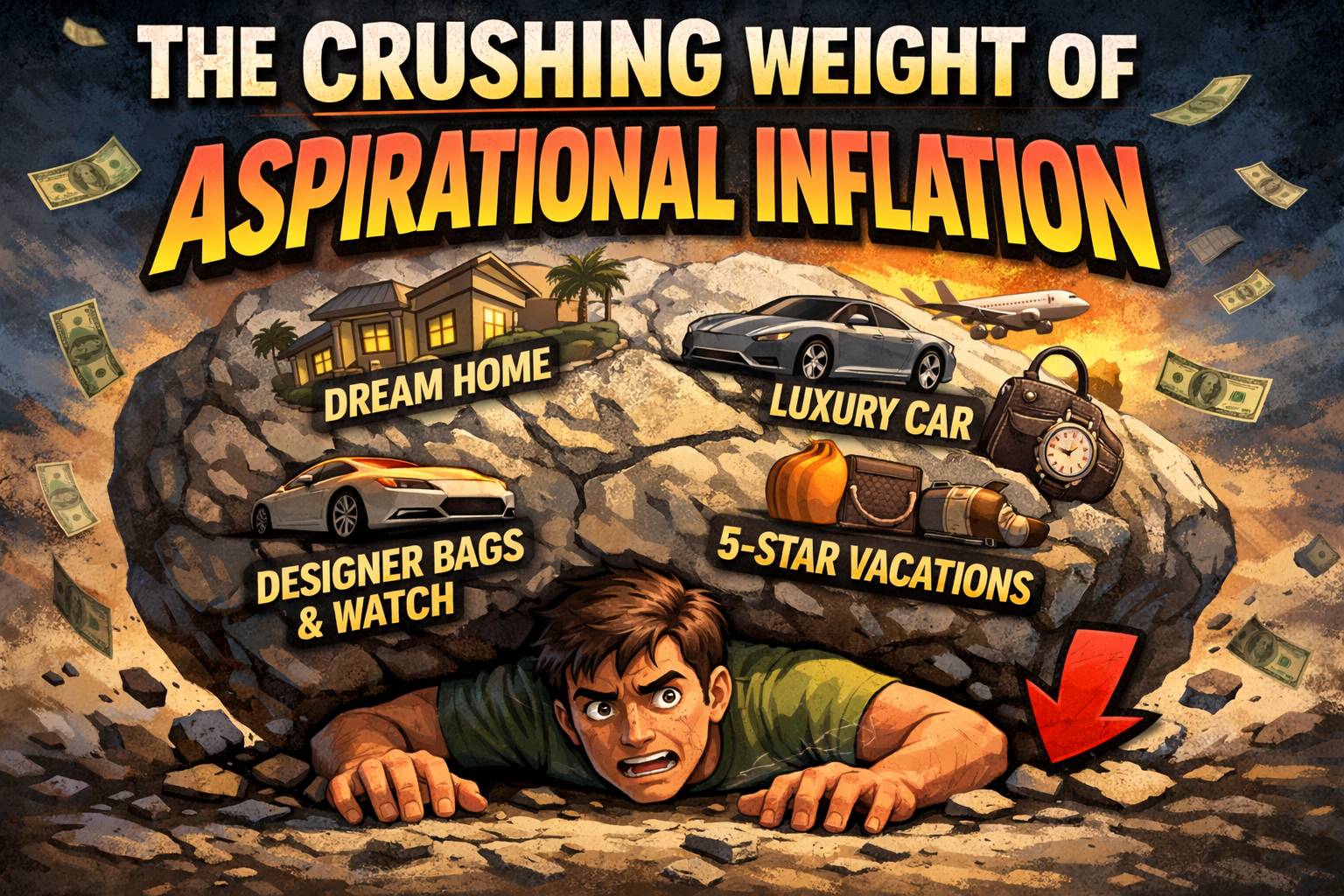
1. The Crushing Weight of Aspirational Inflation
The new middle class is a product of aspiration. Their financial benchmark is not their parents’ life, but a curated global standard seen on social media and streaming platforms. This has led to “aspirational inflation”—a rapid rise in the cost of maintaining a lifestyle that feels dignifying and successful.
- Education as a High-Stakes Lottery: The single largest source of financial terror is education. Securing a seat in a “top-tier” private school for a child can cost upwards of ₹10-15 lakh in “donations,” with annual fees matching a mid-level professional’s monthly salary. This is followed by the ₹20-40 lakh bill for an engineering or medical degree, often funded through high-interest education loans. The pressure doesn’t end there; the demand for foreign Master’s degrees, seen as the only ticket to premium salaries, burdens families with debts exceeding ₹1 crore. Education is no longer an investment but a speculative, all-in gamble on future earnings.
- Healthcare’s Precarious Shield: While corporate insurance coverage has grown, it remains riddled with exclusions, sub-limits, and co-pay clauses. A major medical event, like cancer or a cardiac procedure, in a private hospital can still wipe out decades of savings in weeks. The fear is not of no treatment, but of the catastrophic financial erosion that “good” treatment entails. The reliance on private healthcare, seen as more reliable than underfunded public options, turns health from a right into a volatile financial liability.
- The Housing Trap: Owrowing a home in a “respectable” suburb of a metropolitan city is a non-negotiable social milestone. However, real estate prices have wildly outpaced income growth. A 2BHK in a decent Bangalore or Mumbai suburb can cost ₹1.5-2 crore. The resulting home loan, often with a ₹70,000-₹1,00,000 monthly EMI for 20-25 years, becomes a permanent lien on the family’s income, drastically reducing disposable cash and flexibility. This “asset” feels like a lifelong debt sentence, locking them into jobs they dare not leave.
2. The Illusion of Income and the Reality of Cost
Nominal incomes have risen, but this growth is deceptive.
- Stagnant Real Incomes: When adjusted for inflation—especially the inflation that matters to them (education, healthcare, housing, quality food)—real wage growth for salaried professionals has been anaemic. A ₹1.5 lakh per month salary sounds substantial, but after EMI, school fees, insurance premiums, and essential living costs, the residual “disposable” income is shockingly thin.
- The Gig Economy and Job Insecurity: A significant segment of the new middle class is in the gig economy, IT services, or mid-management roles vulnerable to automation and global volatility. The spectre of “restructuring” and “rightsizing” is constant. Unlike the previous generation’s government job with a pension, today’s middle-class professional is 2-3 bad quarterly results away from financial crisis. There is no safety net, only a safety network of personal loans and credit cards that can quickly become a debt spiral.
- The Tax Burden and Perceived Lack of Return: This cohort falls squarely into the 30% income tax slab, feeling the full brunt of direct taxation. They perceive a stark mismatch between the taxes they pay and the quality of public goods they receive. They pay for private schools and public schools through taxes, private security and police, private water tankers and municipal water. This double payment cripples their ability to save and fosters resentment.
3. The Predatory Lending-Fuelled Consumption Cycle
Easy access to credit has been a double-edged sword.
- Buy Now, Panic Later: Fintech companies have made unsecured personal loans, buy-now-pay-later schemes, and credit card debt absurdly accessible. Consumption is no longer tied to savings but to future income. The middle-class household often juggles multiple EMIs—car, home, personal loan, appliance—creating a fragile house of cards. Any income disruption causes immediate collapse.
- The Social Media Amplifier: Platforms like Instagram and YouTube constantly broadcast upgraded lifestyles—the European vacation, the latest SUV, the smart home gadget. Keeping up with this digitally amplified peer group drives impulsive, debt-financed spending, further eroding financial buffers. The gap between online image and offline balance sheet has never been wider.
4. Inadequate and Unsuitable Financial Products
The Indian financial system has not evolved to meet the nuanced needs of this class.
- Savings vs. Growth Dilemma: Traditional favourites like fixed deposits and life insurance policies offer negative real returns post-tax and inflation. However, the volatility of equity markets (mutual funds, stocks) feels too risky for capital that is earmarked for a child’s education in 10 years or a retirement that has no formal pension. This leaves them stuck in low-yield instruments, watching goals recede further.
- The Retirement Abyss: The EPF is insufficient for a long urban retirement. The National Pension System (NPS) is complex and its market-linked returns induce anxiety. There is no clear, trustworthy, and simple pathway to accumulate a corpus of ₹5-10 crore needed to sustain a middle-class urban life post-retirement. The terrifying prospect of outliving their savings looms large.
- Mis-selling and Lack of Trust: The market is rife with mis-sold insurance-cum-investment products (ULIPs, endowment plans) that lock away money for poor returns. A deep distrust of financial advisors, seen as commission-hungry salespeople, prevents many from seeking legitimate planning advice.
5. The Psychological and Social Burden
The financial strain is compounded by immense social pressure.
- The “Two-Generation Squeeze”: They are the first generation bearing the full cost of upward mobility. They finance their children’s exorbitant future and support ageing parents whose savings are depleted by healthcare costs and who often lack substantial pensions. They are the fragile link between two dependent generations.
- The Fear of Downward Mobility: For the first-time middle class, the memory of scarcity is recent. The terror of slipping back down the economic ladder is powerful and motivates extreme risk-aversion in careers (don’t quit the terrible job) and over-investment in perceived safety (gold, property), even at the cost of growth.
- Lack of Financial Literacy and Time: The frantic pace of urban professional life leaves little time for deliberate financial planning. Basic concepts like asset allocation, risk profiling, and term planning remain alien. Finance is dealt with in reactive, ad-hoc bursts—often when a tax-saving deadline looms or a crisis hits.
The 2026 Context: New Pressures
By 2026, several trends have sharpened these anxieties:
- Climate Change Costs: Recurring extreme weather events drive up insurance costs, damage property, and disrupt livelihoods, adding a new layer of unpredictable financial risk.
- AI-Linked Job Disruption: White-collar roles in analytics, content, and even mid-level code are facing efficiency drives from AI tools, making career paths less predictable and upskilling a constant, costly necessity.
- Geo-Economic Volatility: A fragmenting global economy impacts export-oriented sectors, startup funding, and supply chains, translating into corporate belt-tightening and hiring freezes.
Conclusion: The Precarious Prosperity
India’s new middle class in 2026 is not poor, but it is financially precarious. They have income, but not security; assets, but crippling liabilities; high aspirations, but low resilience. They are running on a treadmill that is accelerating, set at an incline. The feeling of being unprepared stems from the realization that their economic foundation—built on debt, subject to global shocks, and burdened by systemic failures in public goods—is fundamentally shaky.
Addressing this requires more than incremental income growth. It demands a systemic overhaul: building trustworthy public education and healthcare to reduce private financial terror, creating robust social security frameworks for the gig economy, simplifying and making tax-beneficial long-term investment vehicles accessible, and fostering a culture of genuine financial literacy. Until then, the Indian middle class will remain a coalition of the anxiously striving, embodying a growth story punctuated not by confidence, but by the quiet, persistent fear of a single misstep. Their financial unpreparedness is not a personal failing, but the logical outcome of an economic environment that incentivizes consumption over security, offers credit as a substitute for stability, and places the entire weight of national aspiration on their over-leveraged shoulders.