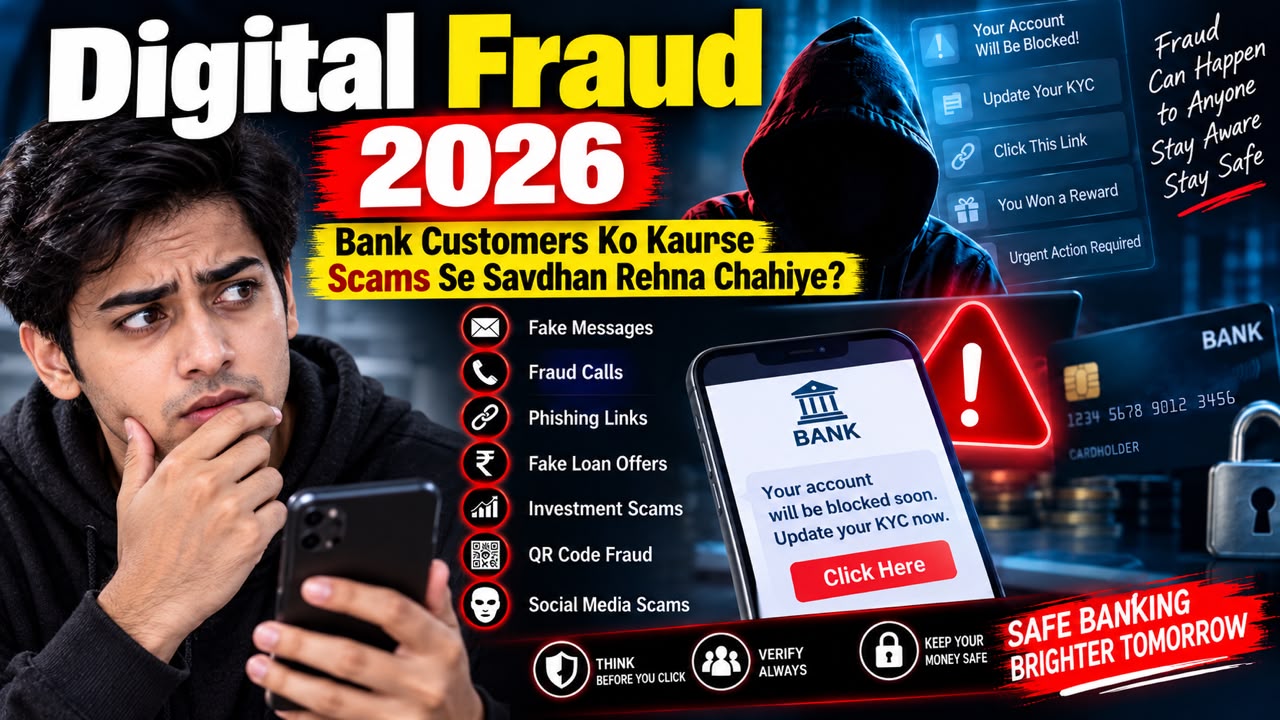
Digital banking has made life much easier. Today, we can send money, pay bills, shop online and check our bank balance with just a few taps on a smartphone.
UPI and mobile banking have become a part of everyday life for millions of people. But there is another side to this convenience. As digital payments have grown, online fraud has also become more common.
Scammers are finding new ways to trick people. Sometimes they pretend to be bank employees. Sometimes they send fake links or payment requests. In other cases, they use WhatsApp, phone calls or social media to gain a person’s trust.
The good news is that many scams can be avoided if you know what to look for.
Here are some of the common digital frauds that bank customers should be careful about in 2026.
- Fake Bank Customer Care Calls
Imagine you have a problem with your bank account or debit card. You search online for customer care and find a phone number.
You call the number, and the person on the other side says they are from the bank.
They may ask for your account details, card information or OTP. They may even ask you to download an app so they can “help” you.
This is where the problem starts.
The person may actually be a scammer pretending to be a bank employee.
Fake customer-care numbers are often shared through websites, social media pages and search results.
How can you stay safe?
Always get the customer-care number from your bank’s official website or official mobile app.
Never share your OTP, ATM PIN, UPI PIN or internet-banking password with someone over a phone call.
If you are unsure, end the call and contact the bank yourself.
- UPI Payment Scams
UPI has made sending and receiving money extremely easy. Unfortunately, scammers also use this system to trick people.
One common trick is a fake payment request.
A scammer may tell you, “I am sending you money. Just approve this request.”
But when you enter your UPI PIN, you may actually be sending money to the scammer.
This is why you should always check the details before approving a UPI request.
Remember: you generally do not need to enter your UPI PIN to receive money.
Another common trick
Someone may send you a screenshot saying that they have already paid you.
Do not trust a screenshot.
Open your banking or UPI app and check whether the money has actually arrived.
- Fake KYC Messages
KYC scams are also very common.
You may receive a message saying:
“Your KYC has expired.”
“Your bank account will be blocked.”
“Update your KYC immediately.”
The message may contain a link. When you click it, you may be taken to a fake website that looks like your bank’s website.
The website may ask for your account number, card details, password or OTP.
Once you provide these details, scammers may use them to attempt unauthorized transactions.
What should you do?
Do not click unknown links received through SMS or WhatsApp.
If you think your KYC really needs to be updated, open your bank’s official app or visit the official website and check there.
- Phishing Links
Phishing is one of the oldest online scams, but it is still very effective.
A phishing message is designed to look genuine.
For example, you might receive a message saying:
“Your reward points are expiring.”
“Your account needs verification.”
“Your refund is ready.”
“Your debit card will be blocked.”
The message may include a link.
The link takes you to a fake website where scammers try to collect your personal or banking information.
Stay safe
Don’t click on links simply because the message looks official.
If you are worried about your account, open the official bank app yourself and check.
Taking an extra minute can save you from a major loss.
- Fake Investment and Loan Offers
Social media has made it easier for scammers to find people interested in loans and investments.
You may see an advertisement promising an instant loan with almost no paperwork.
Another message may promise very high returns from a small investment.
At first, everything may look genuine.
A scammer may even show fake profit screenshots or fake customer reviews.
After you send money, they may ask for another fee. Eventually, they may stop responding altogether.
Be careful with “guaranteed returns”
There is no genuine investment that can promise huge returns without risk.
Before investing your money, check who is offering the investment and whether the company or platform is legitimate and properly regulated.
Never invest just because someone contacted you on WhatsApp, Telegram or Instagram.
- QR Code Scams
QR codes are everywhere today. We use them at shops, restaurants and for online payments.
Scammers sometimes take advantage of this habit.
They may tell you:
“Scan this QR code and you will receive your money.”
But scanning a QR code can sometimes be part of making a payment rather than receiving one.
Before scanning any unknown QR code, understand what transaction you are approving.
And remember: never enter your UPI PIN just because someone says it is required to receive money.
- Fake Customer Support on Social Media
Many people contact companies through Instagram, Facebook or X when they have a problem.
Scammers know this.
They may create fake customer-support accounts that look almost identical to genuine accounts.
You may send them a message about your problem and receive a reply asking for your phone number, account details or a payment.
The account may look professional, but it could still be fake.
A simple way to stay safe
Always check the company’s official profile and website before contacting customer support.
Do not share sensitive banking information through social media messages.
- SIM Swap Fraud
Your mobile number is connected to many important services, including banking and payment accounts.
In a SIM-swap scam, criminals try to gain control of your mobile number.
If your SIM suddenly stops working without any clear reason, don’t ignore it.
Contact your mobile operator and bank through official channels and check whether anything unusual has happened.
Also avoid sharing unnecessary personal information with strangers.
- Fake Banking Apps
Another problem is fake mobile applications.
Scammers can create apps that look similar to genuine banking or financial apps.
They may send you a link and ask you to download the app.
Once installed, the app may request permissions or sensitive information that it does not actually need.
What should you do?
Download banking apps only from trusted official app stores and verify the developer details.
Avoid installing an app just because someone sent you a download link through WhatsApp or SMS.
- Remote Access Scams
This type of scam has become more common with the growth of digital banking.
A scammer may call and say:
“Your payment has failed.”
“Your refund is stuck.”
“Your account needs technical support.”
They may then ask you to install a screen-sharing or remote-access application.
Once you give them access, they may be able to see what is happening on your phone.
Never give remote access to your phone to an unknown person claiming to be from a bank.
Why Do People Fall for These Scams?
It is easy to think that only careless people become victims of online fraud. That is not true.
Scammers are very good at creating pressure.
They may tell you that your account will be blocked in 10 minutes.
Or they may say you have won a reward.
Sometimes they pretend to be a family member who urgently needs money.
When people become scared or excited, they may stop thinking carefully and follow the instructions.
That is exactly what scammers want.
The best response is simple: stop, think and verify.
What to Do If Money Has Been Lost
If you believe you have become a victim of digital fraud, don’t wait.
Contact your bank immediately and report the transaction.
If your card or account information has been exposed, ask the bank about securing the account and blocking affected services.
Keep important details such as transaction IDs, screenshots, phone numbers, messages and payment information.
In India, cyber financial fraud can also be reported through the government’s official cybercrime reporting channels.
The faster you report a fraudulent transaction, the sooner the relevant institutions can start looking into it.
Simple Rules to Protect Your Money
You don’t need to be a technology expert to stay safer online.
Just follow a few basic rules:
- Never share your OTP with anyone.
- Never share your UPI PIN.
- Never share your ATM PIN or banking password.
- Don’t click on unknown banking links.
- Check UPI payment requests carefully.
- Don’t trust payment screenshots.
- Download apps only from trusted sources.
- Don’t give strangers remote access to your phone.
- Verify customer-care numbers through official sources.
- Check your bank statements regularly.
- Report suspicious transactions quickly.
Final Thoughts
Digital banking is convenient, but convenience also comes with some risks.
Scammers are constantly changing their methods. One day they may pretend to be a bank employee, and the next day they may use a fake investment offer or a UPI payment request.
The most important thing is not to panic.
If someone calls and says your account will be blocked, take a moment and verify it.
If someone sends you a payment request, check the details before approving it.
If someone asks for your OTP or UPI PIN, don’t share it.
And if an offer looks too good to be true, take a step back before sending any money.
A few extra minutes of checking can protect your savings from a much bigger problem.
In 2026, staying safe from digital fraud is not only about using strong technology. It is also about being careful, patient and aware before making any financial decision online.