For most salaried employees, income tax is something they only start thinking about when the financial year is coming to an end. That is usually when people start checking their Form 16, looking at TDS and wondering whether they could have saved more tax.
But understanding the basics earlier can make things much easier.
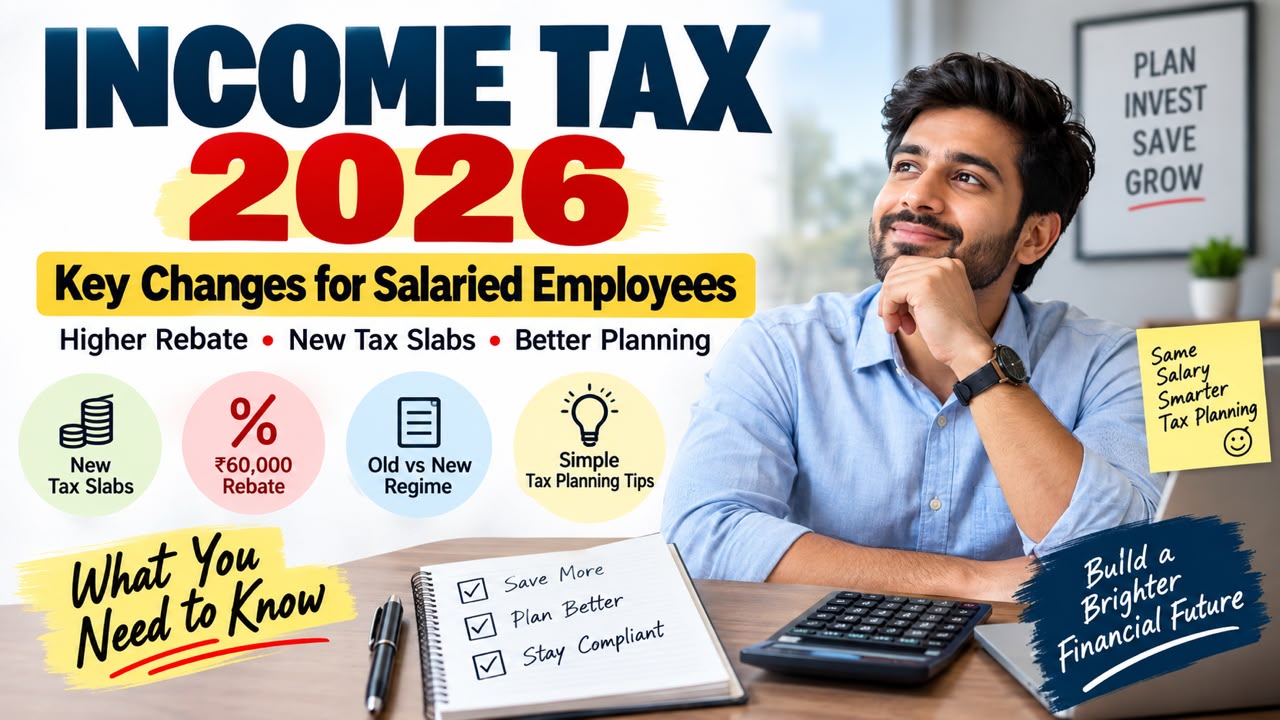
The tax structure for 2026 has several points that salaried taxpayers should be aware of, especially if they are using the new tax regime. The revised tax slabs and higher Section 87A rebate have changed the way many people need to look at their tax calculation.
At the same time, there is no single tax strategy that works for everyone. Two people earning the same salary can have different tax situations because their deductions, investments, home loans and other income may be different.
So, instead of looking at tax as a complicated calculation, let’s break it down in simple terms.
What are the new income-tax slabs for 2026?
The new tax regime has a revised slab structure for Assessment Year 2026–27.
Under the new regime, income up to ₹4 lakh is taxed at zero rate. After that, different portions of income fall into different tax slabs.
Taxable Income Tax Rate
Up to ₹4 lakh Nil
₹4 lakh – ₹8 lakh 5%
₹8 lakh – ₹12 lakh 10%
₹12 lakh – ₹16 lakh 15%
₹16 lakh – ₹20 lakh 20%
₹20 lakh – ₹24 lakh 25%
Above ₹24 lakh 30%
One thing employees should remember is that these are slab rates.
For example, moving into a higher slab does not mean your entire income suddenly gets taxed at that higher rate. Different portions of taxable income are calculated at their respective rates.
This is an important point because many employees misunderstand how tax slabs work.
Why is ₹12 lakh income getting so much attention?
The ₹12 lakh figure has become particularly important because of the enhanced rebate available under Section 87A.
For eligible resident individual taxpayers under the new tax regime, the maximum rebate has been increased to ₹60,000 where total income does not exceed ₹12 lakh, subject to the applicable rules.
In simple terms, if your taxable income falls within the relevant limit, the rebate can reduce the income tax calculated on that income.
However, taxpayers should not assume that every kind of income automatically gets the same treatment. Certain special-rate incomes can be subject to separate provisions.
So, if you have salary income along with other types of income, your complete tax situation needs to be considered.
Does a ₹12 lakh salary mean zero tax?
This is probably one of the most common questions salaried employees have.
The answer depends on what exactly you mean by ₹12 lakh.
Your annual salary, gross income and taxable income are not necessarily the same thing.
Your salary may contain different components, and applicable deductions can affect the amount that is ultimately considered for tax purposes.
This is why simply looking at your CTC and multiplying it by a tax rate is not a reliable way to calculate your tax.
For example, two employees may both have a similar annual package but end up with different taxable incomes because their salary structures and other income are different.
Standard deduction can make a difference
Salaried employees should also pay attention to the standard deduction.
It is a straightforward provision that can reduce the salary amount considered while calculating taxable income, subject to the applicable tax regime and rules.
This is one reason why employees should distinguish between:
CTC → Gross Salary → Taxable Income → Final Tax Liability
These are not always the same number.
Understanding this difference makes the entire tax calculation much easier.
Old tax regime or new tax regime?
This is where things can become a little confusing.
The new tax regime is the default regime, but eligible taxpayers can opt for the old tax regime under the applicable rules.
The major difference is that the old regime allows several deductions and exemptions that are either restricted or unavailable under the new regime.
For example, depending on eligibility, taxpayers under the old regime may consider benefits related to:
- Section 80C investments
- Eligible health insurance premiums
- Certain home-loan benefits
- HRA exemption
- Other eligible deductions
The important point is that having deductions does not automatically mean the old regime will result in lower tax.
You need to actually compare the numbers.
A simple example
Imagine two employees who both earn a similar salary.
Employee A has relatively few eligible deductions and investments.
Employee B has a home loan, eligible insurance payments and other deductions available under the old regime.
Their tax calculations can therefore look quite different.
This is why copying a friend’s tax strategy may not work for you.
The better approach is simple: calculate the tax liability under both regimes and compare the result based on your own income and eligible deductions.
What happens when your salary increases?
Some employees worry that getting a salary hike could actually leave them worse off because they will enter a higher tax slab.
That’s generally a misunderstanding of how progressive tax slabs work.
Suppose part of your income falls into a higher slab. The higher rate applies to the relevant portion of income, rather than automatically applying to every rupee you earn.
So, if you receive a salary increment, you should look at the additional tax on the additional taxable income instead of assuming that the entire salary will be taxed at the highest rate.
A salary increase can still increase your take-home pay even though your tax liability also rises.
TDS is not the same as your final tax
Another area that causes confusion is TDS.
Every month, your employer may deduct a certain amount from your salary as Tax Deducted at Source.
But that does not necessarily mean the amount deducted is your final tax liability.
Your final tax calculation depends on your actual income for the year and the applicable deductions, exemptions and other provisions.
If too much TDS was deducted, an eligible taxpayer may receive a refund after filing the income-tax return.
If too little tax was deducted, additional tax may have to be paid.
This is why it is worth checking your TDS instead of simply assuming that everything is automatically correct.
Don’t forget your other income
Salary is often the biggest source of income for an employee, but it may not be the only one.
You could also have:
- Interest from savings accounts
- FD interest
- Rental income
- Freelance income
- Dividends
- Capital gains
- Other taxable income
These amounts may affect your overall tax calculation.
For example, someone earning ₹10 lakh from salary who also receives significant bank interest or has taxable capital gains cannot calculate their final tax by looking at salary alone.
Keeping a simple record of all your income sources throughout the year can save a lot of trouble later.
Keep an eye on Form 16
Form 16 is one of the most useful documents for a salaried employee.
It contains important details about your salary income and TDS deducted by your employer.
Before filing your return, don’t just download Form 16 and forget about it.
Take a few minutes to check whether the salary figures and TDS information match your records.
If something looks wrong, it is better to raise the issue with your employer early rather than discovering a mismatch later.
You should also review the tax information available through the relevant tax statements before filing your return.
What if you have a home loan?
Home loans can make tax planning more interesting because the tax treatment differs between the old and new regimes.
Under the old regime, eligible taxpayers may be able to claim certain benefits relating to home-loan interest and principal repayment, subject to the relevant conditions.
The new regime has different rules around deductions and exemptions.
But there is one important financial point that often gets overlooked: don’t take a home loan simply because of a tax benefit.
A tax deduction is only one part of the equation.
Before taking a loan, look at the EMI, total interest cost, your income stability and whether the property fits your long-term financial plans.
Should you invest just to save tax?
This is another common mistake.
Near the end of the financial year, some employees suddenly start looking for investments that can reduce their tax.
Tax-saving investments can certainly be useful, but tax should not be the only reason you invest.
Before putting your money into anything, consider:
- How much risk does it carry?
- How long will the money be locked in?
- Can you access the money if you need it?
- Does it fit your financial goals?
- What kind of return can reasonably be expected?
A tax-saving product that doesn’t suit your financial situation may not be a good investment simply because it offers a deduction.
A practical tax-planning checklist for employees
You don’t need a complicated system to manage your taxes.
A simple checklist can help.
First, understand your salary.
Know your basic salary, allowances and other components rather than looking only at CTC.
Second, check both tax regimes.
If you are eligible to choose, compare the actual tax calculation under both options.
Third, track your investments.
Keep records of eligible investments, insurance payments and other relevant documents.
Fourth, check your other income.
Don’t forget bank interest, rental income, freelance earnings or investment-related income.
Finally, check your tax documents before filing.
Make sure your Form 16 and other available tax information are consistent.
Common mistakes to avoid
Most tax mistakes aren’t complicated. They are usually simple things that get overlooked.
One common mistake is assuming that CTC is the same as taxable income.
Another is forgetting to report interest income from a bank or fixed deposit.
Some people choose a tax regime without actually comparing the numbers.
Others claim deductions without checking whether they meet the eligibility requirements.
And then there are people who make investments at the last minute simply because they want to reduce their tax bill.
Taking a little time throughout the year can help avoid most of these problems.
What should salaried employees focus on in 2026?
The biggest takeaway for salaried employees is that tax planning should be based on your actual financial situation.
The new tax regime has a revised slab structure, beginning with a nil rate up to ₹4 lakh and going up to 30% for income above ₹24 lakh.
The Section 87A rebate has also been increased to a maximum of ₹60,000 for eligible resident individual taxpayers with total income up to ₹12 lakh, subject to the applicable conditions.
At the same time, the old tax regime remains relevant for eligible taxpayers who have deductions and exemptions that may affect their overall calculation.
So, rather than asking, “Which regime is best for everyone?”, a more useful question is:
“What does my tax calculation look like under each regime?”
That answer will depend on your own income, deductions and financial circumstances.
Final Thoughts
Income tax doesn’t have to be as complicated as it first appears.
For a salaried employee, the starting point is simply understanding how much you actually earn, what part of that income is taxable and which tax regime applies to your situation.
From there, keep your documents organized, track income from other sources and compare the available tax options instead of making decisions based on assumptions.
The 2026 tax structure has brought important changes under the new regime, particularly the revised slabs and the higher Section 87A rebate.
But tax planning is not just about paying less tax.
It is about making sensible financial decisions, using the benefits available under the law and keeping your overall financial plan on track.
If you understand your numbers early, tax season becomes much less stressful—and you are less likely to make rushed financial decisions at the last minute.
Disclaimer: Tax rules and individual tax liabilities can vary depending on personal circumstances and may change over time. This article is intended for general information and should not be treated as professional tax or investment advice. Always check the latest Income Tax Department rules before filing your return or making a significant tax-related decision.