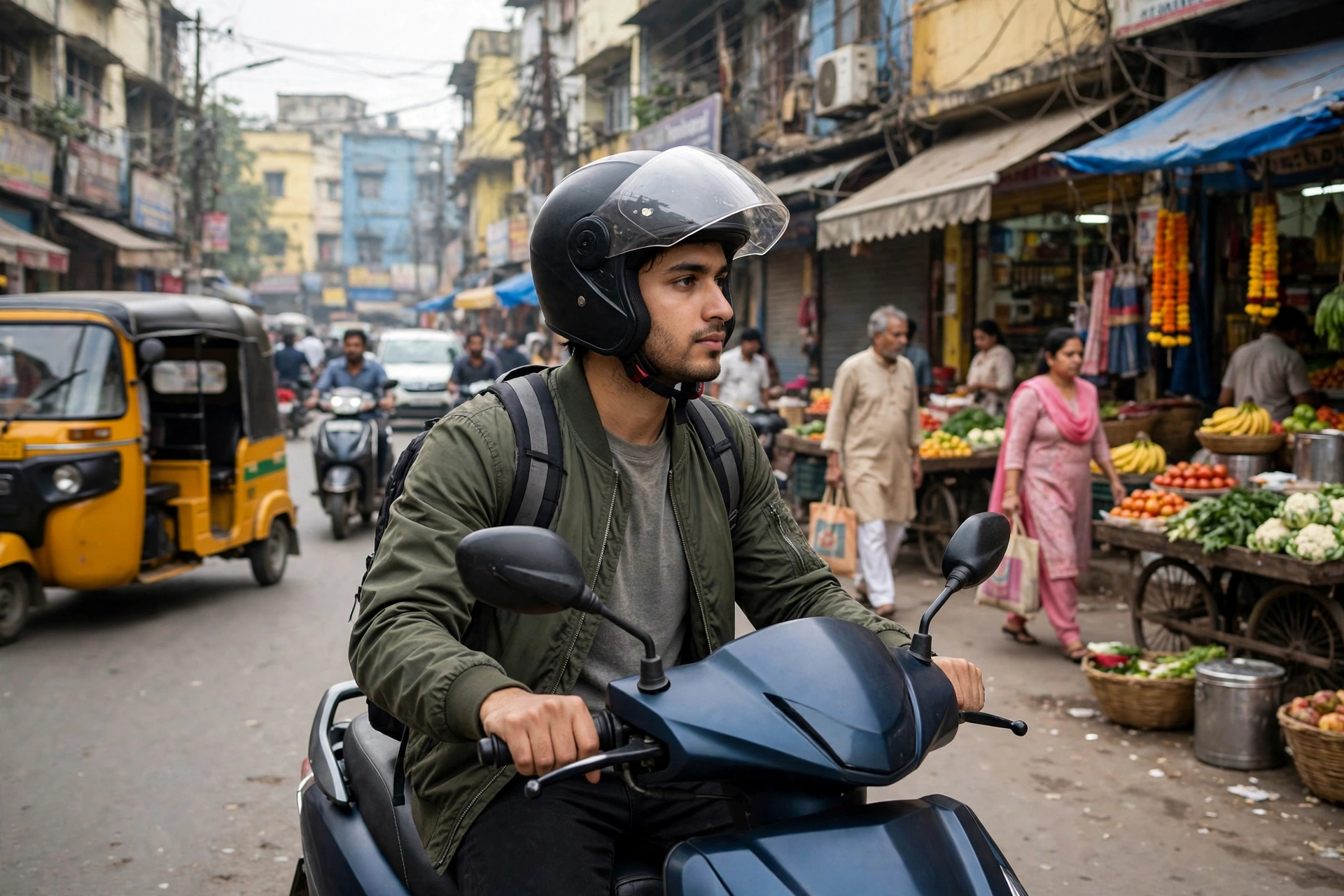
If you ride a bike in India, you already know the one document the traffic police will ask for before anything else. Not your PUC, not your licence — your bike insurance. And yet, for something so mandatory, most riders understand it less than the bike they ride every day.
Walk into any two-wheeler showroom and the insurance is sold in about five minutes, usually bundled with the bike. The salesperson picks a plan, you sign, and you ride out. A year later, the renewal reminder arrives on SMS, you pay whatever the premium says, and life goes on. It is only when something goes wrong — a crash, a stolen bike, a dented car that was not yours — that the policy you bought in five minutes suddenly matters a lot.
So let us slow down and actually understand it. There are really only two types of bike insurance in India that matter for most riders: third-party cover and comprehensive cover. The difference between them is not small print. It is the difference between being protected and only looking protected.
What third-party bike insurance actually covers
Third-party insurance is the minimum the law requires. Under the Motor Vehicles Act, you cannot ride a two-wheeler on a public road in India without it. The fine for riding uninsured is ₹2,000 for a first offence, and it can go up to ₹4,000 the second time. But the fine is the least of it.
Here is what third-party cover does: if your bike hits someone, or damages someone else’s property, the insurance company pays for that damage. “Third party” means the other person — the pedestrian you brushed past, the car owner whose bumper you scraped, the family of someone injured in an accident involving your bike.
What it does not do is pay for your bike. If your bike is stolen, damaged in a crash, or wrecked in a flood, a third-party-only policy pays you nothing. Your bike, your repair bill, your loss. That is the whole trade-off.
Third-party premiums are fixed by the IRDAI, the insurance regulator, based on engine capacity. For a bike under 75cc, the annual premium is around ₹538. For 75cc to 150cc — where most commuter bikes like the Splendor, Platina, and Shine sit — it is about ₹714 a year. For 150cc to 350cc, roughly ₹1,366. Above 350cc, around ₹2,804. These numbers get revised from time to time, but the structure stays the same: the regulator sets the price, and every insurer charges the same base premium for third-party cover.
On top of this, you will see a personal accident cover of ₹15 lakh added, which is also mandatory for the owner-driver. That costs about ₹300 a year and pays your family if you are seriously injured or killed in an accident.
What comprehensive bike insurance adds
Comprehensive cover is third-party cover plus own-damage cover. It includes everything a third-party policy does, and then it also pays for damage to your own bike. That one addition changes the policy completely.
A comprehensive policy typically covers damage from an accident, theft of the bike, fire, floods and other natural disasters, riots and vandalism, and damage while the bike is being transported. If your bike is stolen from outside your office and never found, a comprehensive policy pays you the insured declared value of the bike. If a tree falls on it during a storm, the repair is covered. If you skid on a wet road and crack the fairing and bend the handlebar, the repair bill goes to the insurer, minus the deductible.
The premium is higher, of course. For a new ₹90,000 commuter bike, a comprehensive policy might cost ₹2,500 to ₹4,500 in the first year depending on the insurer, the city, and the add-ons you pick. For a ₹1.5 lakh bike, expect ₹5,000 to ₹8,000. The exact number depends on the insured declared value, which is the current market value of your bike, and on your no-claim bonus.
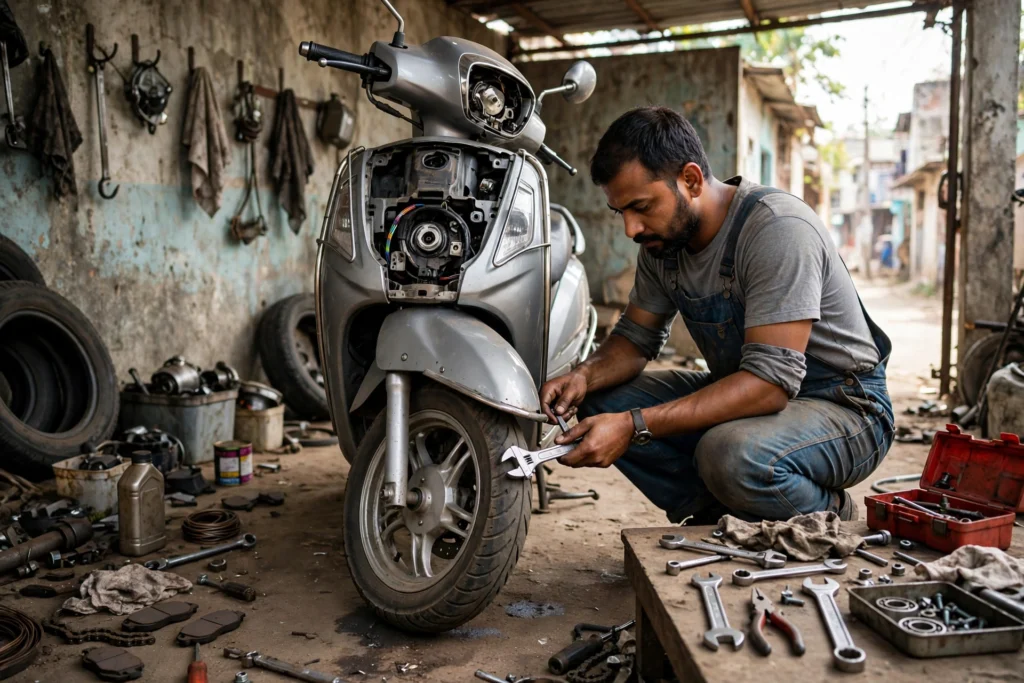
That is still a small amount compared to what a single serious repair costs. A front fork replacement, a fuel tank dent, a headlight assembly — a moderate accident on a commuter bike can easily produce a ₹15,000 to ₹25,000 repair bill at an authorised service centre. On a premium bike, one fall can cost ₹50,000 or more in parts alone.
The real cost of choosing wrong
Let us put real numbers to the choice. Take a three-year-old bike worth about ₹55,000. A third-party-only policy costs roughly ₹714 a year plus the personal accident cover. A comprehensive policy for the same bike might cost ₹1,800 to ₹2,500 a year.
The difference is about ₹1,500 a year, or roughly ₹125 a month. That is less than what most riders spend on fuel in a week.
Now imagine the bike gets stolen. With third-party cover, the loss is the full ₹55,000. With comprehensive cover, the insurer pays the insured declared value minus a small deductible, usually ₹500 to ₹1,000 for a bike. The policy has paid for itself roughly twenty times over in that one claim.
The maths is different for a very old bike. If your bike is twelve years old and worth maybe ₹12,000 in the market, a comprehensive policy might cost ₹1,200 a year while the maximum payout is capped at that ₹12,000 value. In that situation, third-party cover starts to make sense, because you are paying a tenth of the bike’s value every year to insure it. But for any bike less than five or six years old, the comprehensive premium is usually a small fraction of the value it protects.
What is an IDV and why it matters
Every comprehensive policy has a number called the Insured Declared Value, or IDV. This is the maximum the insurer will pay if your bike is stolen or totally damaged. It is supposed to be the current market value of your bike.
When you buy a new bike, the IDV is close to the ex-showroom price minus depreciation. Each year, the IDV falls. A bike that cost ₹1 lakh new might have an IDV of about ₹95,000 in the first year, ₹85,000 in the second, ₹76,000 in the third, and so on. The regulator publishes a standard depreciation schedule, and insurers follow it.
Here is the catch. Some buyers, trying to lower their premium, accept a low IDV. A lower IDV means a lower premium, yes, but it also means a lower payout when you claim. If your bike is worth ₹70,000 and you insured it at ₹45,000 to save ₹400 on premium, you have saved ₹400 and given up ₹25,000 of protection. That is a bad trade. When you buy or renew, check the IDV on the policy document and make sure it is close to what your bike would actually sell for.
On the other side, no insurer will let you set an IDV far above the market value. The system is built to keep the number honest. Your job is simply not to let it drift too low.
The no-claim bonus: the discount you earn by not crashing
One feature of comprehensive bike insurance that most riders underuse is the no-claim bonus, or NCB. If you go a full year without making a claim, your next premium gets a discount on the own-damage portion. The discount starts at 20% after one claim-free year, rises to 25%, then 35%, 45%, and reaches 50% after five consecutive claim-free years.
That 50% discount is significant. On a bike where the own-damage premium is ₹3,000, a 50% NCB brings it down to ₹1,500. It stays with you even if you sell the bike and buy a new one, as long as you transfer it within the allowed window. It is tied to you, not to the bike.
This creates a practical rule that experienced riders follow: do not claim for small damage. If a scratch or a small dent costs ₹2,000 to fix and your NCB is worth ₹1,500 a year, claiming that ₹2,000 might cost you more in lost discounts over the next few years than the repair itself. Pay small repairs from your pocket, save the insurance for the big ones. That is how you keep both the NCB and the protection.
One thing to note: the NCB applies only to the own-damage part of a comprehensive policy. It does not apply to third-party-only cover, because there is no own-damage premium to discount.

Add-ons worth paying for, and ones you can skip
Insurers sell a long list of add-ons with comprehensive policies. A few are genuinely useful for Indian riding conditions. Most are not.
Zero depreciation cover is the most useful add-on for a new bike. Without it, the insurer pays for replaced parts after deducting depreciation — plastic parts lose 50% of their value immediately, metal parts lose value with age. With zero-dep cover, the insurer pays the full cost of new parts. For a bike under five years old, this add-on is usually worth the extra ₹500 to ₹1,500 a year, because almost every claim involves plastic parts like fairings, indicators, and mudguards.
Roadside assistance is useful if you ride long distances or commute on highways. It covers towing, a flat tyre, a dead battery, or running out of fuel. It usually costs ₹200 to ₹400 a year and saves a lot of trouble at 11 pm on an empty road.
Engine protection cover matters if you live in a city that floods during monsoon — Mumbai, Chennai, Bengaluru, and parts of Delhi see waterlogged streets every year. If water enters the engine and seizes it, a standard policy may not cover the damage, because it is considered a consequential loss. Engine protection covers it. If your area floods, buy it. If it does not, skip it.
Consumables cover pays for engine oil, coolant, nuts and bolts, and other small items consumed during a repair. These are usually excluded from a standard claim. The add-on is cheap, often under ₹200, and worth having.
Add-ons you can usually skip: return-to-invoice cover is more relevant for cars; tyre protection makes sense only on expensive bikes; and NCB protection is useful only if you are accident-prone, which rather defeats the purpose of the bonus.
How claims actually work
Knowing the claim process before you need it saves a lot of panic. When an accident happens, the first steps are simple: make sure everyone is safe, call the police if someone is injured or if there is significant damage, and take photos of the damage, the other vehicle, and the location.
For an own-damage claim, you inform the insurer, usually through their app or helpline, and they assign a surveyor or direct you to a network garage. At a network garage, the garage and the insurer settle the bill directly — you pay only the deductible and any depreciation. This is called a cashless claim, and it is one of the main reasons to check how many network garages your insurer has near you before buying.
For a theft claim, you file an FIR with the police, inform the insurer, and if the bike is not found within 90 days, the insurer settles the claim at the IDV. This takes time, and the paperwork is real, but it works.
One common mistake is delaying the claim. Most insurers expect to be informed within 24 to 48 hours of the incident. Waiting a week makes the process harder and can give the insurer grounds to question the claim. Report quickly, keep the photos, and keep every receipt.
Buying and renewing: a few practical rules
If you are buying a new bike, the dealer will offer insurance, and the premium will usually be higher than what you can get online for the same cover. You are not obliged to buy from the dealer. Compare the same IDV and the same add-ons on an insurer’s website or a comparison site before you sign. The difference can be ₹1,000 to ₹3,000 in the first year alone.
When renewing, do not let the policy lapse. A break in insurance means the insurer may insist on inspecting the bike before renewing a comprehensive policy, and you lose the continuity of your NCB if the gap is long. Set a reminder a week before expiry. Renewing online takes about ten minutes.
Do not buy based on premium alone. Two policies at the same price can have very different claim settlement records. The IRDAI publishes claim settlement ratios for insurers, and a company that settles 95% of claims is a better bet than one that settles 80%, even if the second is a few hundred rupees cheaper.
Finally, read the policy document once, at least the exclusions page. The common exclusions are worth knowing: damage while riding without a valid licence, riding under the influence of alcohol, using a private bike for commercial purposes, and normal wear and tear. These are not fine print tricks. They are the boundaries of the contract, and knowing them means no surprises later.
Which one should you pick?
For most riders, the answer is straightforward. If your bike is less than five years old and worth more than ₹30,000, comprehensive cover is worth it. The extra premium is small, the protection is real, and the NCB rewards you for careful riding. If your bike is old, barely used, and worth very little, third-party cover is a fair choice, because the maximum payout no longer justifies the comprehensive premium.
What is never a good choice is riding without any insurance at all. Beyond the fine, an accident involving another person can lead to a third-party liability claim that runs into lakhs. A ₹714 annual premium is the cheapest protection in Indian personal finance. Everything else — the comprehensive cover, the add-ons, the NCB — is a decision about your own bike. The third-party part is a decision about everyone else on the road.