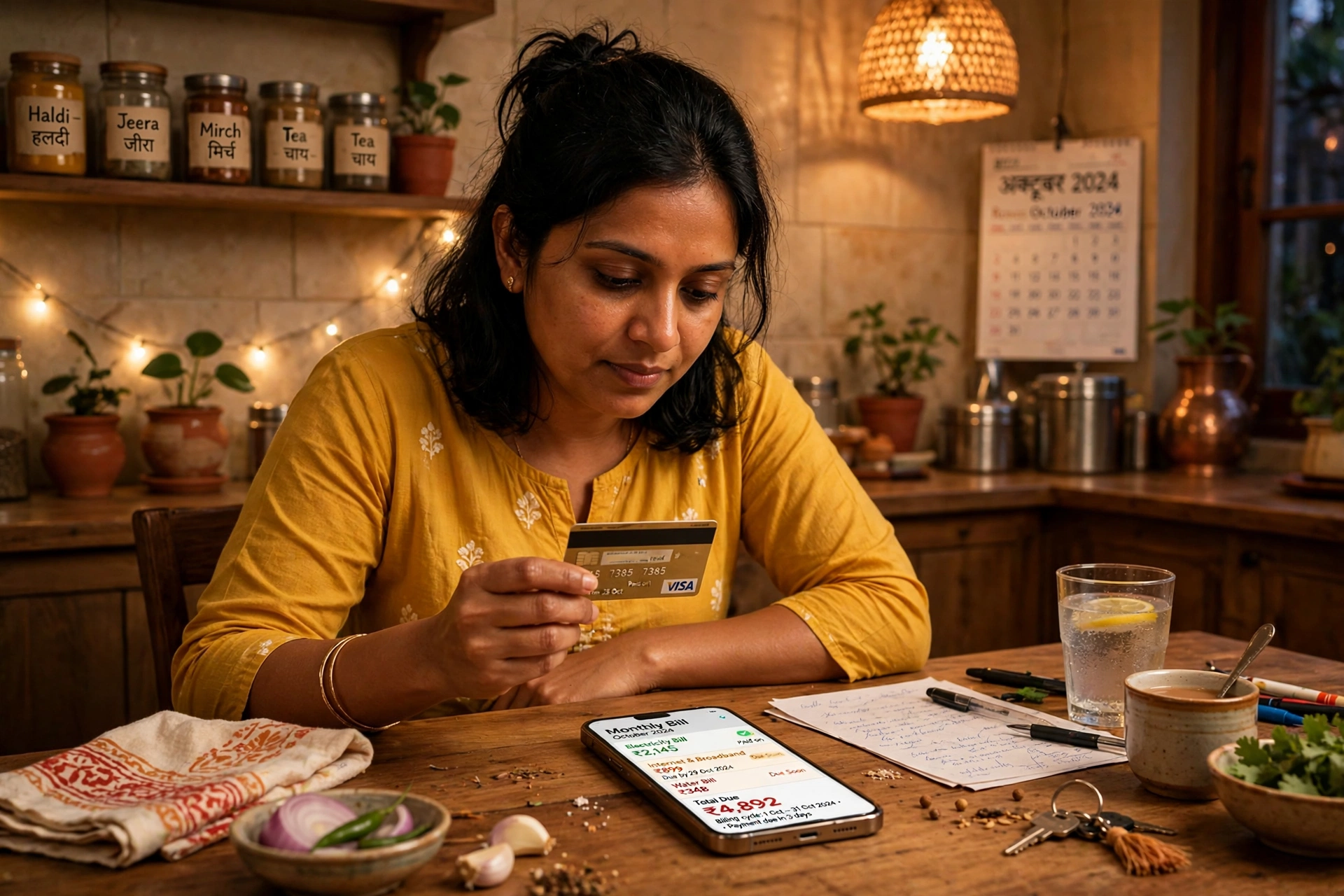
Paying only the credit card minimum due feels like you have handled the bill. The bank accepts the payment, no late fee is charged, and the card keeps working. Yet the balance barely moves. That gap is the credit card minimum due trap: the minimum is designed to keep the account regular, not to clear it quickly.
If you owe ₹50,000 and pay only the minimum due each month, you could still be paying it off years later, with interest far larger than most people expect. Pay it in full before the due date, and the story changes completely. Pay a fixed amount well above the minimum, and the timeline shortens sharply. This article works through all three paths with real numbers.
Rates and rules vary by card and bank, and your statement is the final word for your account. Treat the figures below as clearly labelled illustrative maths.
What the credit card minimum due actually is
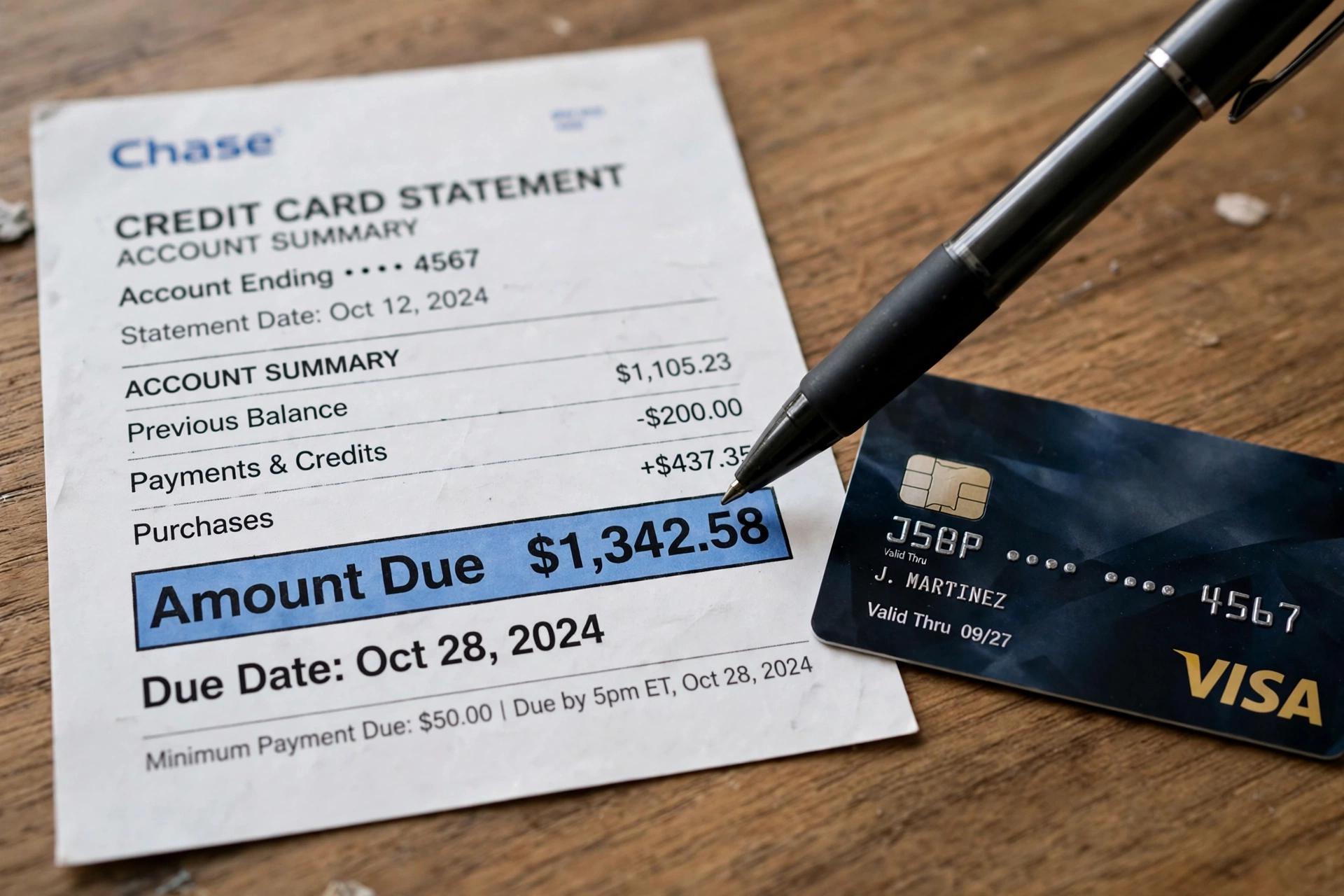
Your statement usually shows the total amount due, the minimum amount due, and the due date. The total amount due is everything you owe for that cycle, including purchases, cash withdrawals, interest, and fees carried forward. The minimum amount due is a much smaller slice, often around 5% of the outstanding balance, plus interest, fees, and overdue amounts, subject to a floor set by the bank.
Paying that minimum by the due date keeps the account from being treated as a missed payment, so you generally avoid a late payment fee. It does not mean the rest of the bill is waived or put on hold for free. The unpaid part stays on the card and attracts interest, usually from the transaction date, not just from the due date.
So the minimum is the smallest payment the bank will accept without treating the account as overdue. It is not a suggested payment, and it is not a plan for becoming debt-free. On a ₹60,000 salary with most of it already committed, a ₹2,500 minimum due looks manageable next to a ₹50,000 full payment. The problem is what happens after you pay it: most of it can be eaten by interest, leaving only a little to reduce what you borrowed.
The worked example: ₹50,000 at about 42% a year
Take a concrete case, with the assumptions kept visible. You owe ₹50,000. The card charges about 42% per annum, or about 3.5% per month. You make no new purchases, take no cash advance, and no extra fee is added in the months shown. Each month, the minimum due is 5% of the balance at the start of that month.
Those are simplified assumptions. A real statement may calculate the minimum due slightly differently, add GST on interest and fees, and apply a floor amount. The shape of the result stays the same: a small payment against high monthly interest clears principal very slowly.
In month one, interest on ₹50,000 at 3.5% is ₹1,750, and the minimum due at 5% is ₹2,500. You pay ₹2,500, the bank takes ₹1,750 as interest, and only ₹750 reduces the principal. The next balance is ₹49,250. You paid ₹2,500, and your debt fell by ₹750. That is the trap in one line.
Month two is similar. Interest on ₹49,250 is about ₹1,724, and the minimum due is about ₹2,463. Principal falls by only about ₹739, leaving roughly ₹48,511. Because each payment is a percentage of a slowly shrinking balance, the payment itself shrinks too, so progress stays slow even though you pay regularly.
| Month | Balance at start | Interest at 3.5% | Minimum due at 5% | Principal cleared | Balance at end |
|---|---|---|---|---|---|
| 1 | ₹50,000 | ₹1,750 | ₹2,500 | ₹750 | ₹49,250 |
| 2 | ₹49,250 | ₹1,724 | ₹2,463 | ₹739 | ₹48,511 |
| 3 | ₹48,511 | ₹1,698 | ₹2,426 | ₹728 | ₹47,783 |
| 4 | ₹47,783 | ₹1,672 | ₹2,389 | ₹717 | ₹47,066 |
| 5 | ₹47,066 | ₹1,647 | ₹2,353 | ₹706 | ₹46,360 |
| 6 | ₹46,360 | ₹1,623 | ₹2,318 | ₹695 | ₹45,665 |
After six months of paying on time, you have paid about ₹14,449 in total, but the balance has fallen only from ₹50,000 to about ₹45,665. The other roughly ₹10,114 went on interest. No payment was missed and no late fee was triggered in this illustration, yet almost three-quarters of what you paid went on interest.
After twelve months of minimum-only payments, you would have paid roughly ₹27,000, and the balance would still be around ₹41,700. A year of disciplined payments clears less than one-fifth of the original ₹50,000. Keep going on minimum payments alone under these assumptions, and clearing the balance stretches well beyond a decade, with total interest crossing ₹1,00,000. Real cards differ in exact timeline, but not in the basic point.
Why the remaining balance keeps attracting interest
Cards usually give an interest-free period, often up to 45 to 50 days, when you pay the total amount due in full by the due date. That is what makes a card convenient for someone who spends ₹20,000 in a month and clears it completely. The moment you pay only part of the bill, that benefit normally falls away for the unpaid part.
From then on, interest is typically charged on the outstanding balance, and often on new purchases too, from the date of each transaction until the amount is fully repaid. There is no fresh interest-free window for new spending while an old balance is revolving. So a minimum payment in January, followed by fresh card spending in February, can mean interest building on both the old balance and the new purchase.
The rate is the other half of the problem. Card interest in India is commonly 36% to 45% a year. At 3.5% a month, a ₹30,000 balance costs about ₹1,050 in interest in one month, and a ₹1,00,000 balance costs about ₹3,500, before fees or tax. When the monthly payment is only a little above the interest, the debt feels stuck even to someone who never misses a payment.
Interest is charged on the balance, not on the minimum
The minimum due decides whether the account counts as overdue; the interest rate on the full balance decides how much the debt grows.
Late fee is not the same as interest
Interest is the cost of carrying a balance over time. A late fee is a penalty for missing the due date or paying less than the minimum due by that date. You can avoid a late fee by paying the minimum on time, and still pay a large amount of interest. In a bad month, you can end up paying both: interest because a balance is carried forward, and a late fee because the minimum itself was missed.
Late fees are usually slab-based, depending on the outstanding amount, and slabs differ by bank. Missing the minimum can also mean losing the interest-free period. Paying at least the minimum on time is therefore worth doing even in a tight month. It is a floor to avoid further trouble, not a strategy for clearing debt.
GST adds another layer. At 18%, GST is generally charged on interest and fees, not on the principal borrowed. On ₹1,750 of monthly interest, GST would be ₹315, taking that month’s interest-plus-tax cost to ₹2,065 before any other fee. Check your bill’s breakup.
Three ways to clear the same ₹50,000, compared
The table below uses the same assumptions: 42% a year, about 3.5% a month, no new spending, no extra fee beyond interest. The “pay in full” row assumes payment by the due date within the interest-free period. If the balance has already started revolving, paying it in full still stops further interest building, though interest already charged stays payable.
| Approach | Monthly payment | Time to clear | Total interest approx. | Total paid approx. |
|---|---|---|---|---|
| Pay only the minimum due (5%) | Falls from ₹2,500 as balance falls | Well over 10 years in this simplified model | Over ₹1,00,000 | Over ₹1,50,000 |
| Pay a fixed ₹5,000 a month | ₹5,000 every month | About 13 months | About ₹12,500 | About ₹62,500 |
| Pay in full by the due date | ₹50,000 once | Immediately | ₹0, if paid in full within the interest-free period | ₹50,000 |
At a fixed ₹5,000 a month, month one still costs ₹1,750 in interest, but ₹3,250 clears principal, leaving ₹46,750. Next month, interest falls to about ₹1,636, so ₹3,364 clears principal. Because the payment stays fixed while interest falls, more of each payment reaches principal every month. A smaller thirteenth payment finishes it, with total interest of roughly ₹12,500.
That is also why “pay a little extra” helps less than people hope when the extra is tiny. Raising the first payment from ₹2,500 to ₹2,800 adds only ₹300 to principal clearance, while interest is still ₹1,750. A useful test is simple: if your payment is barely above the monthly interest, the balance crawls. If it is two or three times the interest, it starts falling visibly.
The cash-flow difference is real. Paying ₹5,000 instead of ₹2,500 means finding ₹2,500 extra each month, perhaps by pausing a SIP for a few months or cutting discretionary spending. That trade-off is usually worth examining, because savings or a fixed deposit earning far less than 42% cannot keep up with card interest. An emergency fund is separate: it exists for a genuine emergency, so draining it completely to clear a card can leave you exposed. Emergency Fund in India: How Much You Really Need and Where to Keep It
Practical ways out of the minimum-due cycle
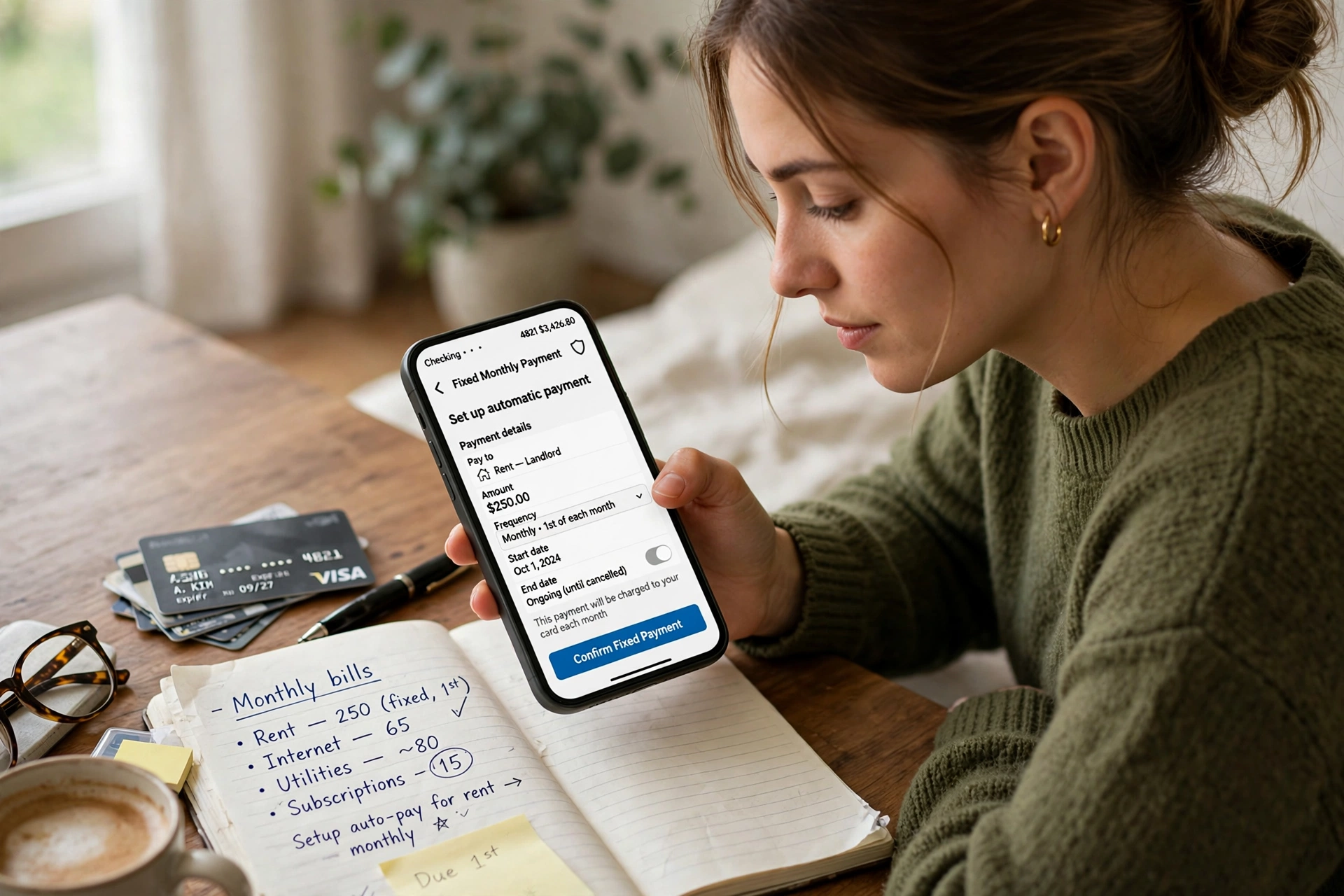
Start with a fixed number, not a vague intention to “pay more.” Pick a fixed monthly payment clearly above the monthly interest that you can sustain. On a ₹50,000 balance, ₹5,000 is a strong starting point in the illustration above. If that is not possible, pick the highest fixed amount you can hold for several months and treat it like rent or an EMI. A fixed amount works because it does not shrink as the balance shrinks.
Next, stop adding new spending to the card carrying the balance, if you can manage it another way. Use a debit card, UPI from your bank balance, or cash for everyday costs while the old balance is cleared. Once the balance is zero and the account is paid in full each month, the interest-free period can work in your favour again.
Some people consider converting the balance into EMIs, or a balance transfer to a card with a lower rate for a few months. Both need a total-cost comparison, not a glance at the monthly EMI. An EMI might look smaller per month than ₹5,000, but it can run for 12 or 24 months, with its own interest rate, a processing fee, and GST. Add up all EMIs plus fees, and compare that total with the fixed-payment plan’s total interest. If the EMI route is not clearly cheaper in total, the fixed payment is simpler. Credit Card Bill to EMI: When Is It Useful and When Can It Be Costly? — compare its total cost, rather than assuming conversion is automatically cheaper.
A balance transfer needs the same caution. A low introductory rate sounds attractive, but the transfer usually carries a fee, the low rate ends on a fixed date, and unpaid amounts can then revert to the normal high rate. It only makes sense with a realistic plan, with dates and amounts, to clear the balance inside that window. If minimum payments are already hard to meet, speak to the bank early rather than waiting for a missed payment.
What to check on your own statement
Spend five minutes on the statement itself. Look for the total due, the minimum due, the due date, the annual interest rate, and the breakup of interest, fees, and GST. Check for any cash advance, which usually attracts interest from day one with no interest-free period, and for new purchases added since the statement date.
Then run your own version of the table above: your balance, your monthly rate, and the fixed payment you can sustain. Most people do not need a spreadsheet to feel the difference between a balance falling by ₹750 a month and one falling by ₹3,250 a month. They need to see their own figures once, clearly.
The minimum due has a place. In a genuinely tight month, paying it on time avoids a late fee and keeps the account regular, and that beats missing the payment altogether. As a habit, though, it is an expensive way to carry a balance. A ₹50,000 debt does not stay a ₹50,000 problem when paid at the minimum: here it becomes a multi-year commitment with interest running into six figures. Pay in full when you can. When you cannot, pay a fixed amount well above the minimum, stop new spending on that card, and compare any EMI or transfer offer on total cost first. The card then goes back to being a payment tool, cleared each month, instead of a balance following you from one statement to the next.