
When a daughter is born in an Indian family, two questions usually follow close behind the celebrations: how will we pay for her education, and what about her marriage? For many parents, the answers involve a mix of fixed deposits, gold, and whatever savings they can manage. But there is one scheme designed specifically for this purpose, backed by the government, paying one of the highest interest rates of any small savings scheme — and a surprising number of parents have never opened an account under it.
It is called the Sukanya Samriddhi Yojana, or SSY. Launched in 2015 as part of the Beti Bachao Beti Padhao campaign, it is a savings scheme exclusively for the girl child. If you have a daughter under ten, it is one of the strongest options available for her long-term future. Here is how it works, what it pays, and how to open an account.
What is Sukanya Samriddhi Yojana?
SSY is a government-backed deposit scheme that parents or legal guardians can open in the name of a girl child. The money deposited earns interest that is reviewed every quarter, and the entire maturity amount — deposits plus interest — is tax-free. The account matures after 21 years from the date of opening, or when the girl marries after turning 18, whichever comes first.
What makes SSY stand out is the combination of three things: a high interest rate, complete tax exemption, and government backing. Few other savings options offer all three at once. A fixed deposit may pay 7% or so, and the interest is taxable. A PPF account is tax-free, but its interest rate is lower than SSY’s. For a parent saving specifically for a daughter’s education or marriage, that combination is hard to beat.
Interest rate and how the returns add up
The SSY interest rate is currently 8.2% per annum, and it is revised every quarter by the government. That is higher than the PPF rate and higher than most bank fixed deposits. Interest is calculated on the lowest balance in the account between the 5th and the end of each month, and credited once a year.
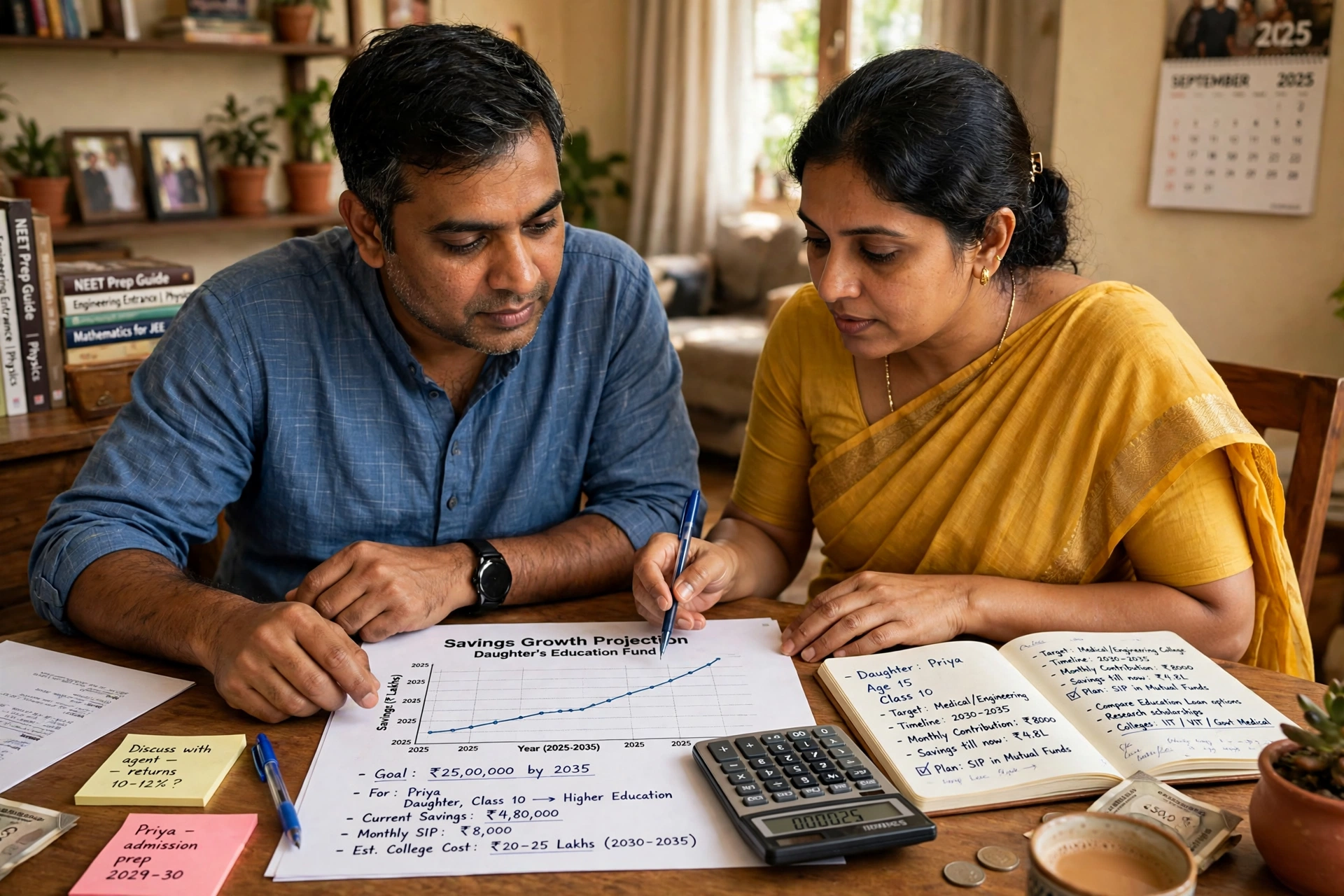
To see what that means in practice, consider a parent who deposits ₹1.5 lakh every year — the maximum allowed — for 15 years. At 8.2%, the account would grow to roughly ₹70 lakh by maturity at 21 years. Even a smaller commitment adds up: depositing ₹25,000 a year for 15 years grows to around ₹11–12 lakh by maturity. And depositing just ₹12,000 a year — ₹1,000 a month — still builds a corpus of roughly ₹5.5 lakh.
These are approximate figures, because the interest rate changes from time to time, but they show the point clearly: starting early and depositing steadily matters far more than depositing a huge amount once. A parent who opens the account when the daughter is one year old gives the money 21 years to compound. A parent who waits until she is nine gets only 12 years of growth before the account matures. The difference runs into lakhs.
Who can open an SSY account?
The rules are specific, and it is worth knowing them before you visit the bank or post office:
- The account can be opened for a girl child below the age of 10. A parent or legal guardian opens and operates it until the girl turns 18, after which she can operate it herself.
- A family can open a maximum of two SSY accounts — one per girl child. A third account is allowed only in the case of twin or triplet girls.
- The minimum deposit is ₹250 per year. If you do not deposit the minimum in a year, the account is treated as defaulted, and a penalty of ₹50 per default year applies to revive it.
- The maximum deposit is ₹1.5 lakh per financial year, and deposits can be made in any number of instalments.
- Deposits must be made for 15 years from the date of opening. After that, the account keeps earning interest until maturity at 21 years, even though no further deposits are required.
- Partial withdrawal of up to 50% of the balance is allowed once the girl turns 18, for her higher education.
- The account can be closed before maturity only if the girl gets married after turning 18, or in case of the account holder’s death, or on compassionate grounds such as a life-threatening illness.
The tax benefits: EEE status
SSY enjoys what tax planners call EEE status — exempt, exempt, exempt. The deposit qualifies for deduction under Section 80C, up to ₹1.5 lakh a year. The interest earned each year is tax-free. And the entire maturity amount is tax-free. Very few investment options in India offer all three, which is one reason financial planners recommend SSY so often for a daughter’s goals. If you are already using your 80C limit for other investments, our guide on how to save tax beyond Section 80C explains what else is available.
How to open an SSY account
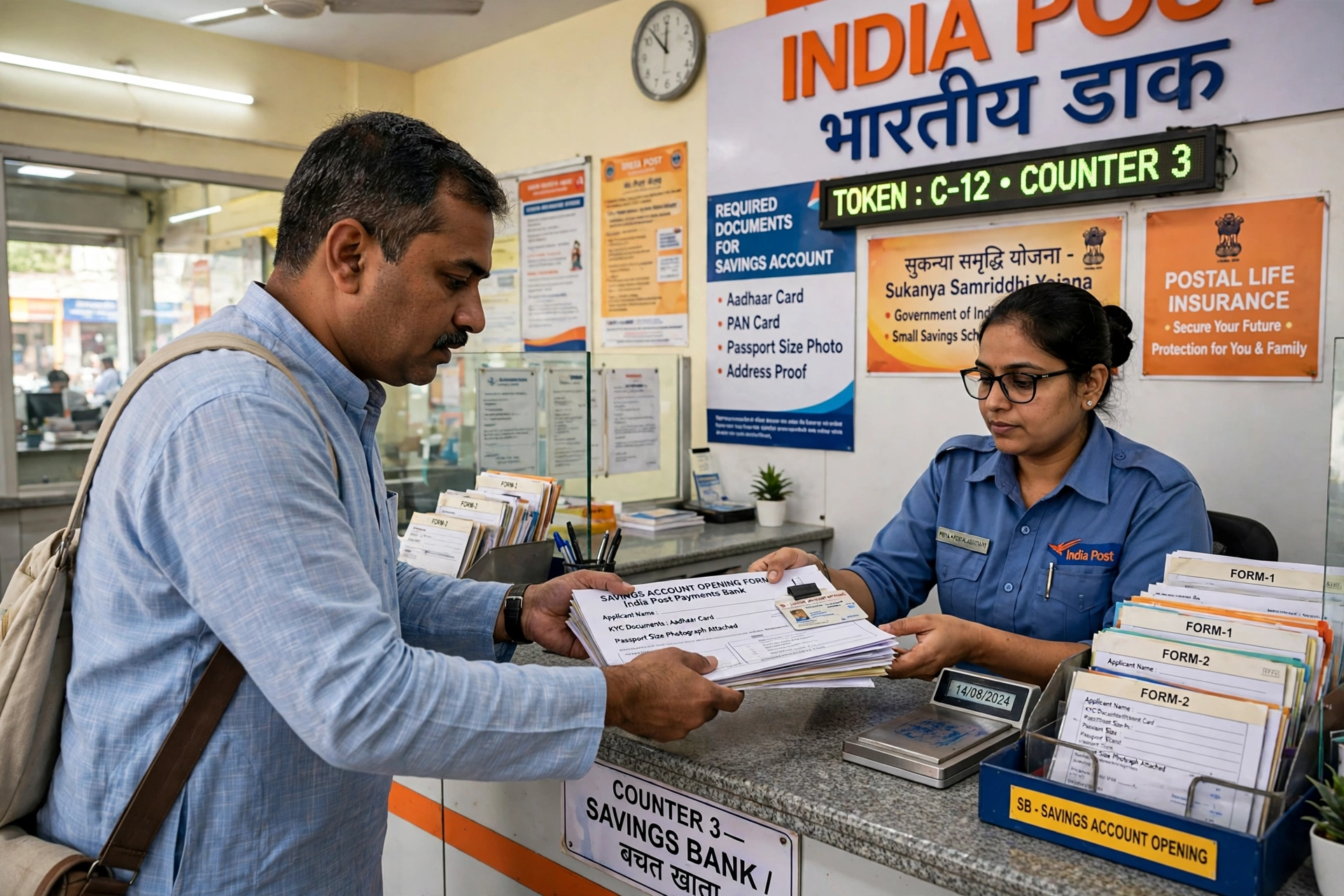
Opening an account is straightforward, and you can do it at any post office or at most banks — including SBI, HDFC Bank, ICICI Bank, PNB, Bank of Baroda and others. Here is what to carry:
- The girl child’s birth certificate
- The parent or guardian’s identity proof (Aadhaar card, PAN card) and address proof
- A photograph of the child and the parent
- The account opening form, available at the branch or on the bank’s website
At the branch, fill in the form, submit the documents, and make the first deposit — a minimum of ₹250. You will receive a passbook, and deposits can then be made at the branch, through standing instructions from your bank account, or online where the bank supports it. Some banks also allow transfers through net banking or UPI into the SSY account, which makes a monthly deposit easy to automate.
SSY vs PPF vs fixed deposit: which wins for a daughter’s future?
Parents saving for a daughter often compare SSY with the other familiar options. Here is how they stack up:
| Feature | SSY | PPF | Fixed deposit |
|---|---|---|---|
| Interest rate | 8.2% | Around 7.1% | 6.5–7.5% |
| Tax on interest | Fully exempt | Fully exempt | Taxable |
| 80C deduction | Yes | Yes | Only on 5-year tax-saver FD |
| Lock-in | 21 years (deposits 15 years) | 15 years | Flexible |
| Who can open | Girl child under 10 only | Any Indian resident | Anyone |
| Minimum deposit | ₹250/year | ₹500/year | Varies, often ₹1,000 |
The comparison makes SSY’s edge clear for this specific goal: it pays more, and it is fully tax-free. A fixed deposit offers flexibility — you can break it any time — but it earns less and the interest is taxed. PPF is the closest alternative, and it is a good choice too, but it pays less and is not restricted to the daughter’s goal. The honest answer for most parents is that SSY is the best fit for a daughter’s education and marriage fund, while a PPF account suits general long-term savings. For a broader comparison of long-term retirement options, our NPS vs PPF guide goes deeper into how PPF works.
Things to watch out for
SSY is an excellent scheme, but it has a few quirks that parents should know:
- The age window is strict. If your daughter is already past ten, you cannot open an SSY account for her. This is the most common reason parents miss out — they hear about the scheme too late.
- The money is locked in for a long time. Twenty-one years is a long commitment. The partial withdrawal at 18 helps for higher education, but this is not the place for money you might need next year. Keep a separate emergency fund and a separate savings pool for short-term needs. Our guide on saving for your child’s education explains how to split savings across goals.
- Deposits stop at 15 years, but maturity is at 21. Some parents are surprised that they cannot keep depositing after year 15. The account still earns interest for the remaining six years, so the money keeps growing — you just cannot add to it. Plan your deposits accordingly, and put the money you would have deposited in years 16 to 21 into another option.
- The interest rate is not guaranteed forever. It is revised every quarter, and it has moved between 7.6% and 9.2% over the years. If rates fall, your returns fall too — though the same is true of every government savings scheme.
- Keep the deposits regular. A missed year means a ₹50 penalty per year to revive the account, and more importantly, it breaks the compounding habit. Setting up a standing instruction of even ₹1,000 a month avoids the problem entirely.
Should you open an SSY account?
If you have a daughter under ten, the answer is almost always yes. The combination of the highest small-savings interest rate, full tax exemption, and government backing is difficult to match. Even a modest monthly deposit, started early and left alone, grows into a meaningful amount by the time she turns 18 or 21.
The scheme works best when it is one part of a plan, not the whole plan. A daughter’s education fund might combine SSY for the long term, a monthly SIP for growth, and a fixed deposit for expenses in the next year or two. What SSY gives you is a solid, tax-free foundation — the part of the plan you never have to worry about, because the government guarantees it.
So if your daughter is still under ten, do not wait for the “right time” to open the account. Every year you wait is a year of compounding lost, and unlike a fixed deposit, this window does not stay open. A visit to the post office or your bank, a birth certificate, and ₹250 is all it takes to start. Twenty-one years from now, your daughter — and your future self — will be glad you did.