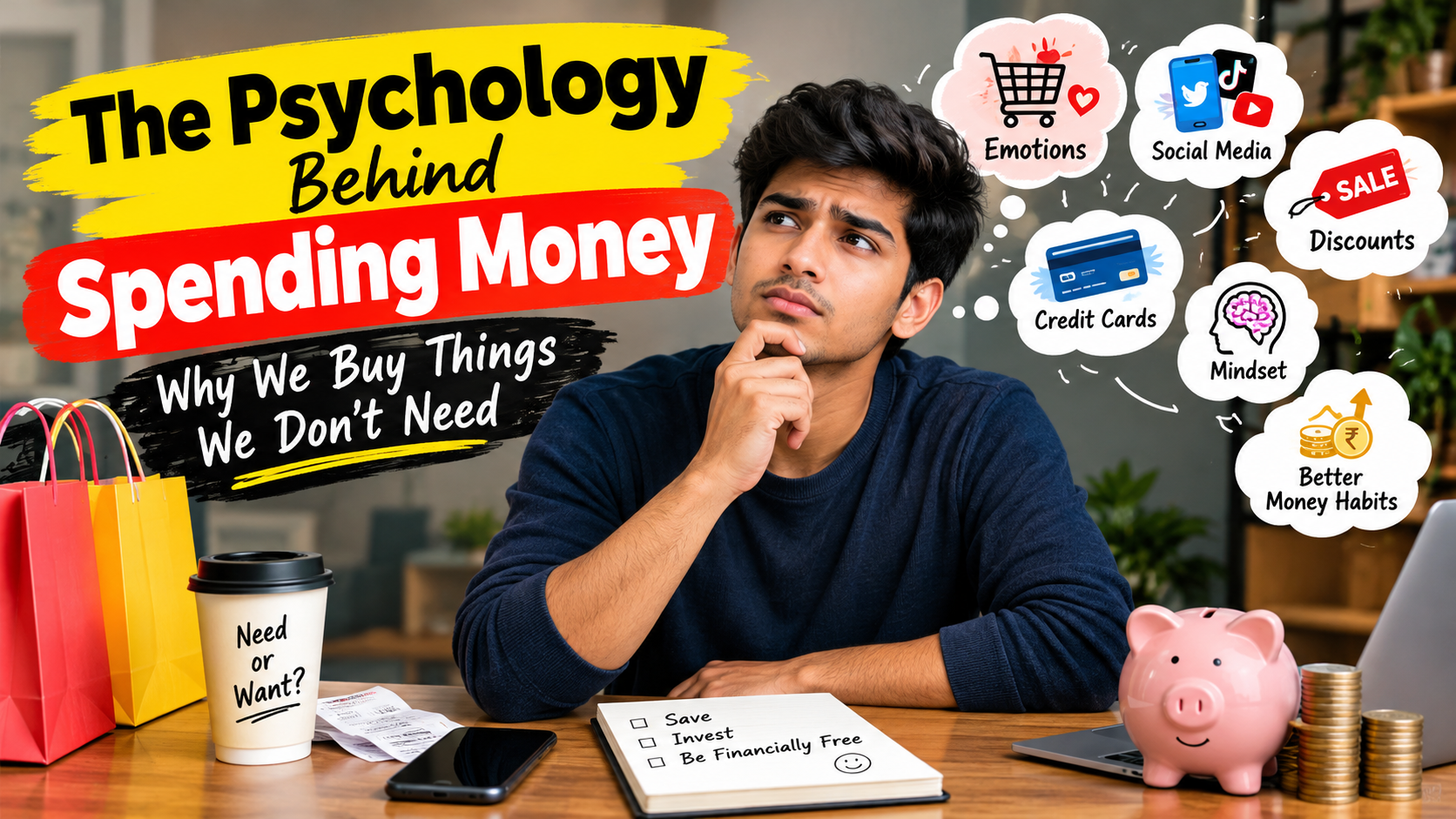
Introduction
Have you ever opened an online shopping app just to look around and ended up buying something you never planned to purchase? Maybe you bought a new shirt because it was on sale, ordered food because you were feeling bored, or upgraded your phone even though your old one was working perfectly fine.
It happens to many of us. Sometimes, we spend money because we genuinely need something. Other times, we buy things simply because they make us feel good in that moment.
The interesting thing is that spending money is not always about how much we earn. Two people can earn the same salary but manage their money very differently. One may save regularly, while the other struggles to understand where their money goes every month.
The difference often comes down to habits, emotions, and the way we think about money.
Understanding the psychology behind spending money can help us make better financial decisions. It does not mean we should stop enjoying life or avoid every purchase. It simply means learning when we are spending for a genuine reason and when our emotions are making the decision for us.
Let’s look at why we spend the way we do and what we can do to develop healthier money habits.
1. Sometimes, We Spend Money to Feel Better
Imagine coming home after a tiring day. You feel stressed, open your favourite shopping app, and start looking at clothes or gadgets. After a while, you find something you like and place an order.
For a moment, you feel happy. You start imagining how the product will look or how much you will enjoy using it.
But a few days later, you might wonder whether you really needed it.
This is an example of emotional spending. It happens when our feelings influence our purchasing decisions.
People may shop when they feel stressed, lonely, bored, disappointed, or even excited. Buying something new can provide temporary enjoyment, which makes shopping an easy habit to repeat.
The problem starts when spending becomes our regular way of dealing with emotions. We might end up buying things we cannot comfortably afford or using money meant for more important expenses.
A simple way to handle this is to pause before making an unplanned purchase. Ask yourself whether you actually want the product or whether you are simply trying to improve your mood.
Sometimes, taking a walk, listening to music, or talking to someone can help you feel better without spending anything.
2. Why Buying Something New Feels So Good
There is a particular excitement that comes with buying something new. It could be a phone, a pair of shoes, or even a small item for your home.
Part of that excitement comes from anticipation. We enjoy discovering something we like, imagining ourselves using it, and waiting for it to arrive.
Online shopping makes this experience even easier. With just a few taps, we can browse hundreds of products and place an order without leaving home.
However, the excitement of buying something does not always last as long as we expect. Sometimes, we enjoy the shopping experience more than the product itself.
For example, someone might buy a new pair of shoes because they look attractive online. After wearing them a few times, the excitement disappears, and the shoes become just another item in the cupboard.
This does not mean buying new things is wrong. The important thing is to notice whether the excitement is repeatedly pushing you to spend more than you intended.
Try making a shopping list before opening an online store. If you are browsing without any particular need, remind yourself that you do not have to purchase something just because you like it.
3. Social Media Makes It Easy to Compare Our Lives
Have you ever seen someone posting pictures of a new car, an expensive holiday, or a luxury phone and felt that you wanted something similar?
Social media has made it easier than ever to see how other people spend their money. We regularly come across pictures of expensive restaurants, designer clothes, holidays, and new purchases.
The problem is that we usually see only a small part of someone’s life.
We do not know whether the person has savings, whether they are paying off debt, or whether the purchase fits comfortably within their income.
Still, seeing these posts can make us feel that our own lifestyle is not good enough.
For example, a college student might feel pressured to buy an expensive phone because their friends have one. Even if their current phone works well, they may start believing that upgrading is necessary to fit in.
This is where comparison can affect our financial decisions.
There is nothing wrong with wanting nice things. But spending money to impress others can become expensive, especially when we are trying to maintain a lifestyle we cannot comfortably afford.
Instead of comparing your purchases with someone else’s, focus on your own financial situation. A person who saves consistently and manages their expenses well may be making more progress toward financial security than someone who spends heavily to maintain appearances.
4. Discounts Can Make Us Spend More
Who doesn’t like a good discount?
When we see a product marked down from ₹2,000 to ₹1,200, it feels like an opportunity to save ₹800. We may feel that buying the product is a smart financial decision.
But there is something worth considering: if you had not seen the discount, would you have bought the product at all?
If the answer is no, then you are still spending ₹1,200 that you might otherwise have kept.
Sales can encourage us to make quick decisions. Limited-time offers, countdown timers, and messages saying that only a few items remain can create pressure to buy immediately.
Sometimes, we purchase things simply because the deal looks too good to miss.
The next time you see a big discount, look beyond the percentage. Think about whether you need the item, whether the price is reasonable, and whether the purchase fits your budget.
A product is not automatically a good deal just because it costs less than its original price.
The best way to save money is often to avoid buying things you never needed in the first place.
5. Why Saving Money Can Feel Difficult
Saving money sounds simple. Spend less than you earn and put the difference aside.
In reality, it can be difficult because spending provides an immediate benefit, while saving often requires waiting.
Suppose you have ₹2,000 left after paying your essential expenses. You could spend it on clothes, entertainment, or eating out. Alternatively, you could put it into your savings account.
Spending gives you something to enjoy today. Saving may not feel as exciting because the benefit is something you will appreciate later.
This is one reason people sometimes postpone saving. They tell themselves they will start next month, after their next salary, or once their income increases.
But the next month often brings new expenses and new reasons to spend.
One practical solution is to save a manageable amount as soon as you receive your income. You do not have to begin with a large amount. The important thing is to create a habit that you can maintain.
You can also give your savings a clear purpose. Saving for an emergency fund, education, or a future purchase can make the process feel more meaningful.
6. Lifestyle Inflation: Why More Salary Doesn’t Always Mean More Savings
Getting a salary increase feels great. It gives us more financial flexibility and can make life more comfortable.
However, a higher income does not automatically lead to better financial health.
Imagine someone earning ₹20,000 a month who receives a salary increase to ₹30,000. They start ordering food more frequently, buying more clothes, and spending extra money on entertainment.
These changes may seem small individually, but together they can consume most of the additional income.
This is known as lifestyle inflation. It happens when our spending increases as our income grows.
Of course, using some extra income to improve your lifestyle is perfectly reasonable. The problem is when every salary increase leads to higher expenses and leaves little room for savings.
A better approach is to decide how you will use additional income before spending it.
For example, if your monthly salary increases by ₹5,000, you might put part of that amount toward savings, investments, or debt repayment while keeping some for personal enjoyment.
The exact amount depends on your needs and financial responsibilities.
The goal is to let your financial position improve as your income grows.
7. Credit Cards Make Spending Feel Easier
Paying for something with cash can make the cost feel more noticeable. You can see the money leaving your wallet.
With credit cards and digital payments, the experience can feel different. You pay with a tap, and the actual financial impact may not become obvious until later.
This convenience is useful, but it can also make it easier to lose track of spending.
For example, you might buy groceries, order food, shop online, and pay for subscriptions using the same credit card. Each transaction may seem manageable on its own, but the total bill can be much higher than expected.
Credit cards are not inherently bad. When used responsibly, they can be convenient and may offer benefits. However, carrying an unpaid balance can result in interest and other applicable charges.
The best approach is to treat credit as a payment method, not as extra money.
Check your transactions regularly, keep track of the total amount spent, and make sure you understand the repayment terms.
If digital payments make it difficult to notice how much you are spending, reviewing your expenses once a week can help you stay aware.
8. Advertising Influences What We Want
Sometimes, we start wanting a product only after seeing it repeatedly.
You might be watching a video when an influencer recommends a skincare product. Later, you see the same product in an advertisement, and then it appears again while you are browsing online.
After seeing it several times, you may begin to feel that you need it.
This is one way advertising influences consumer behaviour. Brands use attractive visuals, product demonstrations, celebrity endorsements, and personalized recommendations to encourage purchases.
There is nothing unusual about businesses promoting their products. However, it is useful to remember that advertisements are designed to attract customers, not necessarily to help them decide whether a product is worth buying.
Before purchasing something because you saw it online, take a moment to consider whether it solves a real problem for you.
You can also wait a day or two before making the decision, particularly when the item is expensive.
A little distance from the advertisement can help you decide whether you genuinely want the product.
9. Simple Ways to Improve Your Spending Habits
Understanding why we spend is a good start, but real improvement comes from changing small everyday habits.
Here are a few practical steps that can help.
Track Where Your Money Goes
For one month, write down your expenses. Include everything from groceries and transport to online shopping and small digital payments.
At the end of the month, look for patterns. You may discover that several small purchases are taking up more money than you expected.
The purpose is not to stop spending on everything you enjoy. It is to understand where your money is going.
Follow the 24-Hour Rule
Whenever you want to buy something that is not essential, wait at least 24 hours before making the purchase.
For expensive products, consider waiting longer.
During this time, think about whether you need the item, whether you can afford it, and whether you would still want it without the discount or advertisement.
You may find that the urge to buy disappears after a little time.
Make a Monthly Budget
A budget helps you plan how your income will be used.
Start with essential expenses such as rent, food, transport, bills, and debt payments. Then decide how much you can reasonably save and how much you can spend on entertainment or personal purchases.
Your budget should reflect your actual income and responsibilities. It does not need to be complicated to be useful.
Reduce Shopping Triggers
If you frequently make unplanned purchases after receiving promotional messages, turn off notifications from shopping apps.
Unsubscribe from marketing emails you rarely need, and avoid browsing shopping websites when you are bored.
Making unnecessary purchases less convenient can help you think more carefully before spending.
Set Clear Savings Goals
Saving becomes easier to understand when you know what you are working toward.
Instead of simply saying that you want to save more, choose a specific goal, such as building an emergency fund or saving for a course.
Break the goal into smaller amounts that fit your budget. Review your progress regularly and adjust the plan when your circumstances change.
10. Spending Money Is Not Always a Bad Thing
While it is important to control unnecessary expenses, we should not treat every purchase as a mistake.
Money helps us meet our needs and enjoy life. Buying a gift for someone, eating out with friends, travelling, or purchasing something that makes everyday life easier can all be worthwhile.
The aim is not to feel guilty whenever you spend money.
Instead, try to understand whether your spending reflects your priorities or whether you are making decisions because of pressure, habit, or a temporary emotion.
You can enjoy your money today while still preparing for the future.
A balanced financial life allows room for both.
Conclusion
The psychology behind spending money is more complicated than it may appear. We do not always buy things because we need them. Sometimes, we spend because we are stressed, influenced by social media, attracted by a discount, or simply excited about owning something new.
These habits are common, and recognizing them is the first step toward making better decisions.
You do not need to change everything overnight. Start by tracking your expenses, waiting before making unplanned purchases, and setting realistic savings goals.
Over time, these small changes can help you understand your spending patterns and use your money more intentionally.
Remember, managing money well is not about buying the cheapest things or never enjoying yourself. It is about knowing what matters to you and making sure your spending supports those priorities.
When you understand why you spend, you can make better choices about where your money goes—and that is an important step toward building a stronger financial future.